
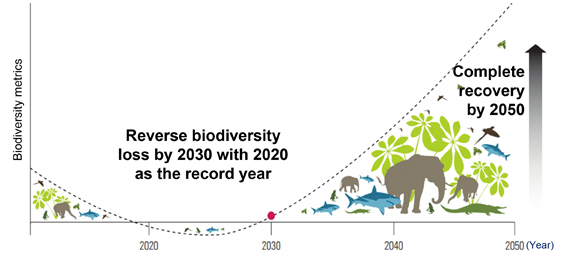
Global environmental issues, such as climate change and biodiversity loss, are becoming more serious every year and are recognized as major risks to society and the economy*1. Various measures have been adopted to address climate change including the 2015 Paris Agreement, and international initiatives are underway to develop a net zero decarbonized society. Measures addressing biodiversity loss include the 2022 Kunming-Montreal Global Biodiversity Framework (GBF); under the 2050 vision of “Living in harmony with nature”, the GBF has set a goal of becoming “nature positive”*2 by 2030, which prescribes taking urgent action to halt and reverse biodiversity loss and promote environmental recovery under 23 specific targets.
Accordingly, our Group is steadily adopting business initiatives to meet the global “net zero” and “nature positive” goals, while proactively identifying and disclosing important climate- and nature-related concerns.
*1: Excerpt from World Economic Forum (References Material 1)
| Ranking of risks according to severity over next decade | |
|---|---|
| 1 | Extreme weather events |
| 2 | Biodiversity loss and ecosystem collapse |
| 3 | Critical changes to Earth systems |
| 4 | Misinformation and disinformation |
| 5 | Adverse outcomes of AI technologies |
| 6 | Natural resource shortages |
| 7 | Inequality |
| 8 | Cyber insecurity |
| 9 | Societal polarization |
| 10 | Pollution |
*2: Measurable goals for achieving global nature positive targets by 2030
Source: WWF
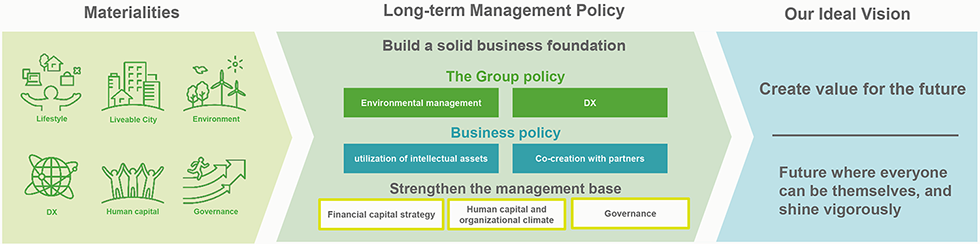
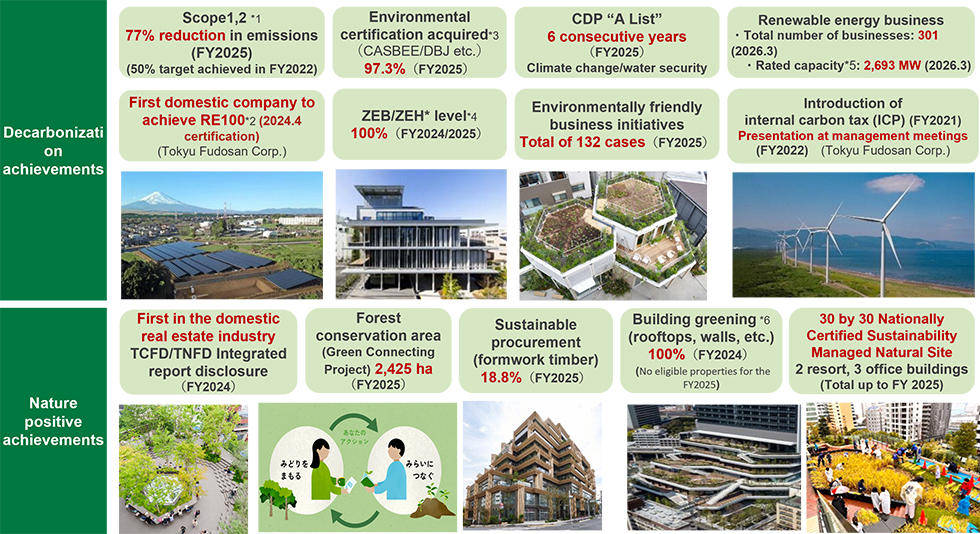
We are working toward solving climate- and nature-related issues through our business practices. To mitigate and adapt to climate change, the conservation of natural vegetation is essential for absorbing greenhouse gas (GHG) and reducing the risk of extreme weather events. Climate change is also a major cause of biodiversity loss and needs to be addressed to achieve nature positive goals.
Nature- and climate-related issues are closely related to each other, as recommended by the TNFD; thus, we have adopted integrated examination policies and initiatives on climate and nature, and disclose information in accordance with the framework.
This report seeks to provide an overview of how we address climate- and nature-related issues through disclosure based on the TCFD recommendations, transitioning to a decarbonized society, and disclosure based on the TNFD recommendations.
This table can be scrolled horizontally
| Disclosure based on TCFD recommendations | Transition plan for a decarbonized society | Disclosure based on TNFD recommendations (TNFD report) | |
|---|---|---|---|
| Revision history |
|
|
|
| Disclosure contents |
|
|
|
↓ Integration
Climate- and nature-related governance/strategy/risk and impact management/metrics and targets/transition plan for a decarbonized society
For your benefit, this report uses icons in the upper right corner of each page to indicate the theme (“climate” and “nature”) and items “governance,” “strategy,” “risk and impact management,” and “metrics and targets” being covered. In addition, the “NEW” icon is displayed in the upper left corner for content that has been newly added to this report.
Please refer to the Appendix for the TNFD Recommendations for disclosures.
This table can be scrolled horizontally
| Pillars of disclosure | Main recommendations for disclosure | Climate-related disclosure | Nature-related disclosure |
|---|---|---|---|
| Governance |
|
|
|
| Strategy |
|
|
Based on the TNFD's LEAP★ approach, we identified nature-related issues (dependencies, impacts, risks, and opportunities) as follows:
|
|
|||
| Risk and impact management |
|
|
|
| Metrics and targets |
|
|
|
We conducted an integrated climate and nature scenario analysis encompassing our Group’s businesses, identified material risks and opportunities based on their financial impacts, and incorporated the findings into our strategy.
STEP 1)
Assess dependencies/impacts on nature for Group overall
Based on tools such as ENCORE (see Glossary), we reviewed an overview of dependencies and impacts in our entire business.
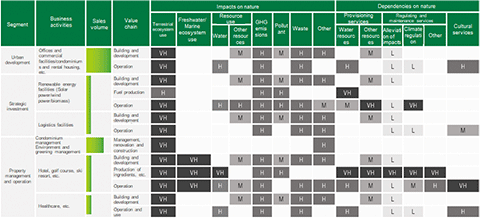
Impacts
Land modification/occupation, etc. upon real estate development and operation Terrestrial ecosystem use
Dependencies
Supply services for resources, etc. and cultural services★ for nature-based comfort, landscapes, etc.
Business scale
(Sales volume)
STEP 2)
Analyze importance
at addresses of each property
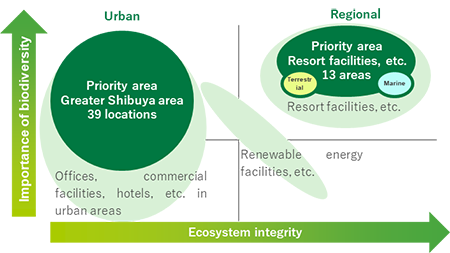
We analyzed various metrics regarding the ecological integrity★ and biodiversity importance and water stress as they pertain to the addresses of properties held and operated by the Group.Then we selected the "Greater Shibuya area" and "13 areas including resort facilities" as our priority locations.
Conduct detailed analysis at the locations below:
Our businesses in "Greater Shibuya area", one of the priority locations, has various impacts, such as land alteration and occupation, as well as dependencies on nature, such as mitigation of flooding and heat island effects, and the healing and aesthetic aspects of nature.
Of these, the impacts of land use and building greening on nature were quantitatively analyzed using the analysis tools of Think Nature Inc.
As a result of performing quantitative analysis using Think Nature’s analysis tools, we found that biodiversity regenerative effects before and after the building of Group properties in the greater Shibuya area turned positive starting with properties from FY2012 and beyond. At properties completed in recent years, initiatives aimed at ensuring the quantity and quality of greening, such as securing green space area largely through urban redevelopment systems and selecting native species of trees for planting, have shown positive effects, and the community planning efforts of the Group have been recognized as contributing to nature positive.
In particular, the quantity and quality of greening at target properties under our Redevelopment Business have been trending highly relative to facilities up to this point. Going forward, we will continue to promote the planning of communities that coexist with nature.

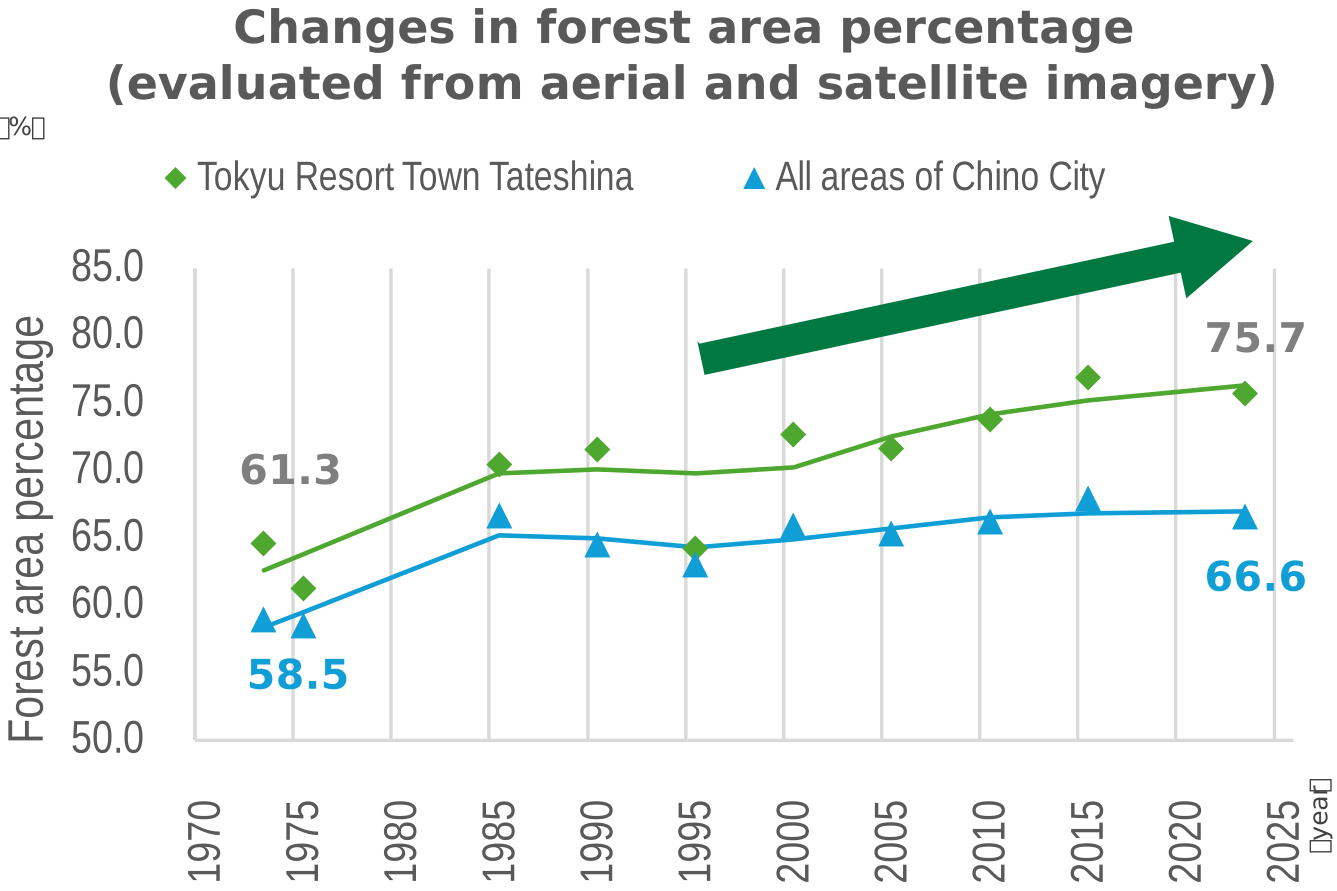
Our businesses at “Tokyu Resort Town Tateshina”, analyzed as a priority location, has various dependencies on nature, such as tourism resources, recreational functions, climate control, and disaster mitigation. Despite the potential negative impacts, such as land alteration and occupation, through the value chain, there are positive impacts through initiatives such as forest management. Focusing on one of these important impacts, that is, land alteration and occupation through facility development and operation, this impact was measured as an indicator via quantitative evaluation of the changes in forest area percentage since development initiation in collaboration with Think Nature Inc..
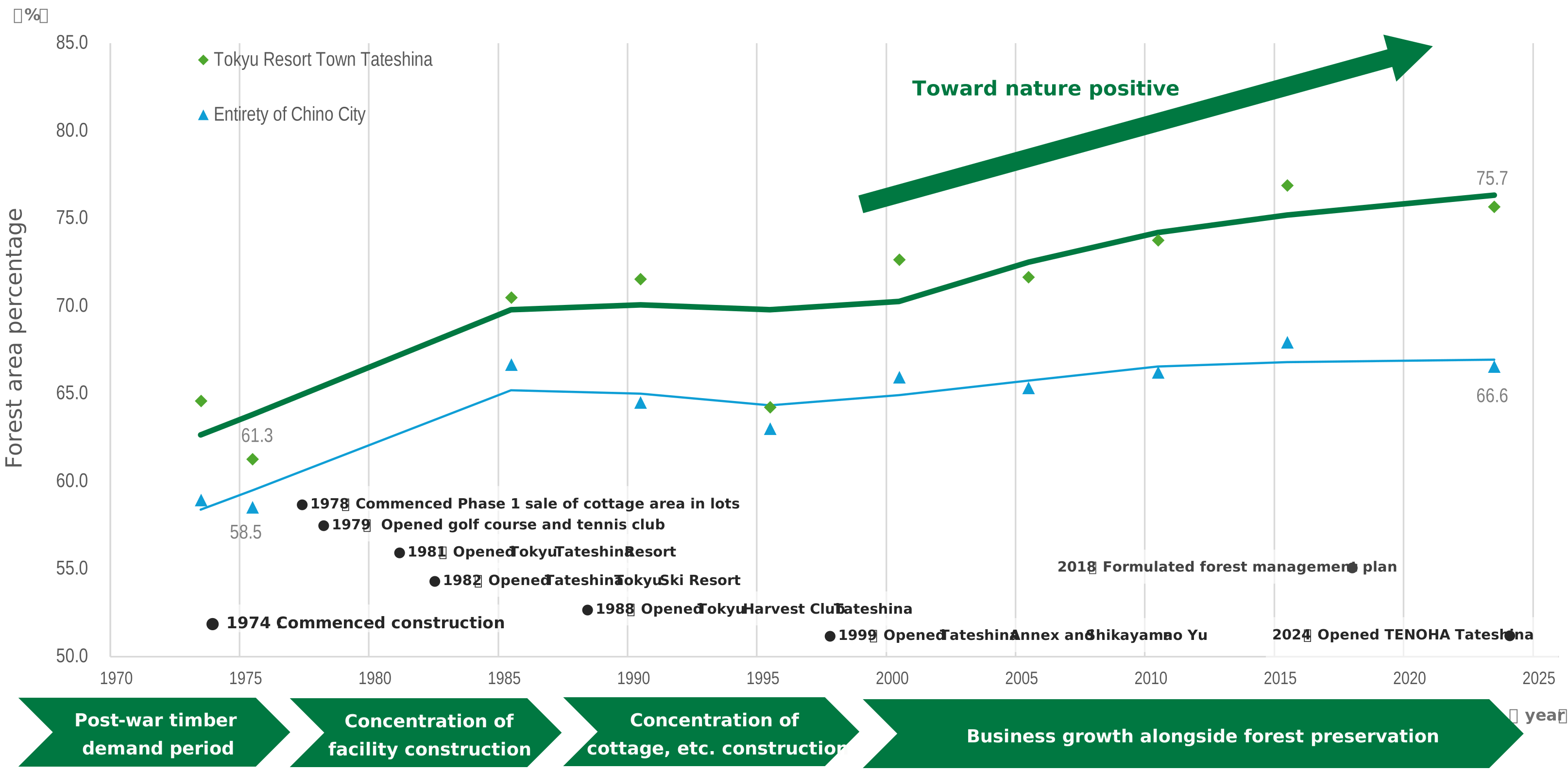
Analysis of forest area from aerial and satellite images showed that, although the forest area has declined due to the construction of golf courses and vacation homes, the overall trend is toward recovery, and that the current status is that the area is in its most recovered state, as well as the fact that the business operations, which have simultaneously maintained and recovered forests, are contributing to nature positive as a result of our group's resort development and operations (bottom left upper figure).
Additionally, "Tokyu Resort Town Tateshina" is engaged in forest management, such as thinning based on a forest management plan. Currently, given the advanced age of the trees that constitute the forests, going forward, thinning will be continued while considering forest management that includes a partial clear-cutting of aged larch forests and replanting.
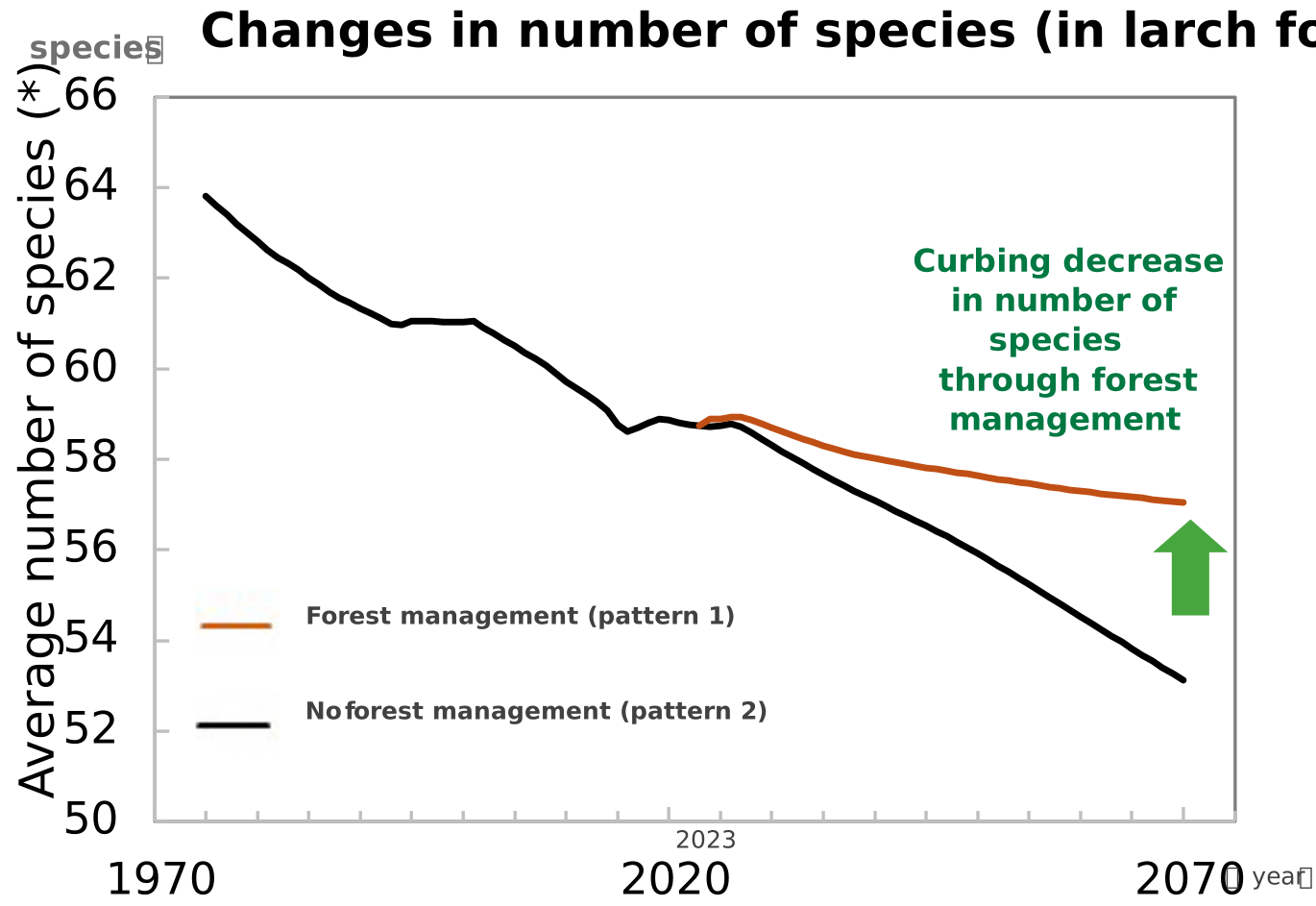
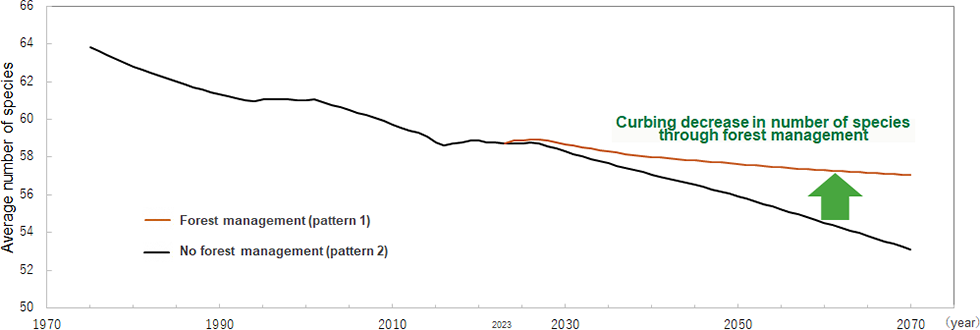
Even when conducting a quantitative evaluation on the potential impacts of forest management on biodiversity and conducting a "management method of clear-cutting and reforesting two hectares a year," the decline in the number of species in the forest was greatly suppressed compared with the case of not conducting forest management and leaving the process to natural transitions (lower right figure). These results will be used as a reference to continue promoting efforts to preserve biodiversity with appropriate forest management.
Palau Pacific Resort (PPR), a priority area, both relies on and affects natural ecosystems in multiple ways.
An environmental impact assessment found that PPR has had a nature-positive contribution by conducting its business while preserving both terrestrial and marine ecosystems, following its guiding principles of balancing nature conservation with development and contributing to the local community.
A green space assessment at the resort showed that restored and maintained natural forests now cover an area far larger than the built-up area [Figure 1].
Coral reef assessments indicated that measures, such as establishing a marine protected area, have steadily increased coral coverage in the seas in front of the resort. Despite recent environmental pressures from typhoons and predation by marine organisms, new coral growth continues to expand [Figure 2]. Furthermore, there has been an increase in populations of large invertebrates, including the endangered Tridacna gigas, confirming the effectiveness of PPR’s conservation and restoration efforts [Figure 3].
![[Figure 1] A stacked bar chart showing changes in forest area within a resort site, comparing 1976 and 2023. The vertical axis shows area in thousand square meters, with categories for forest, grassland, and other. Forest area increases significantly from 1976 to 2023, highlighted by an arrow and note indicating an approximate 1.4-fold increase, while grassland and other areas decrease proportionally. Source: Think Nature Co., Ltd.](/img/environment/img-tcfdtnfd-133-pc.svg)
![[Figure 3] A bar chart showing changes in macroinvertebrate population density. The horizontal axis shows years (2015, 2016, 2019, 2024), and the vertical axis shows the number of individuals per 60 square meters. After a temporary decline in 2016, the population increases steadily, reaching the highest level in 2024. An arrow highlights that the population has 'increased'.](/img/environment/img-tcfdtnfd-134-pc.svg)
![[Figure 2] A combined chart showing changes in coral coverage and coral larval recruitment density. The horizontal axis shows years from 1994 to 2024. The left vertical axis represents coral coverage in percent, and the right vertical axis shows larval recruitment density as individuals per three square meters. The green line represents coral coverage at PPR and shows an overall increase, highlighted by an arrow stating 'coral coverage has increased'. The gray line indicates the 'Global average'. Green bars from 2015 onward show settlement of new coral larvae, indicating signs of recovery. Annotations note the opening of PPR in 1984 with beach restoration and coral transplantation, and the 2002 designation as a marine conservation area with information disclosure and educational measures to prevent physical disturbance.](/img/environment/img-tcfdtnfd-135-pc.svg)
Based on the scenario and dependency/impact analyses, we characterized climate- and nature-related transition risks, physical risks, and opportunities that are particularly important for our business.
Although various climate- and nature-related risks are expected, many business opportunities can also be expected.
Real estate development requires a long time and involves many parties; thus, it is necessary to collaborate with stakeholders to address climate- and nature-related issues throughout the entire supply chain.
Company-specific climate- and nature-related initiatives
This table can be scrolled horizontally
| Item | Major initiative | |
|---|---|---|
| Climate-related | Establishing a business that provides renewable energy | |
| ZEB/ZEH, environmental certification acquisition | ||
| Nature-related | Urban development | Urban development, urban greening, greening technology, planting management, etc. |
| Hotel and leisure | Forest management, protection of rare species, Marine Conservation, etc. | |
| Other | Invasive species removal, pollution and waste reduction, resource circulation, water use reduction | |
We plan to continue deepening our analysis of the Group’s dependencies and impacts—as well as risks and opportunities—related to climate and nature, while taking into account international trends regarding nature-related metrics and targets. Furthermore, with a view toward aligning our reporting with SSBJ standards*, we have already incorporated some of the disclosure elements required by those standards and will continue to enhance our disclosures to ensure full compliance.
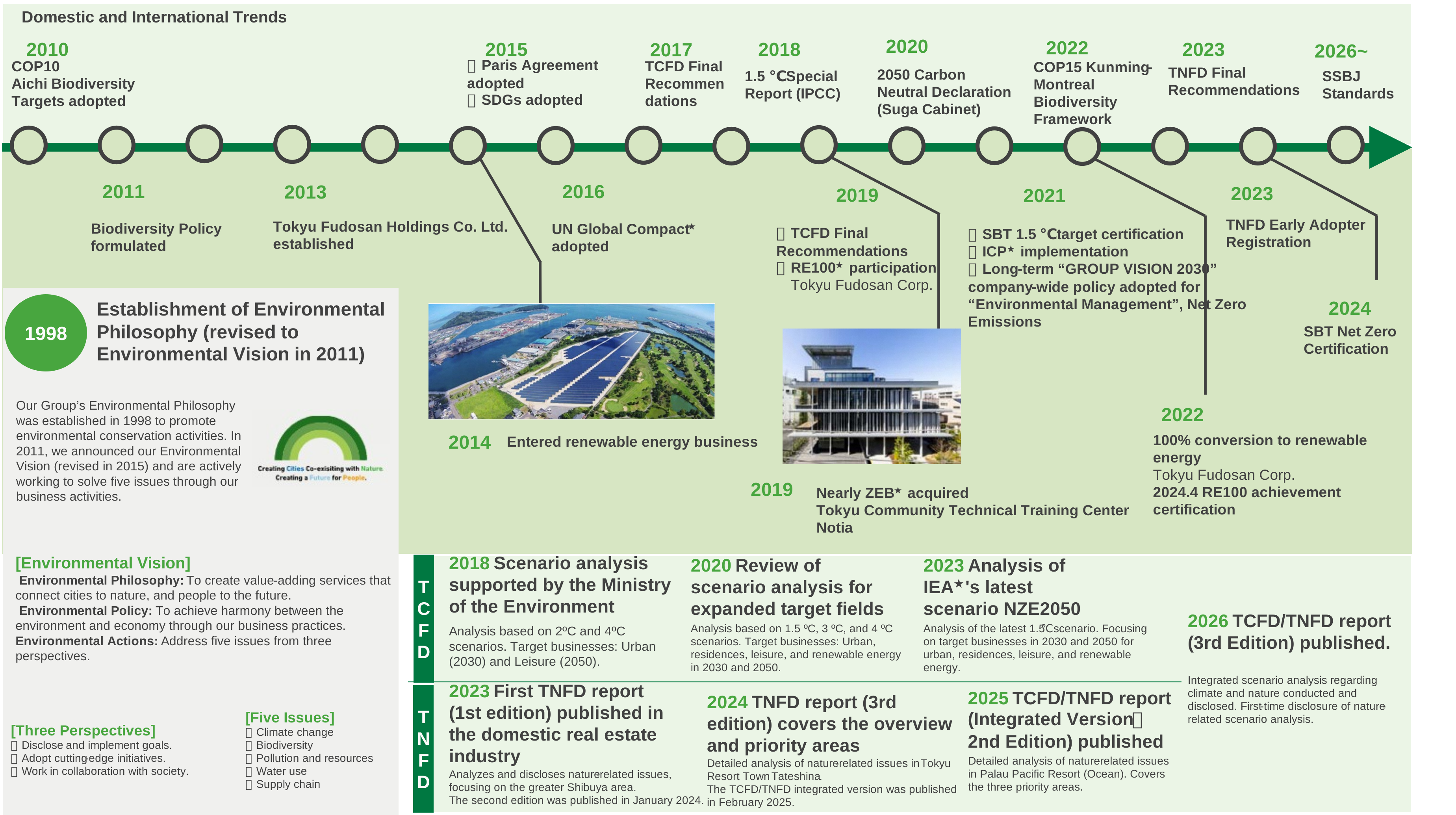
We formulated the long-term “GROUP VISION 2030” and set a long-term goal of reducing GHG emissions to net zero by 2050, for which we received SBT Net Zero certification in July 2024.
This report describes our transition plan, in line with the TCFD and other guidelines, which forms the basis for promoting decarbonization initiatives, such as renewable energy businesses and ZEB/ZEH building conversions.

This table can be scrolled horizontally
| Components of transition plan | Disclosure |
|---|---|
| Governance structure |
|
|
|
| Roadmap and measures |
|
| Risks and opportunities |
|
| Metrics and targets |
|
| Stakeholder engagement |
|
This table can be scrolled horizontally
| General Requirements | Our Group Policy |
|---|---|
| Application of Materiality |
|
| Scope of disclosure/areas with nature-related issues |
|
| Integration with other sustainability-related disclosures |
|
| Target period |
|
| Engagement with indigenous and local communities and affected stakeholders |
|
introduction
Disclosure of climate- and nature-related information
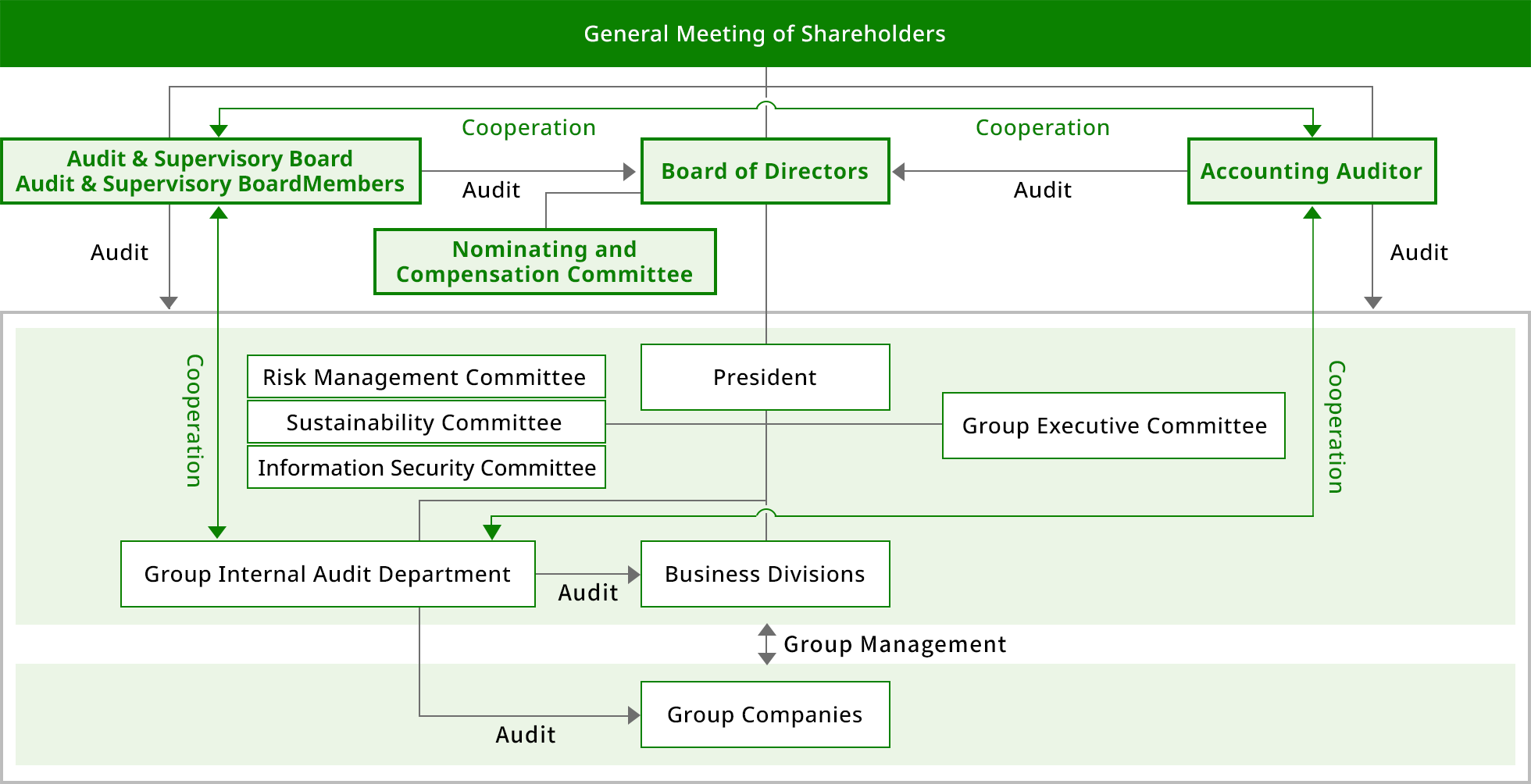
Here, we explain the board's oversight and management roles in relation to climate- and nature-related dependencies and impacts, risks and opportunities, and stakeholder engagement in nature-related issues.
Our climate- and nature-related governance structure incorporates targets that are approved and reviewed by the Board of Directors.

The TNFD prioritizes effective and meaningful engagement with indigenous/local communities and affected stakeholders in assessing and managing nature-related dependencies, impacts, risks, and opportunities, and recommends disclosure under “governance.”
The development of real estate including housing, office buildings, commercial facilities, and leisure facilities requires a long time and involves many stakeholders. Therefore, appropriate decarbonization and nature positive measures must incorporate the concerns of stakeholders (design companies, construction companies, customers, etc.) and be implemented throughout the supply chain.
Below, we introduce key topics on human rights and stakeholder engagement related to our business and supply chain.

When planning construction, we require our construction companies to comply with our Sustainable Procurement Policy, and we regularly conduct due diligence surveys to check the status of each company. We aim to build a responsible supply chain by working with construction companies to address any issues. In FY2025, we assessed 123 companies through self-assessment surveys, which is conducted annually primarily among construction companies. Of these, we held individual engagement meetings with three companies to improve on the issues and share advanced case studies (see Supply Chain (Society) for details).
Many of the concrete formwork plywood panels used in construction are made from tropical timber, which may be produced due to the environmental destruction of native forests and land confiscation from indigenous peoples. Our group has collaborated with construction companies that are the primary suppliers and set the target of achieving a use rate of sustainable timber (FSC and PEFC-certified timber, domestic timber) among raw materials for concrete formwork plywood used in building construction of 100% by 2030. The following types of initiatives were advanced to that end:
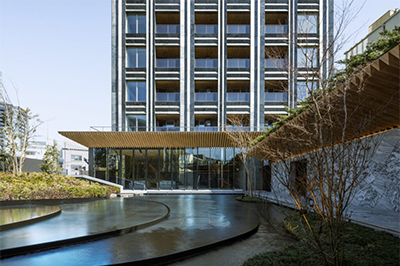 Branz Chiyoda Fujimi
Since FY2018, the group has conducted scenario analyses while progressively expanding the scope of businesses covered in accordance with the materiality of climate change risks and opportunities. Currently, we have recognized the close relationship between climate change and nature and conducted an integrated scenario analysis that addresses both climate- and nature-related issues.
| Climate-Related Scenario Analysis (FY2018 onward) |
|
|---|
| Development of Climate- and Nature-Related Scenarios |
|
|---|
| Identification of Risks and Opportunities Based on the Scenarios |
|
|---|
| Assessment of the Materiality of Risks and Opportunities Through Discussions with Business Divisions |
|
|---|
| Quantitative Assessment of Financial Impacts from Risks and Opportunities |
|
|---|
| Confirmation of Response Strategies |
|
|---|
The assumptions applied in the climate- and nature-related scenario analysis are as follows.
Scenario analysis was conducted for the following businesses.
This table can be scrolled horizontally
| Segment | Businesses Covered |
|---|---|
| Urban Development Business | Office and Commercial Facilities Business / Residential Business |
| Strategic Investment Business | Renewable Energy Business / Industry Business |
| Property Management and Operations Business | Property Management Business / Wellness Business / Environmental Greening Business |
| Real Estate Distribution Business | Brokerage and Rental Housing Services Business |
(However, the evaluation found no risk or opportunity items with significant impacts in the Property Management, Environmental Greening, or Brokerage and Rental Housing Services Businesses; thus, the disclosures of business-specific risks and opportunities for these businesses have been omitted.)
For the climate change and nature-related scenario analysis, assessment of risks and opportunities, and formulation of strategies, the short-, medium-, and long-term time horizons shown on the rightbelow have been established.
| Short term | 1 - 2 years |
|---|---|
| Medium term | 3 - 9 years |
| Long term | 10 - 25 years |
Criteria used to assess the likelihood and impact of risks and opportunities are defined as follows.
| High |
|
|---|---|
| Medium |
|
| Low |
|
| High | Has a significant positive or negative effect on the group’s overall or relevant business performance, strategy, or business model (impact of 10% or more on operating profit) |
|---|---|
| Medium | Has a moderate positive or negative effect on the group's overall or relevant business performance, strategy, or business model (impact of 5 to 10% on operating profit) |
| Low | Has only a limited effect on the group's overall or relevant business performance, strategy, or business model (impact below 5% on operating profit) |
The likelihood and impact of anticipated risks and opportunities are assessed for both the group as a whole and each business, and items with high ratings in both categories are selected for disclosure. Therefore, the disclosure items differ depending on the business.
Qualitative assessments are also conducted for items in which establishing assumptions for quantitatively measuring the impact is difficult.
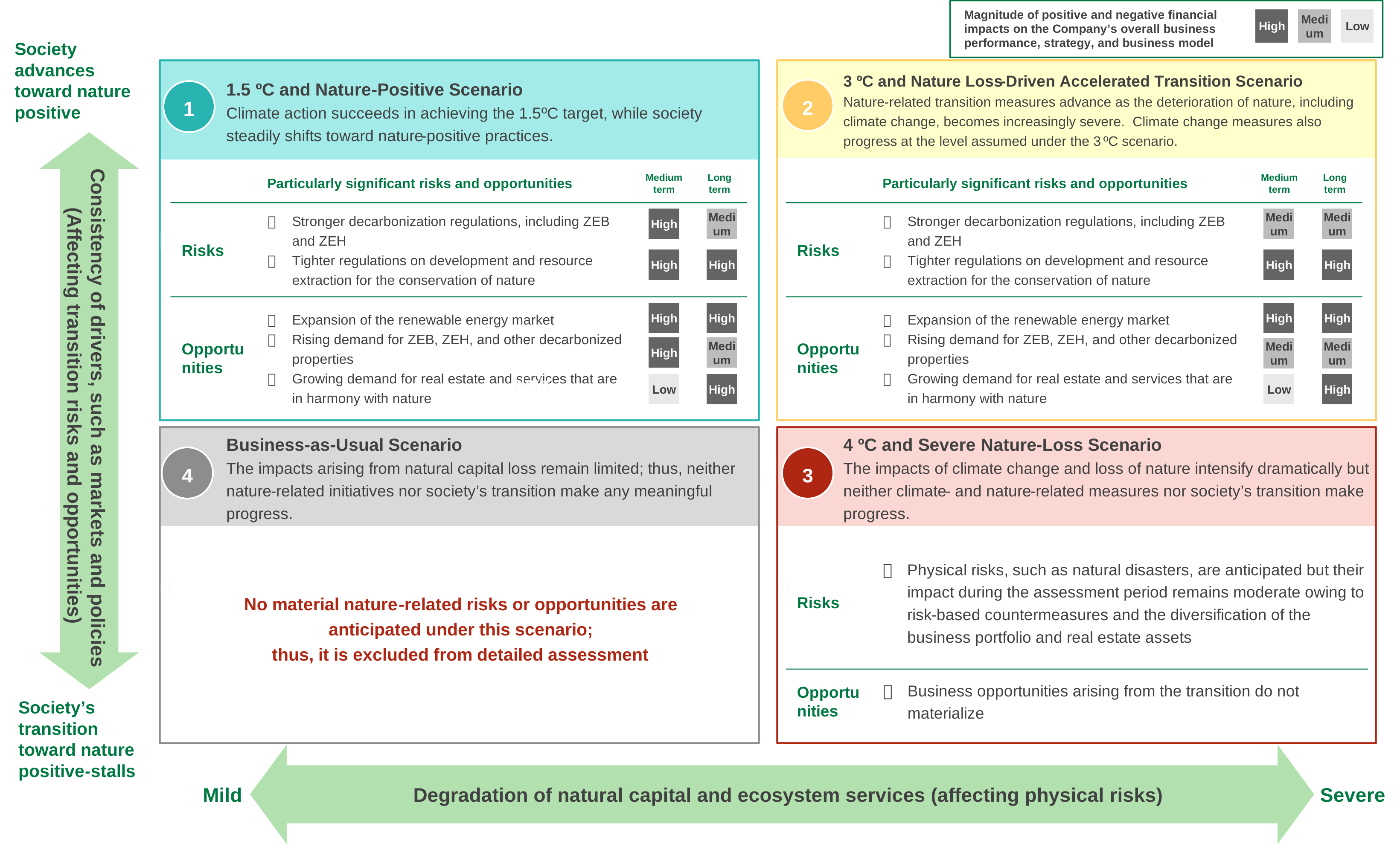
Both the transition toward a decarbonized society and increasing severity of climate change can affect the company’s future businesses; thus, scenario analysis was conducted using the following three scenarios, namely, the 1.5ºC scenario, which assumes the fastest transition toward a decarbonized society; the 4ºC scenario, under which the impacts of climate change become the most severe; and the 3ºC scenario, which represents an intermediate scenario combining the elements of both of the aforementioned scenarios.
This table can be scrolled horizontally
| Scenario | Overview | Reference Scenario (Transition Scenario) |
Reference Scenario (Physical Scenario) |
|---|---|---|---|
| 1.5ºC Scenario |
A scenario in which policies, technologies, markets, and other factors steadily advance toward a decarbonized society, in line with the international goals of the Paris Agreement, limiting the increase in the Earth’s average temperature by the end of the 21st century to 1.5ºC above the pre-industrial level. |
|
The following scenarios, which limit the rise in the Earth’s average temperature by the end of the 21st century to approximately 1.5ºC or below 2ºC, are used as references.
|
| 3ºC Scenario |
A scenario in which countries continue reducing emissions in line with their Nationally Determined Contributions (NDCs) but fall short of achieving the 1.5ºC target, resulting in an increase in the Earth’s average temperature by the end of the 21st century by approximately 2.5 to 3ºC above the pre-industrial level. |
|
As an intermediate scenario, the following scenarios assuming an increase of approximately 3°C in temperature are used as references.
|
| 4 ºC Scenario |
A scenario in which policies, technologies, markets, and other factors continue expanding along current trends, causing an increase in the Earth’s average temperature of more than 4ºC above the pre-industrial level by the end of the 21st century, thereby increasing the impacts of climate change, including natural disasters. | No transition toward decarbonization is assumed. | The following scenarios, which assume no climate policies are introduced and temperatures rise by more than 4ºC, are used as the references.
|
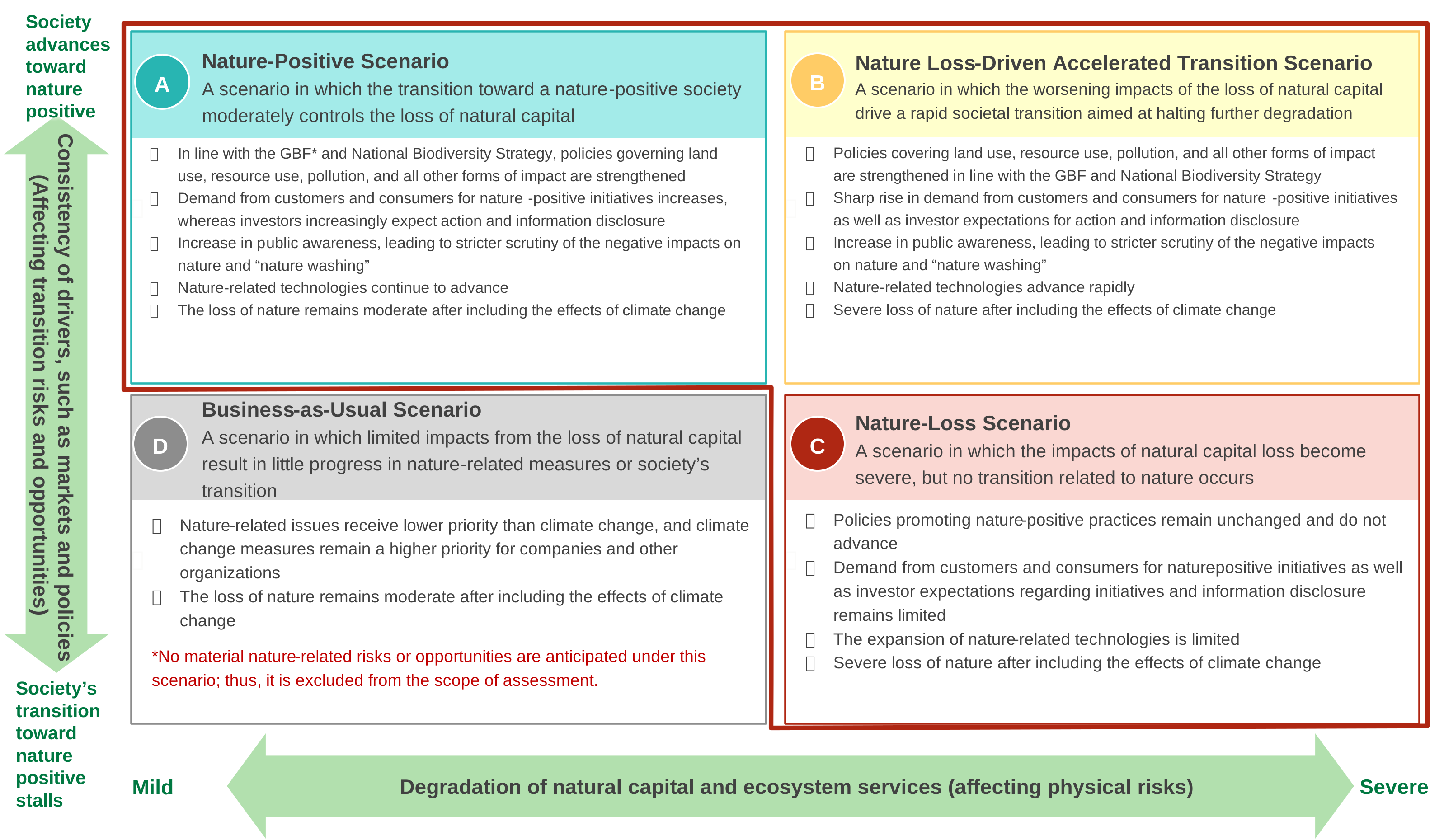
Considering nature-related risks and opportunities, the four scenarios presented in the guidance of TNFD scenario analysis were adapted to reflect the group’s businesses, and scenario analysis was conducted using the three scenarios shown within the boxed area. Scenario D was excluded from detailed assessment as both nature-related physical risks and transition risks are expected to be limited.
This table can be scrolled horizontally
| Scenario | Scenario 1 1.5°C + Nature Positive (A) |
Scenario 2 3°C + Accelerated Transition Driven by Nature Loss (B) |
Scenario 3 4°C + Severe Nature Loss (C) |
|---|---|---|---|
| Overview |
|
|
|
| Policies and Regulations |
|
|
|
| Markets and Economy Society and Technology |
|
|
|
| Climate and Nature Conditions |
|
|
|
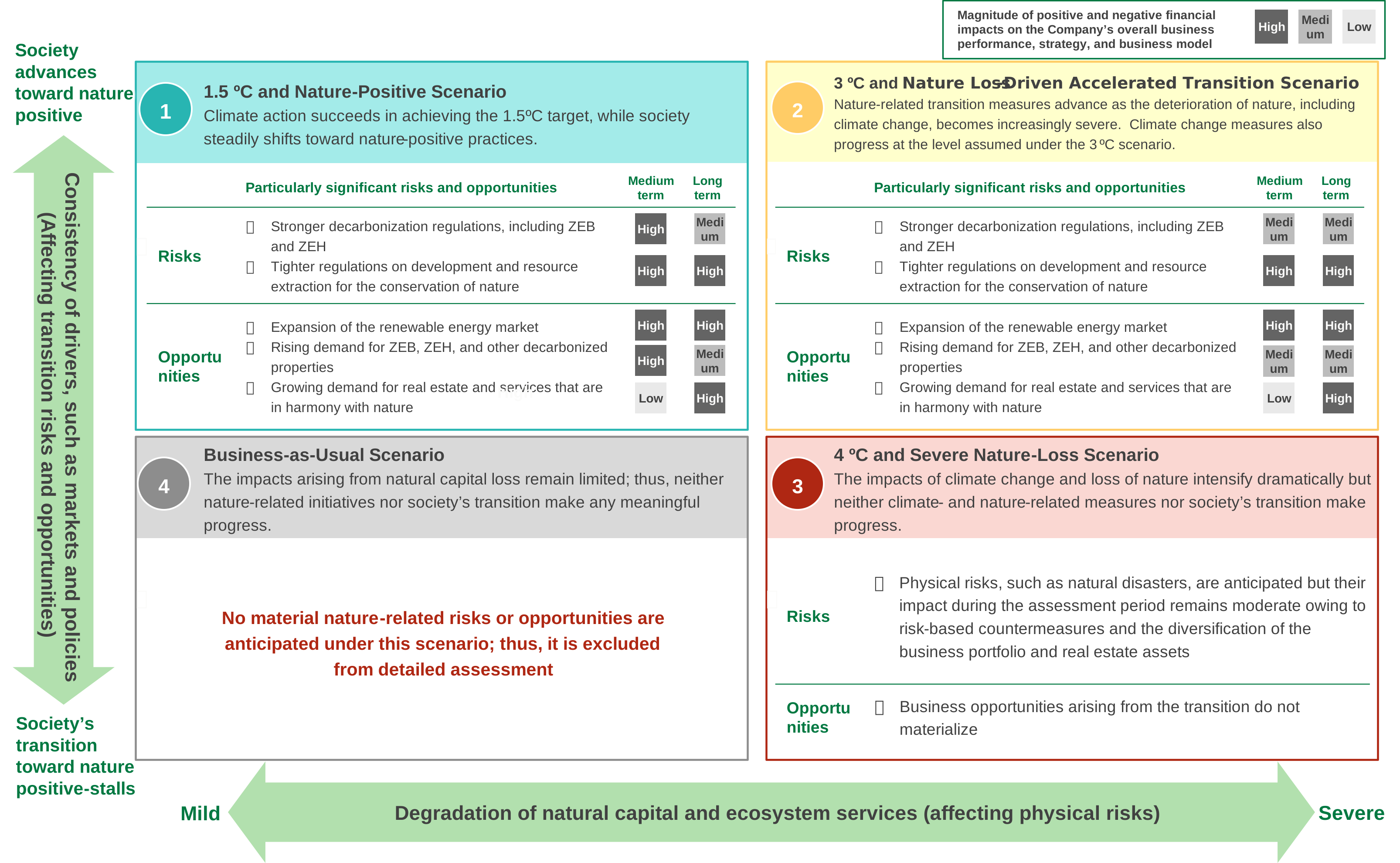
The following were identified, based on the scenario analysis, as the most important risks and opportunities for the group as a whole, together with their impacts on the group.
This table can be scrolled horizontally
| Classification | Risk components | Impact on the Business Model and Value Chain |
Areas Where the Risk Is Concentrated |
Climate | Nature | Time Horizon | Likelihood | Scenario | Financial Impact | ||
|---|---|---|---|---|---|---|---|---|---|---|---|
| Short term | Medium term | Long term | |||||||||
| Transition Risk |
|
|
|
● | Medium term onward | High | ① | ー | High | Medium | |
| ② | ー | Medium | Medium | ||||||||
| ③ | ー | ー | ー | ||||||||
|
|
|
● | Medium term onward | Medium | ① | ー | High | High | ||
| ② | ー | High | High | ||||||||
| ③ | ー | ー | ー | ||||||||
This table can be scrolled left and right
| Classification | Opportunity components | Impact on the Business Model and Value Chain |
Areas Where the Opportunity Is Concentrated |
Climate | Nature | Time Horizon | Likelihood | Scenario | Financial Impact* | ||
|---|---|---|---|---|---|---|---|---|---|---|---|
| Short term | Medium term | Long term | |||||||||
| Opportunities |
|
|
|
● | Short term onward | High | ① | Low | High | High | |
| ② | Low | High | High | ||||||||
| ③ | ー | ー | ー | ||||||||
|
|
|
● | Medium term onward | High | ① | ー | High | Medium | ||
| ② | ー | Medium | Medium | ||||||||
| ③ | ー | ー | ー | ||||||||
|
|
|
● | Medium term onward | Medium | ① | ー | Low | High | ||
| ② | ー | Low | High | ||||||||
| ③ | ー | ー | ー | ||||||||
This table can be scrolled left and right
| Risk / opportunity components | Response to the Risk or Opportunity |
|---|---|
|
|
|
|
|
|
|
|
In response to climate change risks and opportunities, we incorporate the below considerations in our business strategy.
This table can be scrolled horizontally
| Classification | Impact and response |
|---|---|
| Products and Services | To address climate change risks and opportunities, the group has long worked to improve the energy efficiency of buildings as a mitigation measure and strengthen BCP★ at operating facilities and for-sale housing as an adaptation measure. The long-term vision established in 2021 further promotes ZEB/ZEH. Tokyu Land Corp. achieved 100% in FY2024 with respect to its KPI of raising the adoption rate to 100% by FY2030, with the adoption rate defined as the percentage of for-sale condominiums and operating facilities, based on construction starts, that meet ZEB/ZEH-oriented or higher building performance standards. Group companies, including Tokyu Livable, Inc., are also advancing the standardization of ZEH. Tokyu Land Corp. and ReENE Energy Inc. also aim to expand and promote the renewable energy business “ReENE.” |
| Supply and Value Chains |
Upstream, the “Sustainable Procurement Policy” established in 2020 identified climate change as a major issue, and the group began examining ways to reduce carbon emissions from building construction processes in collaboration with general contractors. Downstream, the group promotes GX-ZEH for for-sale housing, ZEH for rental housing, and the introduction of renewable electricity. |
| Research and Development Investment | Tokyu Community Corp., constructed a technical training center that became the first office building in Tokyo to obtain “Nearly” ZEB certification and has also developed a service that proposes ways to achieve ZEB through repair plans. In addition to new buildings, Tokyu Land Corp. is verifying the ZEB conversion for existing office buildings, reductions in air-conditioning costs through rooftop sweet potato greening, and heat mitigation measures in outdoor urban spaces. It also actively conducts demonstrations of agrivoltaic solar sharing in its renewable energy business. |
| Facility Operations | Tokyu Fudosan Corp., declared its commitment to “RE100★ in 2019, aiming to use 100% renewable electricity by 2050 through the utilization of renewable electricity generated by its own businesses. In December 2022, it completed the transition to 100% renewable electricity at all its 244 facilities in Japan, and in April 2024, it became the first domestic operating company to receive the RE100 certification. The group’s companies are also working to ensure the use of renewable energy in their business locations, with Tokyu Livable, Inc. and Tokyu Housing Lease Corp., among others, working toward the use of 100% renewable electricity at all locations in Japan. |
We addresse the climate change risks and opportunities through financial planning as follows.
This table can be scrolled horizontally
| Classification | Impact and response |
|---|---|
| Indirect Costs | Tokyu Fudosan Corp. used the results of scenario analysis as a basis to simulate the maximum achievable reduction in CO₂ emissions at existing operating facilities through medium- and long-term energy-efficiency renovations and operational improvements. The simulation showed that to achieve CO₂ emission reductions at the SBT level, the company must begin purchasing renewable electricity promptly and progressively increase the amount of emissions reduced. Therefore, the company accelerated the introduction of renewable electricity at its operating facilities by using electricity generated through its own renewable energy business and achieved RE100 in FY2023. The group’s companies are also working to ensure the use of renewable energy at their business locations, including Tokyu Livable, Inc., which is working toward the use of 100% renewable electricity at all locations in Japan. |
| Capital allocation | Tokyu Fudosan Corp. entered the renewable energy business in 2014 in response to the government’s renewable energy promotion measures. Following the results of the scenario analysis conducted since FY2018, the company identified the expansion of the renewable energy business as a climate change-related opportunity and has invested actively in this endeavor. It develops and operates solar and wind power plants and has built one of the largest businesses of its kind in Japan. It has also standardized ZEB-level performance for newly constructed office buildings and commercial facilities and is converting existing facilities to ZEB through renovation. It is also actively introducing on-site renewable energy facilities and storage batteries. |
| Liabilities | Based on the scenario analysis, we issued 10 billion yen in green bonds in FY2019 to urge investors to participate in our environmental initiatives. In FY2021, we formulated the “WE ARE GREEN” Bond Policy, the first policy for long-term issuance of ESG bonds in Japan, and aim to increase the ESG bond ratio to ≥50% by the end of FY2025 and ≥70% by the end of FY2030. |
| Assets | To manage its business portfolio under the long-term vision, the group uses environmental impact as one of its evaluation criteria and is promoting the conversion of operating facilities to ZEB and active development of renewable energy power plants. |
This table can be scrolled horizontally
| Risk / opportunity components | Uncertainties Considered | Method Used to Account for Uncertainty |
|---|---|---|
|
|
|
|
|
|
|
|
|
|
|
|
This table can be scrolled horizontally
| Classification | Risk or Opportunity | Impact on the Business | Climate | Nature | Time Horizon | Likelihood | Scenario | Financial Impact |
Response Strategy | ||||
|---|---|---|---|---|---|---|---|---|---|---|---|---|---|
| Short term | Medium term | Long term | |||||||||||
| Transition | Risks | Policies and Regulations Market |
Tighter building energy-efficiency and ZEB standards / Introduction of carbon pricing / |
|
● | Medium term onward | High | ① | ー | High | Low |
|
|
| ② | ー | High | High | ||||||||||
| ③ | ー | ー | ー | ||||||||||
| Policies and Regulations |
Tighter regulations requiring higher greening ratios |
|
● | Medium term onward | High | ① | ー | Low | Medium |
|
|||
| ② | ー | Low | Medium | ||||||||||
| ③ | ー | ー | ー | ||||||||||
| Opportunities | Market Products and Services |
Increased demand for ZEB, certified, and renewable-energy properties |
|
● | Medium term onward | High | ① | ー | High | Low |
|
||
| ② | ー | Medium | High | ||||||||||
| ③ | ー | ー | ー | ||||||||||
| Growing demand for office buildings and commercial facilities that are in harmony with nature |
|
● | Medium term onward | Medium | ① | ー | Medium | Low |
|
||||
| ② | ー | Medium | High | ||||||||||
| ③ | ー | ー | ー | ||||||||||
| Capital Flows Financing |
Stronger policy support for the quantity and quality of green spaces during development |
|
● | Medium term onward | High | ① | ー | Low | Medium |
|
|||
| ② | ー | Low | Medium | ||||||||||
| ③ | ー | ー | ー | ||||||||||
| Reputation | Improved reputation through contributions to urban decarbonization and urban development in harmony with nature |
|
● | ● | Medium term onward | High | ① | ー | Medium | Medium |
|
||
| ② | ー | Medium | Medium | ||||||||||
| ③ | ー | ー | ー | ||||||||||
| Physical | Risks | Acute | Lower demand for buildings owing to delays in addressing disaster risks |
|
● | ● | Medium term onward | High | ① | ー | Low | Low |
|
| ② | ー | Low | Low | ||||||||||
| ③ | ー | Low | Medium | ||||||||||
| Opportunities | Market Products and Services |
Increased demand for buildings specifically selected by considering disaster risks, and properties with strong BCP and disaster-prevention performance |
|
● | ● | Medium term onward | High | ① | ー | Low | Low |
|
|
| ② | ー | Low | Low | ||||||||||
| ③ | ー | Low | Medium | ||||||||||
This table can be scrolled horizontally
| Classification | Risk or Opportunity | Impact on the Business | Climate | Nature | Time Horizon | Likelihood | Scenario | Financial Impact |
Response Strategy | ||||
|---|---|---|---|---|---|---|---|---|---|---|---|---|---|
| Short term | Medium term | Long term | |||||||||||
| Transition | Risks | Policies and Regulations Market |
Tighter energy-efficiency and ZEH regulations / Introduction of carbon pricing / |
|
● | Medium term onward | High | ① | ー | Medium | High |
|
|
| ② | ー | Low | Medium | ||||||||||
| ③ | ー | ー | ー | ||||||||||
| Policies and Regulations |
Tighter regulations on land modification and resource extraction for new developments Lower demand for new construction owing to increased renovation demand for nature conservation |
|
● | Medium term onward | Medium | ① | ー | Medium | High |
|
|||
| ② | ー | Medium | High | ||||||||||
| ③ | ー | ー | ー | ||||||||||
| Market | Higher prices caused by tight supply and demand for certified timber |
|
● | Medium term onward | High | ① | ー | Low | Medium |
|
|||
| ② | ー | Low | Medium | ||||||||||
| ③ | ー | ー | ー | ||||||||||
| Opportunities | Market Products and Services |
Growing demand for ZEH, energy-generating, energy-efficient, and renewable energy properties / Provision of energy management services |
|
● | Medium term onward | High | ① | ー | High | High |
|
||
| ② | ー | ー | High | ||||||||||
| ③ | ー | ー | ー | ||||||||||
| Growing demand for resource conservation to protect nature |
|
● | Medium term onward | Medium | ① | ー | High | High |
|
||||
| ② | ー | High | High | ||||||||||
| ③ | ー | ー | ー | ||||||||||
| Stronger competitiveness resulting from the growing demand for housing that is in harmony with nature and greening regulations |
|
● | Medium term onward | Medium | ① | ー | Medium | High |
|
||||
| ② | ー | Medium | High | ||||||||||
| ③ | ー | ー | ー | ||||||||||
| Physical | Risks | Acute | Reduced competitiveness of housing owing to delays in responding to disaster risks |
|
● | ● | Medium term onward | High | ① | ー | Medium | High |
|
| ② | ー | Medium | High | ||||||||||
| ③ | ー | Medium | High | ||||||||||
| Chronic | Reduced competitiveness of housing owing to delays in responding to rising temperatures |
|
● | ● | Medium term onward | High | ① | ー | Low | Medium |
|
||
| ② | ー | Low | High | ||||||||||
| ③ | ー | Medium | High | ||||||||||
| Opportunities | Market Products and Services |
Increased demand for homes specifically selected by considering disaster risks and buildings with strong LCPs★ and disaster-prevention performance |
|
● | ● | Medium term onward | High | ① | ー | Medium | High |
|
|
| ② | ー | Medium | High | ||||||||||
| ③ | ー | Medium | High | ||||||||||
| Growing demand for high-performance housing designed to address rising temperatures |
|
● | ● | Medium term onward | High | ① | ー | Low | Medium |
|
|||
| ② | ー | Medium | High | ||||||||||
| ③ | ー | Medium | High | ||||||||||
This table can be scrolled horizontally
| Classification | Risk or Opportunity | Impact on the Business | Climate | Nature | Time Horizon | Likelihood | Scenario | Financial Impact |
Response Strategy | ||||
|---|---|---|---|---|---|---|---|---|---|---|---|---|---|
| Short term | Medium term | Long term | |||||||||||
| Transition | Risks | Policies and Regulations |
Regulatory revisions and tighter requirements / |
|
● | Short term onward | High | ① | Low | Medium | High |
|
|
| ② | Low | Low | Medium | ||||||||||
| ③ | ー | ー | ー | ||||||||||
| Stronger land development regulations for new projects, expansion of protected areas, and stricter environmental impact assessments and permitting requirements More advanced consensus-building with local communities |
|
● | Medium term onward | Medium | ① | ー | High | High | |||||
| ② | ー | High | High | ||||||||||
| ③ | ー | ー | ー | ||||||||||
| Market | Shortages of maintenance personnel, rising labor costs, and a lack of suitable sites resulting from the increase in renewable energy facilities |
|
● | Short term onward | High | ① | Low | Low | Medium |
|
|||
| ② | Low | Low | Medium | ||||||||||
| ③ | ー | ー | ー | ||||||||||
| Opportunities | Market Products and Services Reputation |
Expansion of the renewable energy market / Lower equipment and operating costs and improved power-generation efficiency |
|
● | Short term onward | High | ① | High | High | High |
|
||
| ② | High | High | High | ||||||||||
| ③ | ー | ー | ー | ||||||||||
| Physical | Risks | Chronic | Higher temperatures affecting solar panels / Restrictions on outdoor work caused by heatwaves |
|
● | ● | Short term onward | High | ① | Low | Low | Low |
|
| ② | Low | Low | Medium | ||||||||||
| ③ | Low | Low | Medium | ||||||||||
This table can be scrolled horizontally
| Classification | Risk or Opportunity | Impact on the Business | Climate | Nature | Time Horizon | Likelihood | Scenario | Financial Impact |
Response Strategy | ||||
|---|---|---|---|---|---|---|---|---|---|---|---|---|---|
| Short term | Medium term | Long term | |||||||||||
| Transition | Risks | Policies and Regulations Technology |
Tighter energy-efficiency standards / Greater need to develop buildings with superior energy efficiency and insulation performance |
|
● | Medium term onward | High | ① | ー | Medium | High |
|
|
| ② | ー | Low | Medium | ||||||||||
| ③ | ー | ー | ー | ||||||||||
| Policies and Regulations |
Stronger land-development regulations for new projects and the expansion of designated protected areas |
|
● | Medium term onward | Medium | ① | ー | Medium | High |
|
|||
| ② | ー | Medium | High | ||||||||||
| ③ | ー | ー | ー | ||||||||||
| Opportunities | Market Products and Services |
Growing demand for logistics facilities with superior GHG emission-reduction performance, including renewable energy adoption and improved logistics efficiency through DX |
|
● | Medium term onward | High | ① | ー | Medium | Medium |
|
||
| ② | ー | Low | Low | ||||||||||
| ③ | ー | ー | ー | ||||||||||
| Physical | Risks | Acute Market Products and Services |
Declining competitiveness of logistics facilities with inadequate BCP measures as weather-related disasters become more severe |
|
● | ● | Medium term onward | High | ① | ー | Low | Low |
|
| ② | ー | Low | Low | ||||||||||
| ③ | ー | Low | Medium | ||||||||||
| Opportunities | Market Products and Services |
Growing demand for logistics facilities with comprehensive BCP measures as weather-related disasters become more severe |
|
● | ● | Medium term onward | High | ① | ー | Low | Low |
|
|
| ② | ー | Low | Low | ||||||||||
| ③ | ー | Low | Medium | ||||||||||
| Growing demand for refrigerated and frozen warehouse businesses owing to rising temperatures / Growing demand for logistics facilities and warehouses driven by the expansion of e-commerce |
|
● | Short term onward | High | ① | Low | Low | Medium |
|
||||
| ② | Low | Low | Medium | ||||||||||
| ③ | Low | Medium | Medium | ||||||||||
This table can be scrolled horizontally
| Classification | Risk or Opportunity | Impact on the Business | Climate | Nature | Time Horizon | Likelihood | Scenario | Financial Impact |
Response Strategy | ||||
|---|---|---|---|---|---|---|---|---|---|---|---|---|---|
| Short term | Medium term | Long term | |||||||||||
| Transition | Risks | Policies and Regulations |
Tighter building energy-efficiency standards and ZEB/ZEH standards / |
|
● | Medium term onward | High | ① | ー | Low | High |
|
|
| ② | ー | Low | High | ||||||||||
| ③ | ー | ー | ー | ||||||||||
| Stronger regulations on waste and resource circulation |
|
● | ● | Medium term onward | High | ① | ー | Low | Medium |
|
|||
| ② | ー | Low | Medium | ||||||||||
| ③ | ー | ー | ー | ||||||||||
| Opportunities | Market Products and Services Reputation |
Growing demand for facilities and services that contribute to decarbonization and nature-positive practices |
|
● | ● | Medium term onward | High | ① | ー | Low | Medium |
|
|
| ② | ー | Low | Medium | ||||||||||
| ③ | ー | ー | ー | ||||||||||
| Physical | Risks | Chronic | Impact on ski resorts resulting from fewer snowfall days and lower snowfall volumes |
|
● | ● | Long term onward | High | ① | ー | ー | Low |
|
| ② | ー | ー | Medium | ||||||||||
| ③ | ー | ー | High | ||||||||||
| Loss of seasonal scenery and naturally attractive tourism environments caused by rising air and sea temperatures |
|
● | ● | Medium term onward | High | ① | ー | ー | Low |
|
|||
| ② | ー | Low | Medium | ||||||||||
| ③ | ー | Low | Medium | ||||||||||
| Opportunities | Market Products and Services |
Strengthening the competitiveness of ski resorts equipped with snowmaking systems |
|
● | ● | Short term onward | High | ① | Low | Low | Low |
|
|
| ② | Low | Low | Low | ||||||||||
| ③ | Low | Low | Medium | ||||||||||
The “Strategy” of the TNFD recommends characterizing the nature-related dependencies, impacts, risks, and opportunities; their impacts on the company's business, strategy, and financial plan; the resilience of the strategy based on relevant scenarios; and priority areas in business activities and value chains.
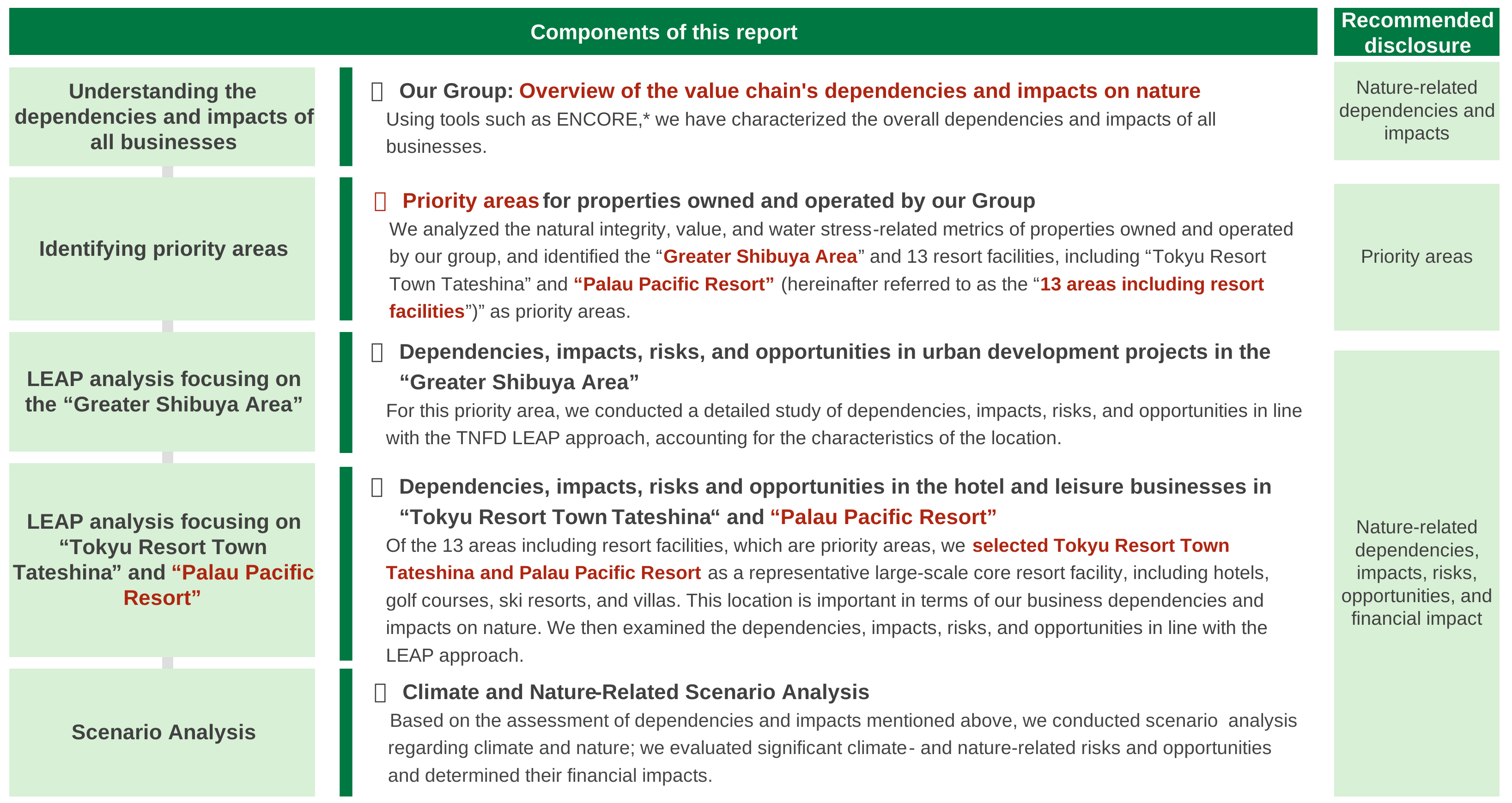
This report examines the following aspects of the Group's business operations.
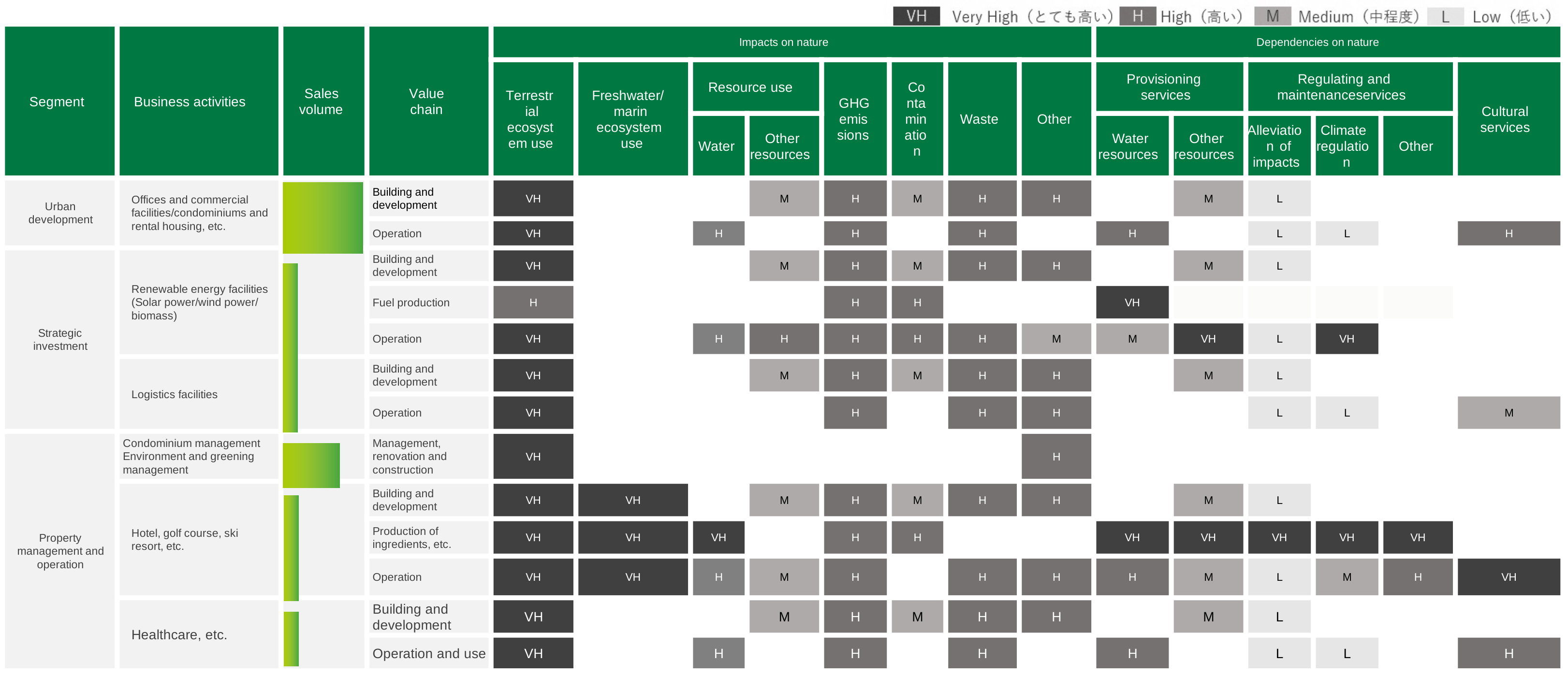
Using TNFD classification as a reference, we examined a summary of the nature of dependencies and impacts according to business and value chain steps and their qualitative importance. Additionally, using the sector-specific ratings in the tools ENCORE, which was developed by the UN Environment Programme (UNEP), and SBTs for Nature★ as a reference*1, we sorted out the importance of dependencies and impacts according to four steps between Very High and Low. The results of that analysis are as follows.*2
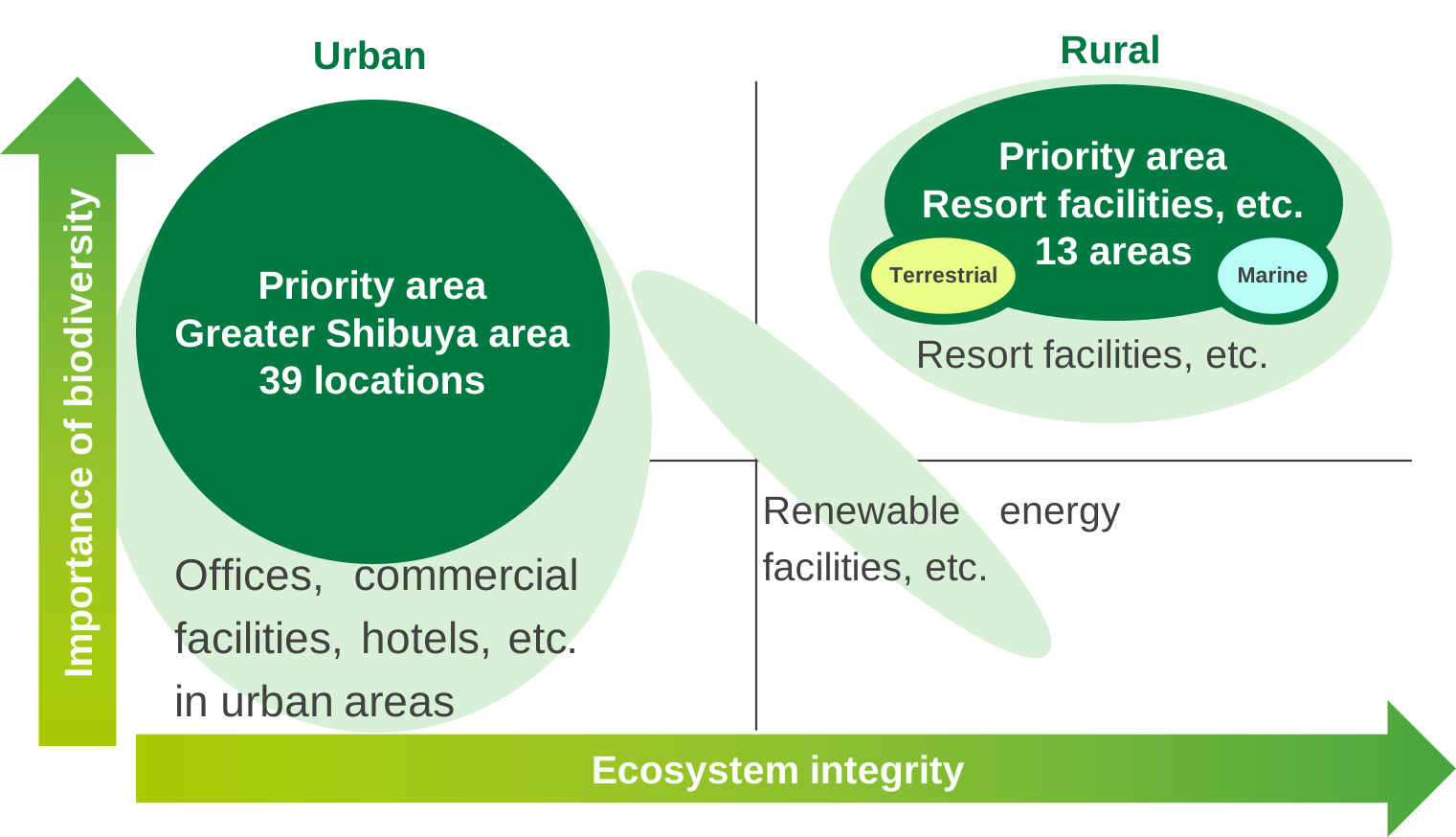
We believe that the importance of nature from the development to operation stages is particularly high within the value chain. Accordingly, we considered priority areas based on the 267 major locations owned and operated by our company (offices and commercial facilities, hotels, leisure facilities, renewable energy facilities, etc.; March 2024). We considered priority areas based on their ecological sensitivity (see the metrics in the table below), as presented by the TNFD, as well as their importance in terms of our dependencies, impacts, and risks and opportunities.

This table can be scrolled horizontally
| TNFD assessment perspective | Referenced metrics | Overview of results |
|---|---|---|
| Ecosystem integrity★ | Assessed according to the Biodiversity Intactness Index★ | Locations of offices, commercial facilities, and urban hotels in urban areas have low ecosystem integrity, whereas locations of resort hotels, leisure facilities, and renewable energy facilities in rural areas have medium to high ecosystem integrity. |
| Importance of biodiversity | Assessed based on the following metrics
|
114 of our total locations (as of March 2024) are adjacent to protected areas. There are many areas with high conservation priority, both in urban and rural areas. Because we have many locations, we scored each based on the metrics and consider their relative priority within our company. (Next page) |
| Water Stress | Assessed based on baseline water stress★ | No properties were located in areas with very high/high water stress. |
The assessment scores for “Biodiversity importance” and “Ecosystem integrity” are represented by the figure on the right.
Considering these results and the Group's overall nature-related dependencies and impacts, we selected priority areas in terms of nature-related risks and opportunities for the Group, as seen in the below table.
We conducted a detailed examination of nature-related dependencies, impacts, risks, and opportunities for the “Greater Shibuya Area,” an urban development business; “Tokyu Resort Town Tateshina” regarding terrestrial aspects and which represents the hotel and leisure businesses; and “Palau Pacific Resort” regarding marine aspects, in line with the LEAP approach provided by TNFD. In particular, we regard PPR as representing both the origin and a model for our real estate development and operations in coexistence with nature.
This table can be scrolled horizontally
| Priority area (1): Greater Shibuya area (number of properties: 39) |
|
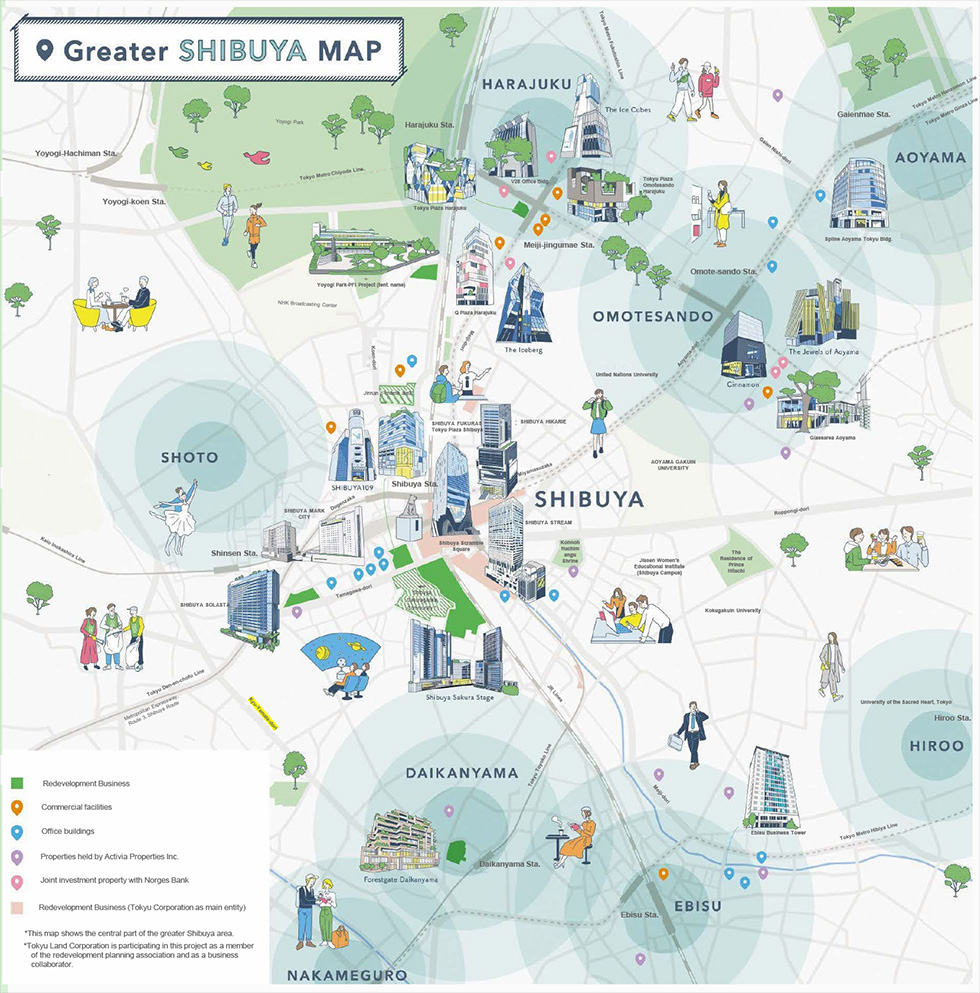
Greater Shibuya area This area is within a 2.5-km radius of Shibuya Station, and our Group develops and operates various commercial facilities and office buildings, as well as redevelopment businesses to increase mobility around the station. |
|---|---|---|
| Priority area (2): 13 areas including resort facilities |
|
Tokyu Resort Town Tateshina A large resort complex located in the northeast of Chino City, Nagano Prefecture, almost in the center of the Tateshina Plateau. The complex includes Tokyu Harvest Club Tateshina, approximately 250 hotel rooms, a golf course, ski resort, approximately 2,300 villa plots, hot spring facilities, restaurants, shops, and community coexistence facilities. |
| Palau Pacific Resort This is a comprehensive resort hotel developed in the Republic of Palau with an emphasis on harmony with environmental conservation. The high-end resort features 172 guest rooms, the largest number in Palau, along with a picturesque private beach of white sand. |
For the priority areas of the Greater Shibuya Area, Tokyu Resort Town Tateshina, and Palau Pacific Resort, we performed a more detailed examination of dependencies and impacts on nature and accompanying nature-related risks and opportunities based on the LEAP Approach presented by the TNFD. More specifically, we examined the below information.
This table can be scrolled horizontally
| Locate Discovery of the interface with nature |
|
|---|---|
| Evaluate Evaluation of dependencies and impacts |
|
| Assess Assessment of risks and opportunities |
|
| Prepare Preparation for response and reporting |
|
Greater Shibuya Area (Shibuya Ward, Tokyo)
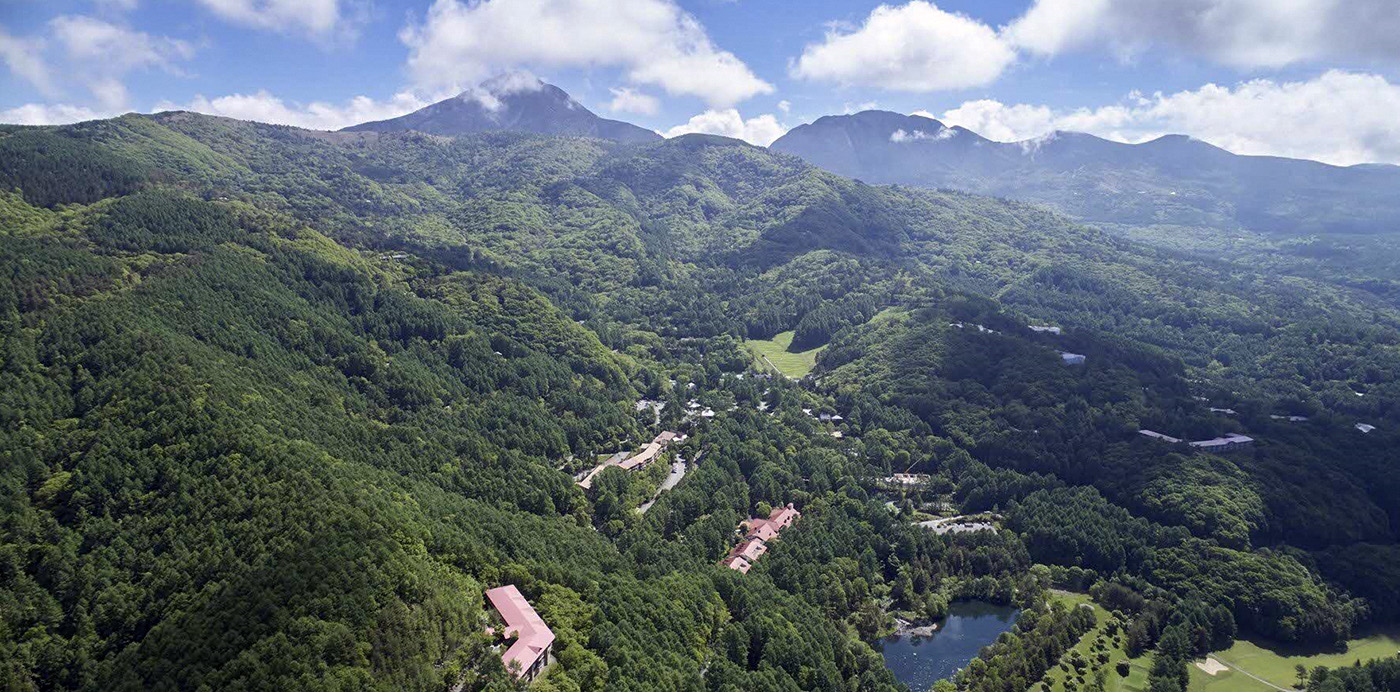
Tokyu Resort Town Tateshina(Chino City, Nagano)
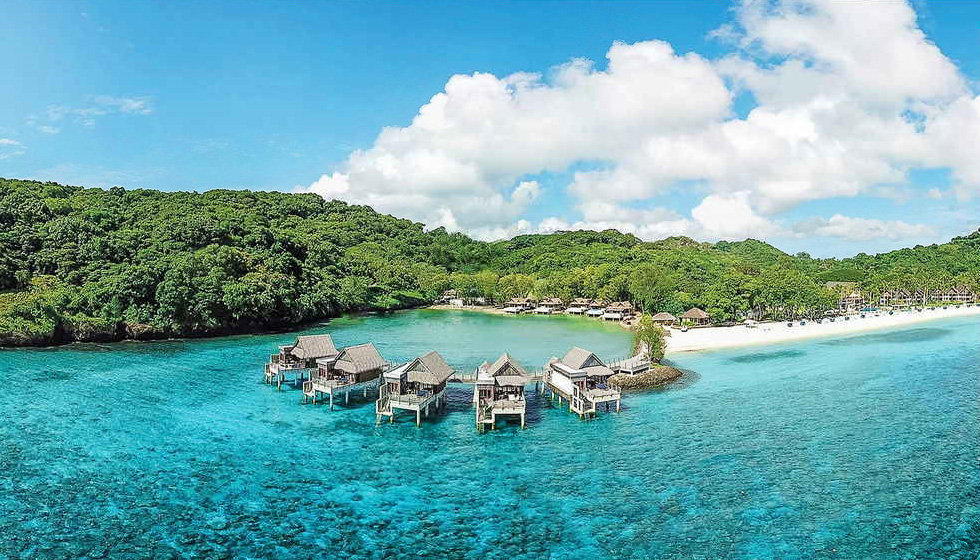
Palau Pacific Resort (Republic of Palau)
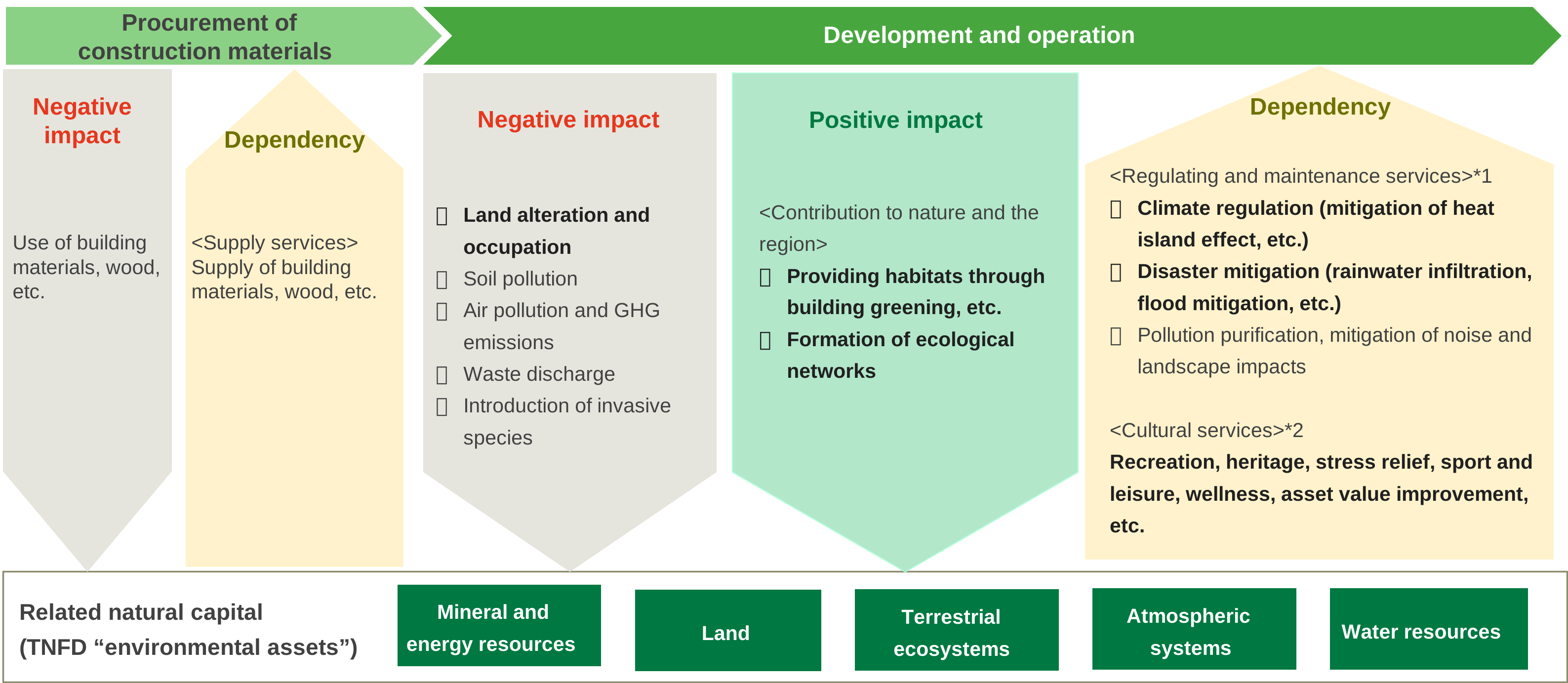
We performed a detailed examination of the natural state of the Greater Shibuya Area (described below) to identify the major dependencies and impacts throughout the value chain in urban development businesses, as shown in the figure below.
Nature may experience both negative and positive impacts, and we also depend on it in various ways.
Dependencies and impacts of nature in the value chain
*Dependencies and impacts in bold are considered particularly important
The greater Shibuya area is an ecosystem type centered on “the city and industries.” It is not a region with high ecosystem integrity.
At the same time, since the 1980s, the green space area ratio of the entire commercial district in the greater Shibuya area has continued to decrease (as calculated according to aerial photographs). It is likely that the region’s ecosystem integrity is trending further downwards.
Green space area ratio of entire commercial district in greater Shibuya area
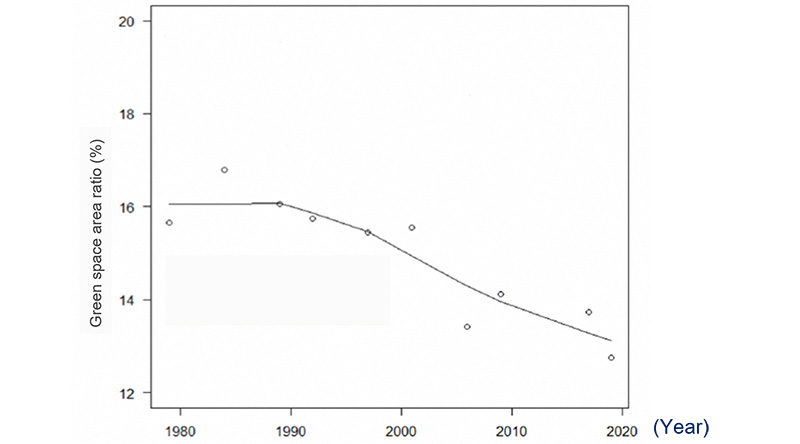 Analysis by Think Nature Inc.
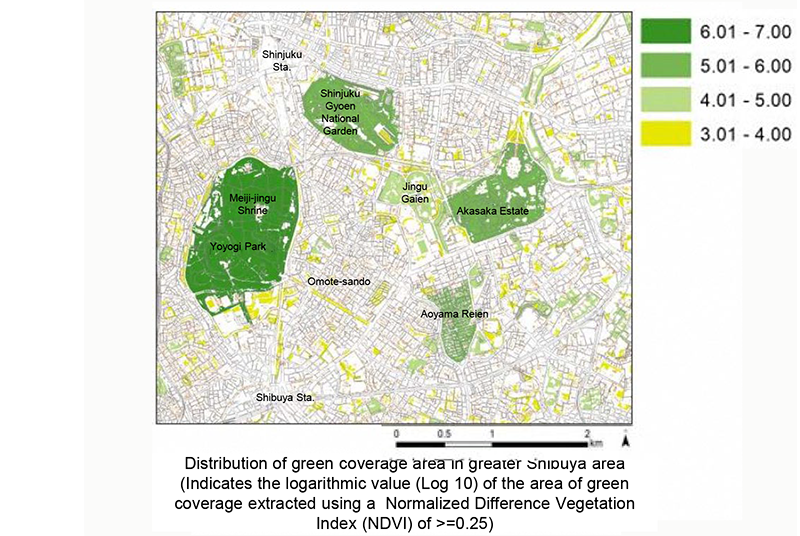
Between FY2016 and FY2018, three parties, TOKYO CITY UNIVERSITY and Group members ISHIKATSU EXTERIOR INC. and Tokyu Fudosan R&D Center Inc., performed a collaborative investigation and research2) on the ecosystem in the greater Shibuya area. The greater Shibuya area is surrounded by large-scale green spaces that include Meiji-jingu Shrine/Yoyogi Park, Shinjuku Gyoen National Garden and the Akasaka Estate. Meanwhile, the downtown area that has large-scale green spaces surrounding it is widely dotted with smaller pockets of green. This and other characteristics make it an area that coexists with nature, a rarity for a city center.
It is believed that new and endangered species as well as plant and animal species not commonly found in urban areas inhabit those large-scale green spaces. The greater Shibuya area is therefore believed to be a key region in forming an ecological network that links together such large-scale green spaces.
Ecological network
An organic network of regions centered on those that host superior natural conditions. An ecological network yields the following effects: By making it possible to conduct foraging, nesting, breeding and other inhabiting stages within the region, this network contributes to preventing the extinction of populations and drops in genetic diversity. The establishment of relationships among various species also links to a recovery in the diversity of species in the region as a whole.
As part of the collaborative research3) conducted by TOKYO CITY UNIVERSITY, ISHIKATSU EXTERIOR INC. and Tokyu Fudosan R&D Center Inc., an investigation of butterfly species was conducted in the greater Shibuya area that targeted three biodiversity-considerate properties with rooftop gardens placed and their peripheral area. As a result, the presence of butterfly species was verified in the rooftop green spaces of each of those properties. Of particular note is how it became clear that building greening by the Group may be functioning as part of an ecosystem network connecting Meiji-jingu Shrine to Harajuku and Omote-sando to exert a positive impact on peripheral ecosystems through providing habitats.
Areas where the presence of butterfly species has been verified
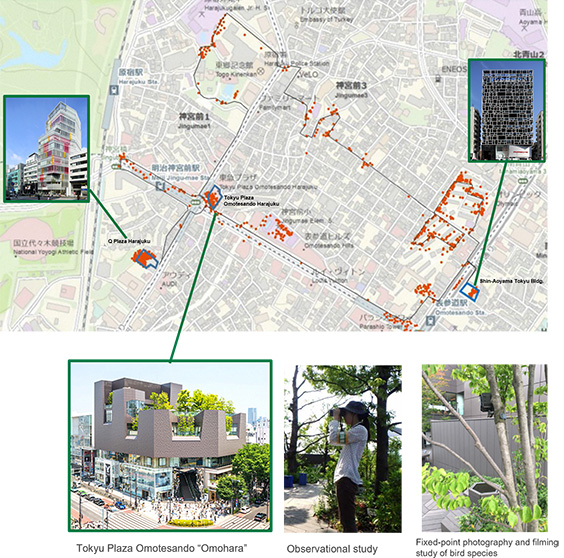
Method of investigation
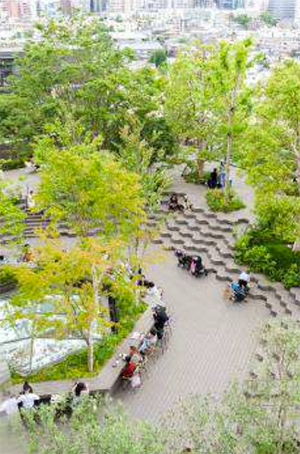
At “Tokyu Plaza Omotesando “Omokado”,” which is located in the greater Shibuya area, monitoring studies of bird and insect studies at the “Omohara Forest” rooftop garden have been conducted yearly since FY2012 (except for certain periods such as the COVID-19 pandemic) to assess changes in the inhabiting and flying situation of living creatures there4).
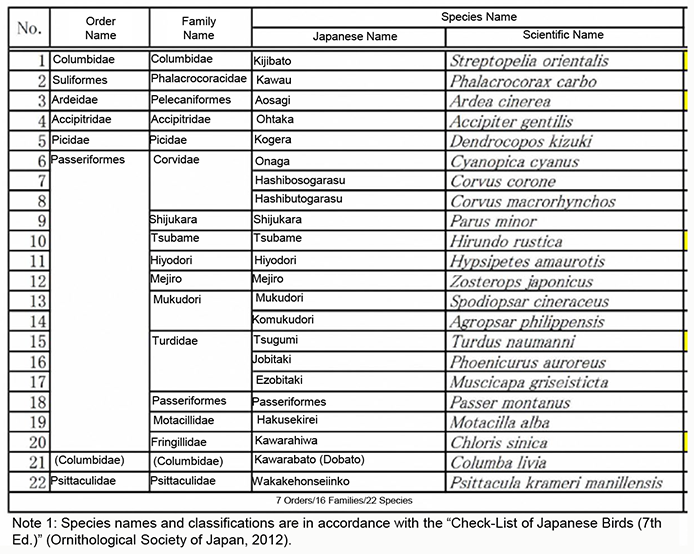
Regarding bird species, between FY2012 and FY2019, the presence of 10 to 16 species was verified every year, or 22 species cumulatively.
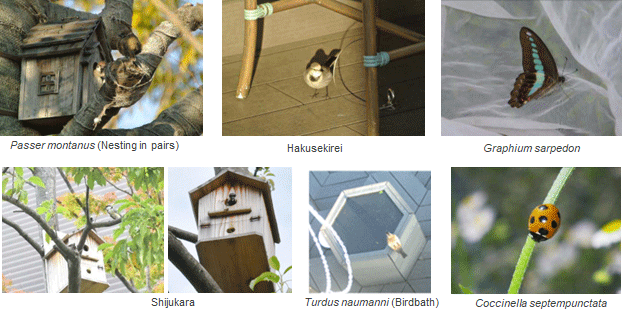
For example, Parus minor, pairs of Passer montanus and the like were verified to nest in next boxes, and various species of bird such as Turdus naumanni were verified to drink in birdbaths, feed/forage through planting, rest, and so forth. This made it clear that a number of bird species use “Omohara Forest” as a habitat on a constant basis.
Regarding insect species, between FY2012 and FY2019, the presence of 40 to 64 species was verified every year, or 151 species cumulatively.
In particular, the presence of 9 species that include Papilio xuthus, which has superior mobility; Hyalessa maculaticollis, whose source of food lies inside rooftop green spaces; and Graphium sarpedon, was continuously verified over that 8-year period.
Based on monitoring results as well, it is inferred that building greening efforts, particularly those in “Omohara Forest,” are exerting a positive impact on the ecosystem through the provision of habitats for living creatures in the greater Shibuya area.
The Company intends to keep on assessing the condition of nature by continuing monitoring going forward.
List of bird species over time and observation photographs (verification survey)
Among the impacts on nature with a high degree of importance, the impacts on the ecosystem based on land occupation and building greening of Group properties were quantitatively analyzed with the cooperation of Think Nature Inc.
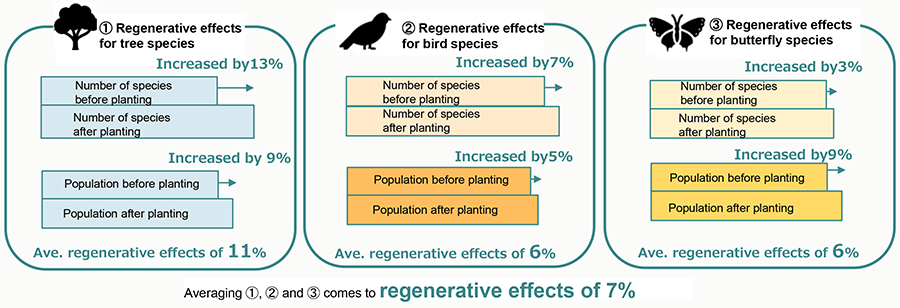
Based on the relationship between planted tree species and the birds/butterflies that use them, the percentage by which living creatures that inhabit the inside of a 1-km grid at the construction site increased or decreased before and after building was calculated for each number of species and populations across three classification groups, with the average of all six percentages used in results.
The below diagram indicates the approach behind Think Nature Inc.’s analysis methods.
Source: Think Nature Inc.
Since the 1980s and particularly from 1990 up through the 2000s, the green space area ratio had been trending downwards before and after building. However, for the Group’s 39 properties overall, the ratio has been trending above the average for the entire commercial district. Furthermore, since 2010, which represents a global turning point that included the holding of the 10th meeting of the Conference of the Parties to the Convention on Biological Diversity (COP10), biodiversity loss was reversed to put nature on a path to recovery (nature positive).
Regarding biodiversity regenerative effects, said effects before and after building were positive at 15 properties out of all 39. In particular, biodiversity regenerative effects at properties completed in FY2012 and beyond are high. We believe these are contributing to the recovery of biodiversity in the greater Shibuya area as a whole.
In the Group’s forte of planning communities that coexist with local communities, particularly those focused on target facilities under our Urban Development Business, we believe that engaging in development and operation that achieve a harmony between the securing of the quality and quantity of green space and the comfort of community visitors and facility users have linked to the high biodiversity regenerative effects shown in recent years.
The results of analysis performed by Think Nature Inc. on the species capture rate through planting at all 39 properties (the percentage of species inhabiting the entire greater Shibuya area that can be called to green spaces at Group properties) showed that planting efforts by those properties were capable of calling approx. 60% of bird species and approx. 90% of butterfly species. In particular, properties where we conduct planting based on native trees indicated a high capture rate, The quality of green there is also contributing to higher biodiversity regenerative effects.
For example, at “Shibuya Sakura Stage,” the planting of numerous tree species in large number, including species native to Tokyo, make it possible to call a large number of bird and butterfly species. This has led to a high species capture rate and high regenerative effects (7.2%).
As it is now clear that greening that includes the likes of the planting of native species, particularly that conducted at properties built in recent years, contributes to the regeneration of biodiversity, we believe that it is crucial for us to continue tackling greening that is conscious of the quality of green space as we move forward.
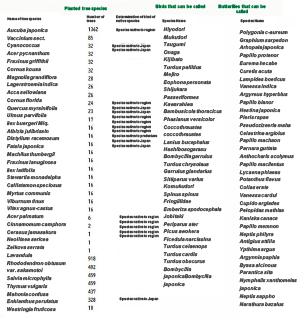
List of species analyzed by Think Nature Inc.
Shibuya Sakura Stage (Completed in Nov. 2023)
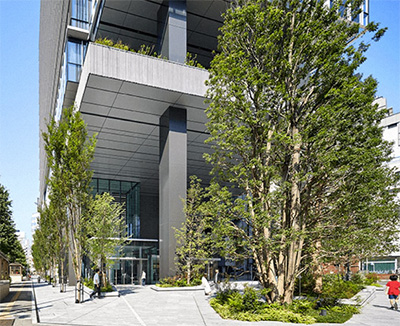
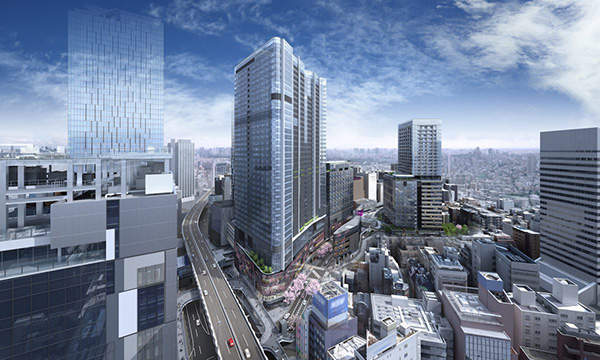
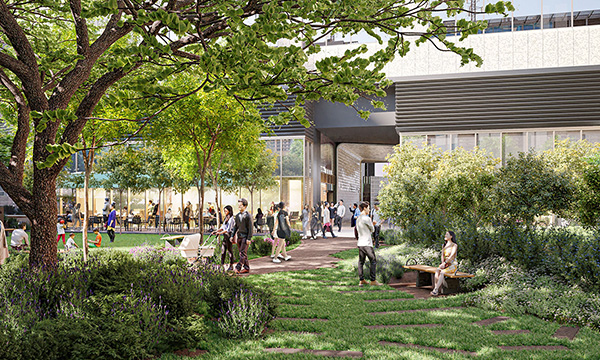
At Sakuragaoka located adjacent to Shibuya Station, we are pushing forward with the development of “Shibuya Sakura Stage,” a large-scale complex to serve as a new landmark for Shibuya.
At this property, we have established “HAGUKUMI STAGE” as a richly-green relaxation sport to promote three-dimensional greening that utilizes the ground, roof, wall surfaces and other elements and also contributes to heat island countermeasures. In addition, we are also tackling the reduction of our environmental footprint through means such as using solar power generation and other forms of renewable energy and introducing next-generation technology.
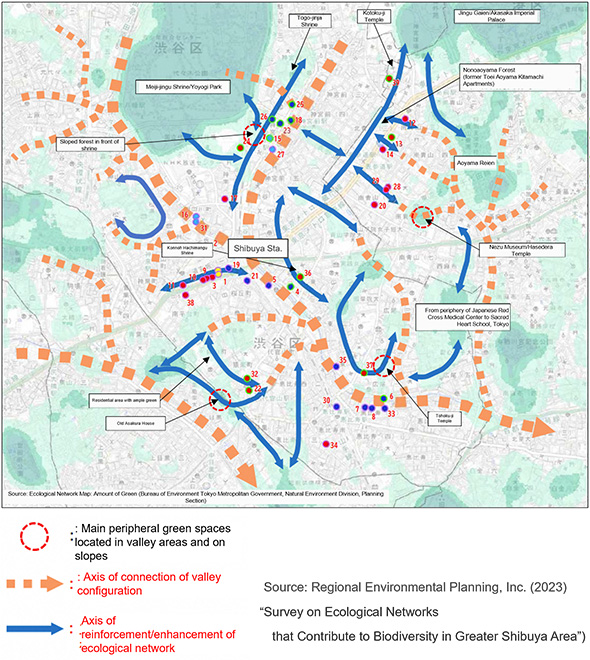
With the help of Regional Environmental Planning, Inc., an environmental consulting company that assists with biodiversity initiatives, we analyzed the current situation of the formation of an ecological network in the greater Shibuya area and the direction of that formation.
Based on analysis of the current situation surrounding topography and green space, it was verified that the topography of the greater Shibuya area has the lowlands of the valleys of the Shibuya River and Meguro River intertwining with the Musashino Plateau, and that much green space remains on slopes facing the valley formation and valley areas.
Additionally, the Company’s properties are located at the red circles on the map to the right, which also constitute locations where fellow properties of ours are in proximity to each other or are concentrated.
We have found that focusing on the following three areas will likely prove beneficial for the purpose of further enhancing our future ecological network,
We plan to give consideration to the maintenance of green space according to the characteristics of the site, and will continue to conduct biological monitoring.
Connection of valley configuration in greater Shibuya area and direction of ecological network formation
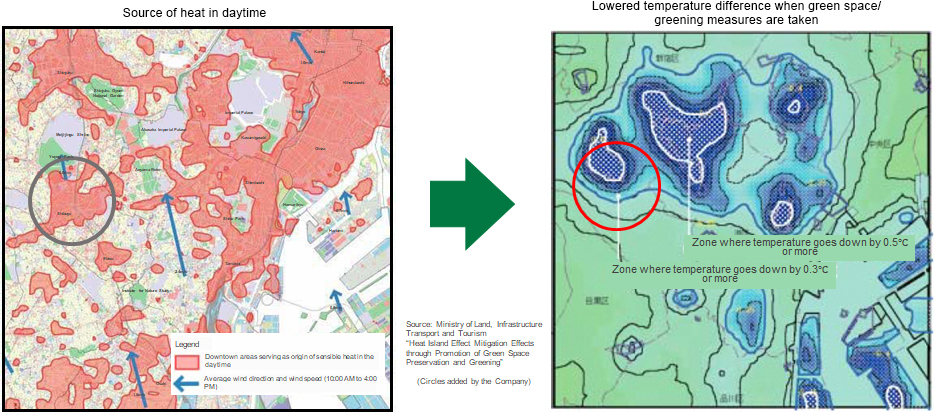
In the National Biodiversity Strategy and Machizukuri (Urban Development) GX Strategy by the Japanese government and the Regional Biodiversity Strategy by the Tokyo Metropolitan Government, functions such as the mitigation of the heat island effect through nature and the reduction of flood damage are emphasized as key ecosystem services in cities. From the standpoint of dependencies, these ecosystem services for disaster mitigation and climate regulation are believed to be crucial. According to the Ministry of Land, Infrastructure Transport and Tourism, while the area surrounding the greater Shibuya area (the area circled on the map) is an origin of heat, it is believed to be a region that can be expected to drop in temperature should green space preservation and greening measures be comprehensively taken.
Additionally, under Shibuya City’s “Green Development Policy,” it is established that forming connections with large-scale green areas through building greening and other means contributes to the creation of cool spots that serve to mitigate the heat island effect in cities. This is believed to be important from the aspect of exerting a positive aspect on such regulation services as well as the aspect of dependencies.
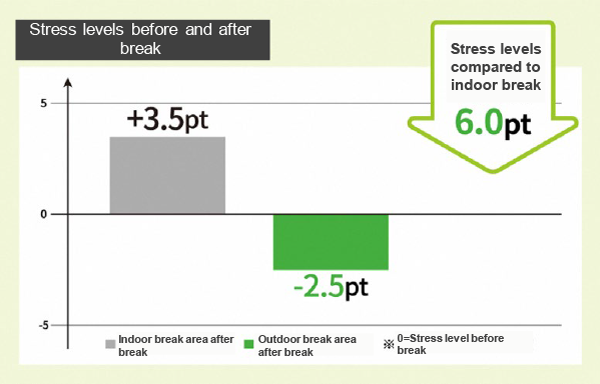
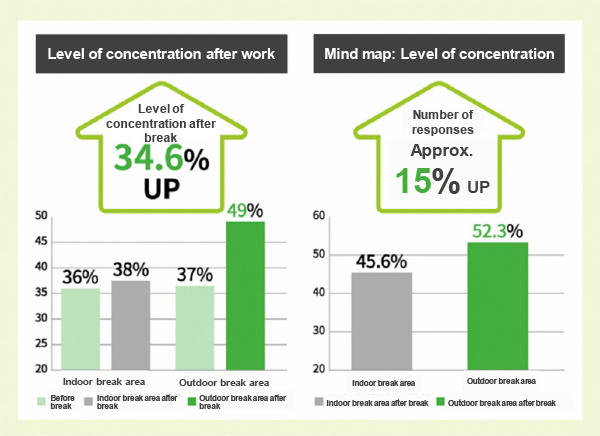
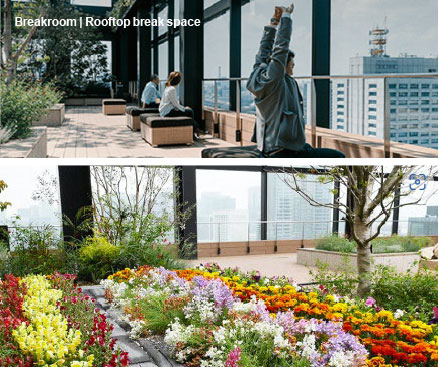
As part of the new “GREEN WORK STYLE” that it is promoting at its office buildings, the Group performed scientific verifications of the impacts and effects that green (vegetation and nature) have on people. For example, following a verification of the effects of breaks taken in rooftop spaces containing green, we found that stress levels after taking breaks where green was present were 6.0 points lower than those for indoor locations with no green present, and that levels of concentration rose considerably as well.
Based on these results, we can also conclude that in cities, the greater Shibuya area included, the importance of cultural services is high from the aspects of the effects on wellness in the form of better landscapes, stress mitigation and comfort; improved productivity coming from the likes of inspiration, invigorated communication and boosts in motivation for working individuals; and the appeal and higher asset value of office, commercial and other facilities.
Overview of demonstration experiment

Based on our nature-related dependencies and impacts, we examined the risks and opportunities related to our urban development business, while also referring to external information such as social trends and policy directions. We anticipate physical risks such as deterioration of the scenery and decreased comfort due to the decline in important ecosystem services, and transition risks due to changes in regulations and market environments. However, we also identified many nature-related opportunities.
This table can be scrolled horizontally
| Classification | Major dependencies / impacts | Risks and opportunities in urban development business | ||
|---|---|---|---|---|
| Transition | Risks | Policies and regulations | Procurement of building materials, lumber, and other resources (impact nature) |
|
| Land alteration and occupation following the development and operation of properties such as offices and commercial facilities (impact terrestrial ecosystems) |
|
|||
|
||||
| Market |
|
|||
| Technology | Use of water and building materials, etc. (impact resource availability) |
|
||
| Reputation | Negative impacts associated with land alteration/occupation, pollution, waste discharge, introduction of invasive species, etc. |
|
||
| Opportunities | Market Products and Service |
Reduction in negative impacts such as land alteration/occupation, pollution, and waste discharge, with positive impacts on ecosystems (and ecosystem services) associated with increased habitat availability in green spaces and formation of ecological networks |
|
|
| Capital Flows Financing |
Reduction of negative impacts such as land alteration/occupation, pollution, waste discharge, etc. Positive impacts on ecosystems (and ecosystem services) associated with increased habitat availability in green spaces and formation of ecological networks |
|
||
|
||||
| Reputation |
|
|||
|
||||
|
||||
| Physical | Risks | Acute / chronic | Mitigation of heat island effect (dependency on regulation/maintenance services) |
|
| Recreation, aesthetic amenities (dependency on cultural services) |
|
|||
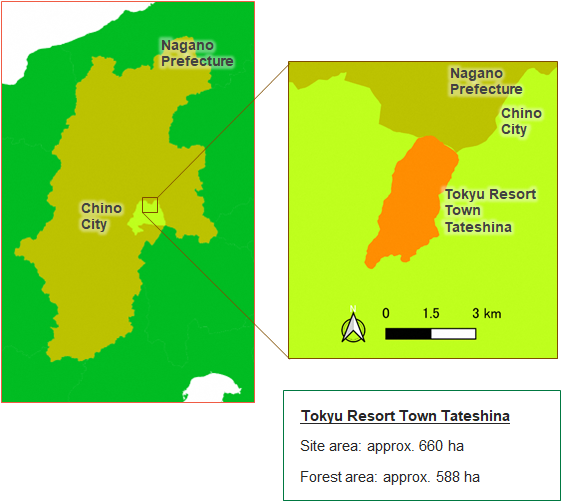
"Tokyu Resort Town Tateshina" is a large-scale resort complex located almost in the center of Tateshina Plateau in the northeastern part of Chino City, Nagano Prefecture, at an elevation of 1,100–1,800 m and a total site area of approximately 660 ha (approximately 140 Tokyo Domes' worth). The complex includes Tokyu Harvest Club Tateshina, a members-only resort hotel, as well as a hotel with 250 rooms, golf courses (18 holes), ski areas, vacation homes (detached houses, resorts, villas), approximately 2,300 plots, a hot springs facility, restaurants, and shops. It was constructed in 1974, with the opening of the Tateshina Tokyu golf course and the first phase of sales of vacation homes starting in 1978, after which the ski area, tennis courts, and hotels were opened. There are several facilities and services where customers can enjoy abundant nature, including a diverse array of activity, healing, and workcation options.
Visitors can see the Yatsugatake mountain range from within the town. Summers are comfortable, with minimum temperatures sometimes even dipping below 10 ºC from July to August. The refreshing, low-humidity climate provides a natural environment suited to avoiding the heat.
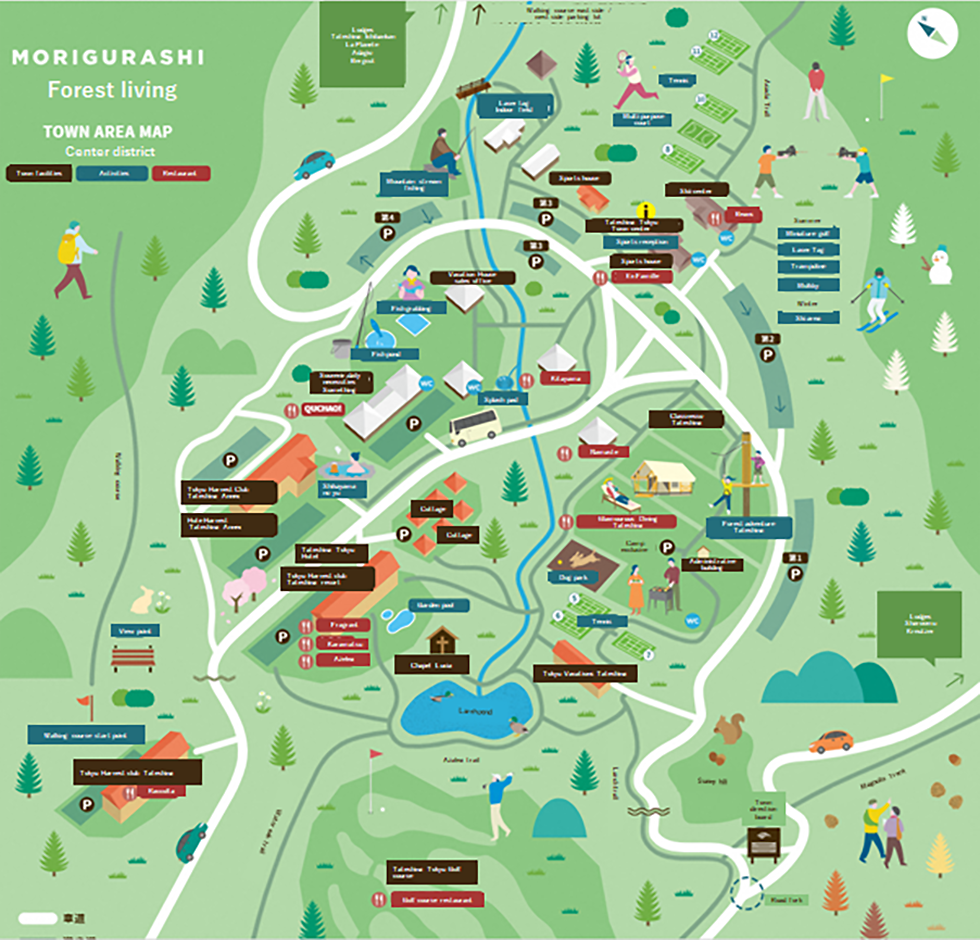
As shown in the figure below, business at “Tokyu Resort Town Tateshina” has various nature and ecosystem service dependencies. Nature and its bounties are particularly important in terms of operation. Both negative and positive nature impacts are given.
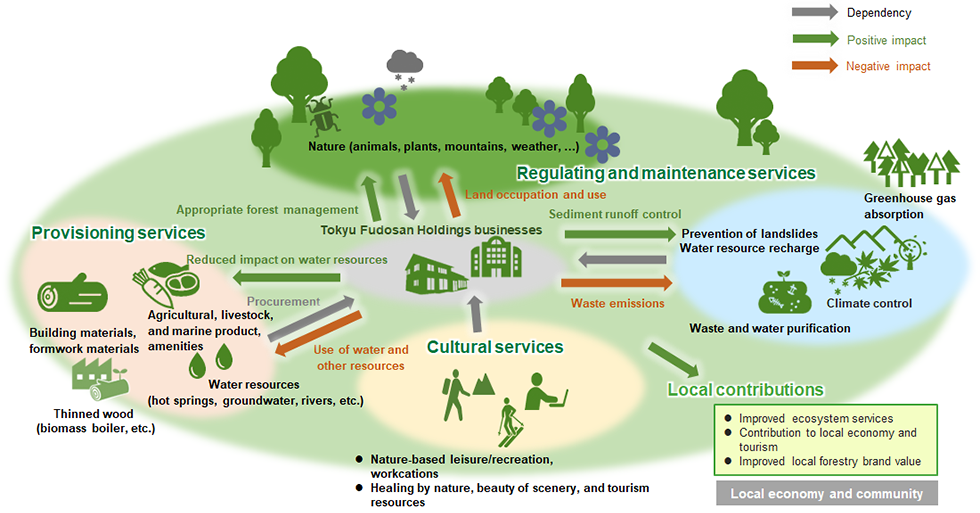
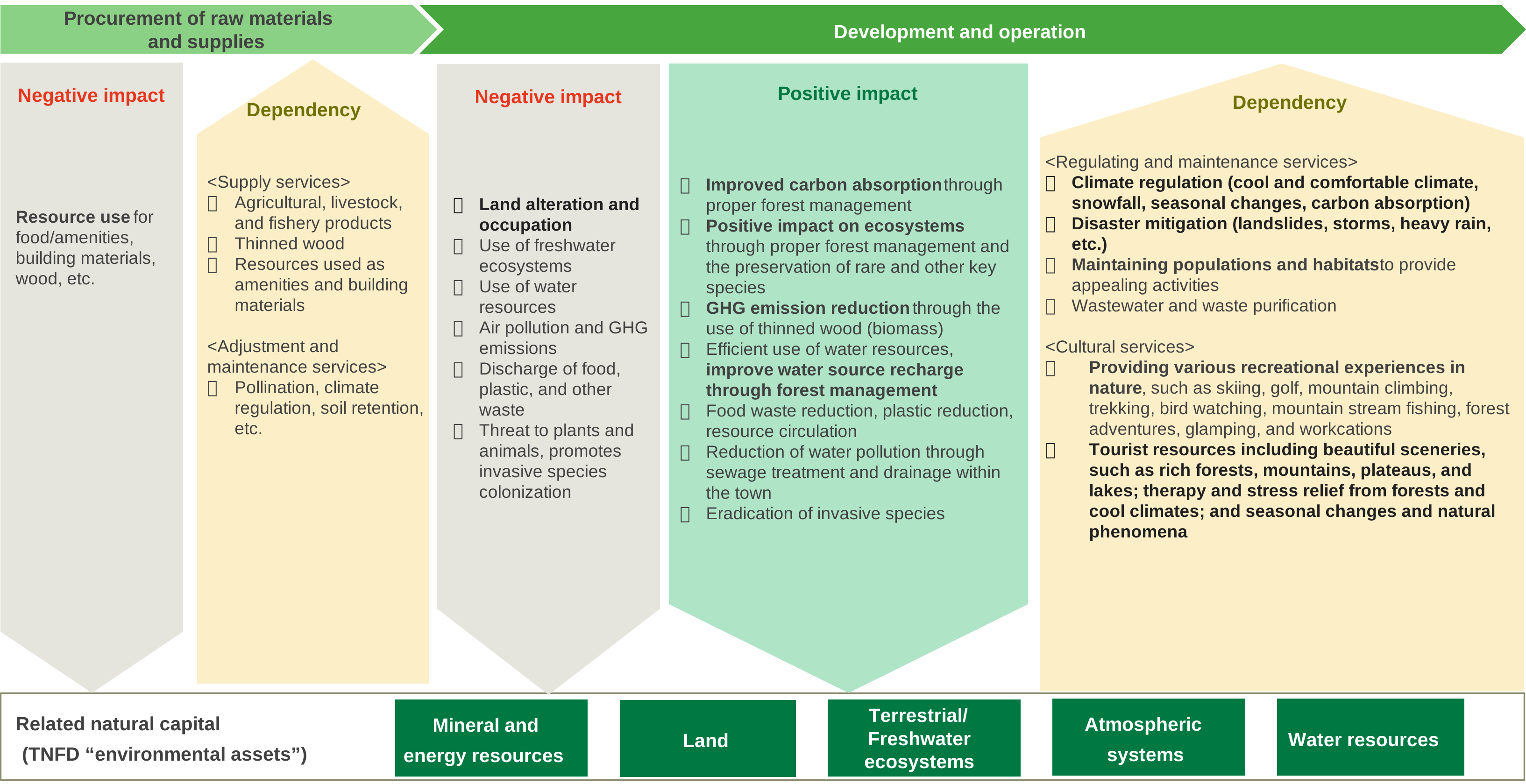
Based on the natural state of Tokyu Resort Town Tateshina, described later, we identified the major dependencies and impacts throughout our business and value chain, as shown in the figure below.
There is the potential for both negative and positive impacts on nature, and we also depend on nature in various ways.
Dependencies and impacts on nature in the value chain
*Dependencies and impacts in bold are considered to be particularly important
"Tokyu Resort Town Tateshina" is a large-scale resort complex that includes a hotel, golf courses, ski areas, and vacation homes. This site also includes a vast forest spanning approximately 588 ha, of which over 30% are larch forests planted for lumber in the post-war period. The large presence of oaks, such as water oak, is a characteristic of the forest.
“Tokyu Resort Town Tateshina” forest composition
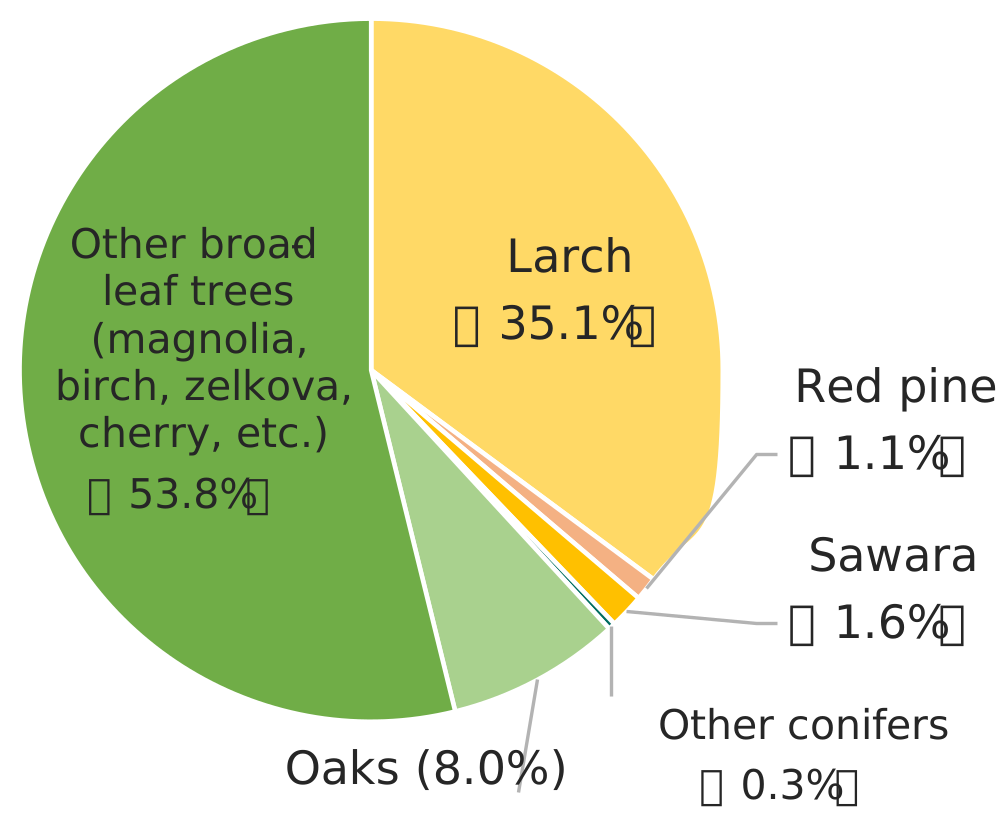
| Constituent tree species | Area | ||
|---|---|---|---|
| Hectares | Percentage | ||
| Conifers | Larch | 207 | 35.1% |
| Red pine | 6 | 1.1% | |
| Sawara cypress | 9 | 1.6% | |
| Other conifers | 2 | 0.3% | |
| Broad-leaf trees | Oaks | 47 | 8.0% |
| Other broad-leaf trees | 317 | 53.8% | |
*Forest area and composition tabulated from forest registers owned by our company or published by Nagano Prefecture.
“Tokyu Resort Town Tateshina”, which is surrounded by abundant nature, has various natural resource dependencies as a tourism attraction.
Therefore, a detailed analysis on the nature dependencies of “Tokyu Resort Town Tateshina” as a tourism resource was conducted in collaboration with Think nature Inc. and centering on an analysis of species.
Source: Think Nature Inc.
| Name | Tokyu Resort Town Tateshina | Chino City |
|---|---|---|
| Larch | 14.2 | 11.2 |
| Panicle hydrangea | 4.1 | 4.0 |
| Wild vine | 3.7 | 3.0 |
| Goldenrod | 3.4 | 3.2 |
| Water oak | 1.5 | 0.8 |
| Redvein maple | 4.2 | 3.8 |
| Pumila pine | 10.2 | 9.7 |
| Lingonberry | 9.8 | 10.1 |
| Rowan | 12.6 | 11.8 |
| Erman’s birch | 5.7 | 4.6 |
“Tokyu Resort Town Tateshina” has abundant larch, even at a national level, to the extent that the site could be called the center of the larch distribution area. Larch is an endemic species in Japan and is the only deciduous conifer; hence, fresh greenery can be enjoyed in the spring, and fall foliage can be enjoyed in the autumn. Characteristic vegetation in larch forests also included plants that bring color to the foothills, such as panicle hydrangea, wild vine, and the beautiful flowering goldenrod. These abundant vegetation and their resulting beautiful scenery increase the appeal of “Tokyu Resort Town Tateshina” as a tourist site and support the business in terms of the maintenance and increase of the exchange population of visitors and related populations.
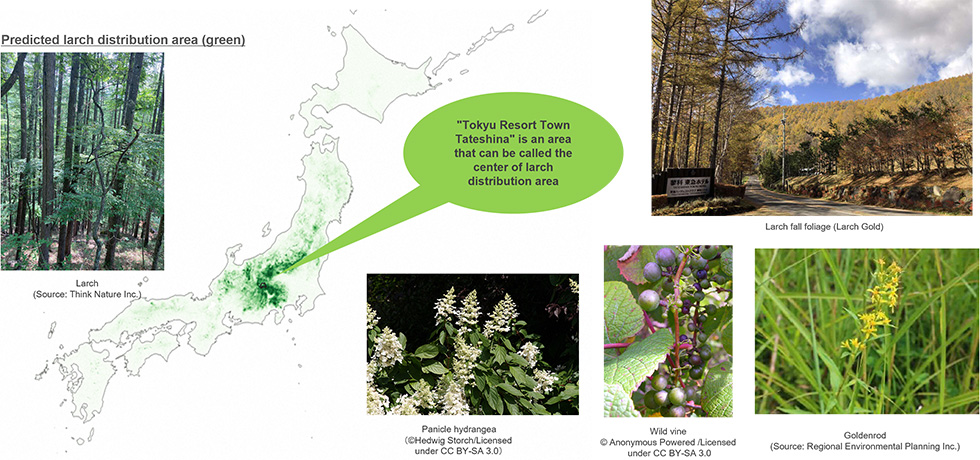
Source: Think Nature Inc.
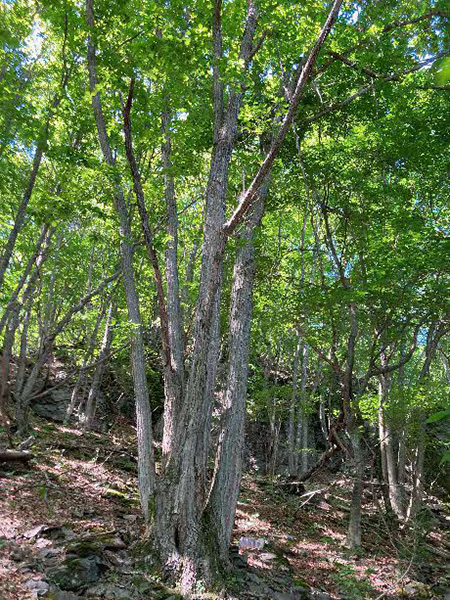
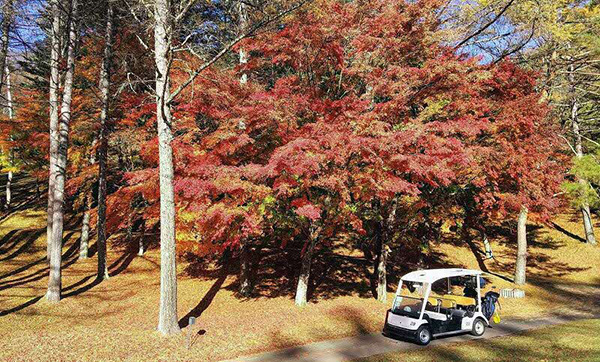
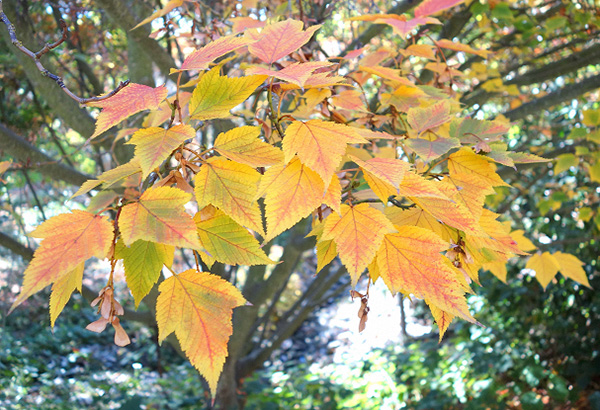
The following characteristics were found for Mizunara (Quercus crispula) and Japanese stone pine (Pinus pumila). These species are abundant and create beautiful scenery that enhances the tourist appeal of Tokyu Resort Town Tateshina, and support the business in terms of maintaining and increasing the number of visitors and related populations.
Although not particularly abundant in Chino City, Mizunara is abundant in Tokyu Resort Town Tateshina. Mizunara is among a community of plants with rich autumn foliage, such as maple trees and oaks.
Areas with high habitat suitability are distributed to the east of Tokyu Resort Town Tateshina, consistent with the ridgeline of the Yatsugatake mountain range. Chino City is characterized by an abundance of Japanese stone pine, an alpine vegetation, which occurs nationally. The lingonberry-Japanese stone pine community is rich in lingonberries and other plants with rich autumn foliage, such as Erman's birch. This type of alpine vegetation is thought to attract climbers.
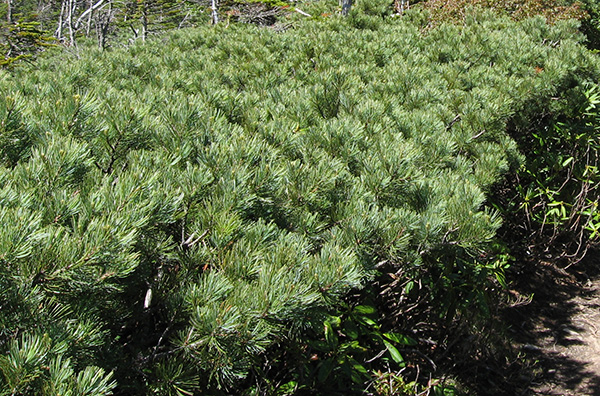
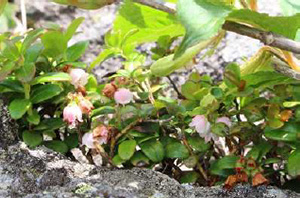
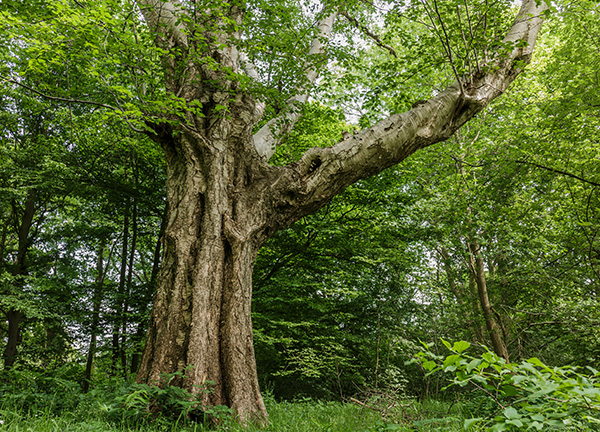
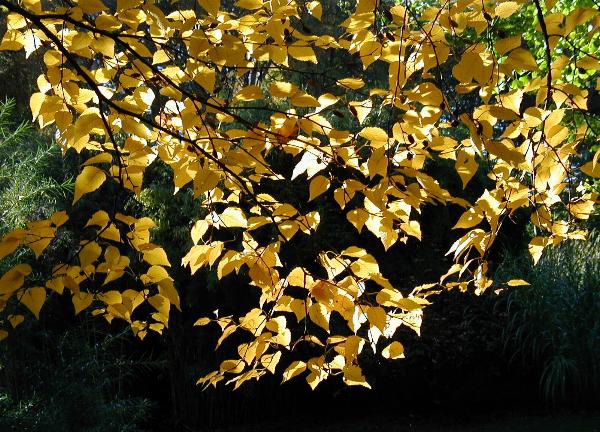
Among the impacts due to the business, the impact of land alteration and occupation from facility development and operations was evaluated as an important impact that may influence ecosystem services and change forest ecosystems and scenery. Specifically, a quantitative analysis of the change in forest areas since the start of development by our company was conducted in collaboration with Think Nature Inc..
Source: Think Nature Inc.
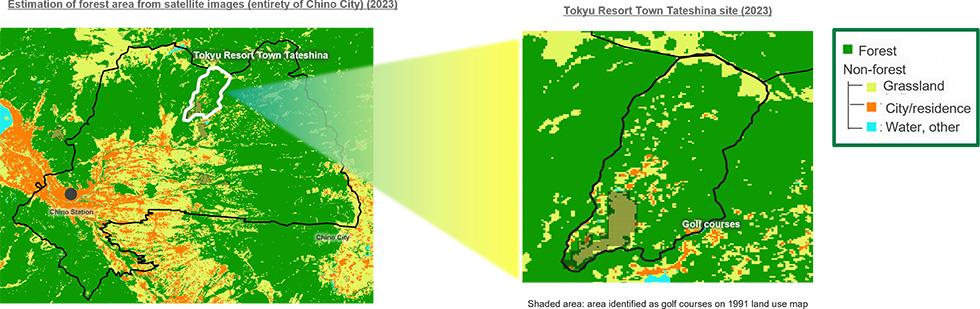
Machine learning: Method of data analysis where a computer uses a large quantity of data to learn rules and make predictions and decisions based on those results.
The change in forests over time is as shown in the figures below. Around 1975, at approximately the time of land acquisition, there were many non-forest areas centered in the north of the site. The state of the forest changed due to forest recovery, as well as the development of facilities and vacation homes.
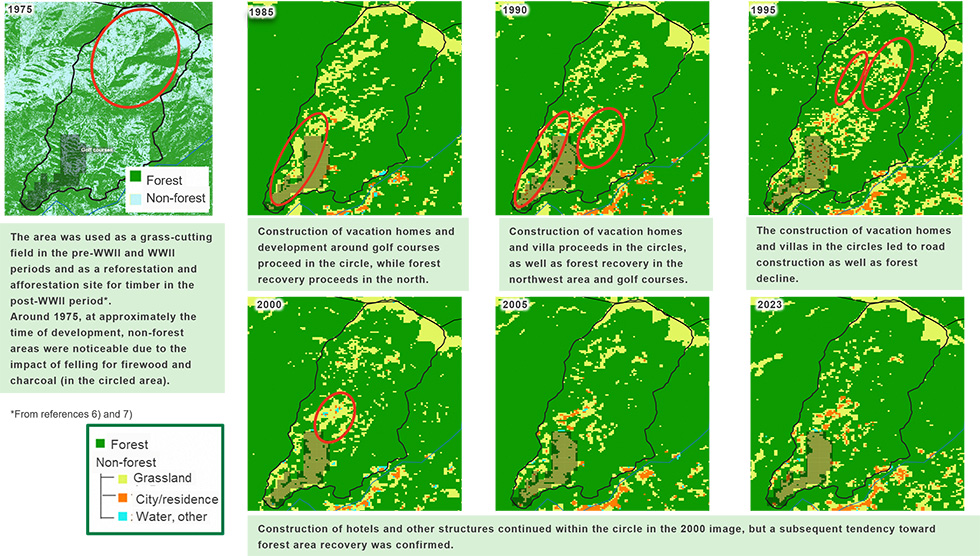
Source: Think Nature Inc.
Results of analyzing the forest state showed that the change in forest area percentage in Tokyu Resort Town Tateshina was as follows: although the forest area has declined due to the construction of golf courses and vacation homes, the overall trend is toward recovery, and the current status is that the area is in its most recovered state, as well as the fact that the business operations, which have simultaneously maintained and recovered forests, are contributing to nature positive as a result of our company’s resort development and operations.
Changes in forest area percentage
(Evaluated from aerial and satellite images)
Source: Think Nature Inc.
Our group has formulated a forest management plan★ at Tokyu Resort Town Tateshina in 2018 based on the forest management plan of Chino City and is engaged in thinning- and reforestation-based forest management. Meanwhile, given the increasing age of the trees that constitute the forests, our group is considering forest management that incorporates not only thinning and reforestation, but also partial clear-cutting of old-growth larch forests and their reforestation. Therefore, a quantitative evaluation was conducted on the impact of future forest management on biodiversity.
Specifically, a quantitative analysis was conducted in collaboration with Think Nature Inc. of the “number of species”, which is an indicator of the state of forest biodiversity, while considering the forest vegetation and management state to examine shifts from the past and the impact of forest management on the number of species.
A comparative analysis was conducted on a pattern of forest preservation activities where 2 ha of old-growth forest is clear-cut every year and reforested, and a pattern of no thinning or clear-cutting and leaving the process to natural transitions, for a larch forest.
This table can be scrolled horizontally
| Pattern | Assumed future management | What will be learned |
|---|---|---|
| 1. Forest management: Clear-cutting of some old-growth forests and reforestation, forming a mixed broadleaf forest |
Clear-cutting of 2 ha of old-growth forest (at least 80 years old) every year and planting broadleaf trees to slowly transition to mixed forest | Impact of small-scale clear-cutting and reforestation over long-term on biodiversity |
| 2. No forest management: Left to natural transition (left alone) |
No forest management (no thinning or clear-cutting) and leaving to natural transition | Impact of absence of human influence and leaving forest as is on biodiversity |
Normally, the aging of forest trees over time decreases the number of species in a forest. Although forests have been created with abundant fall foliage and excellent scenery due to our company’s development that limits deforestation and our planting and preservation of larch forests since the start of development, there has been progressive aging of forests, with an average age of at least 80 years, entering a phase of declining number of species (figure below, until 2023).
Meanwhile, as shown in the figure below, in the larch forest, the management method of clear-cutting and reforesting some old-growth trees to form a mixed broadleaf forest (pattern 1) could suppress the decline in the number of species more than the method of not conducting forest management and leaving the process to natural transitions (pattern 2) (figure below, from 2023 onwards). These results will also be used as a reference to strive toward the preservation of biodiversity in the future through appropriate forest management, such as the continuation of thinning, but also partial clear-cutting and reforestation.
Changes in number of species (in larch forest)
Source: Think Nature Inc.
Average number of species: value determined by dividing the larch forest into 30 m square grids (frames), analyzing the number of species contained within each grid, and calculating a simple average for all grids.
The amount of CO₂ absorption through the forest in “Tokyu Resort Town Tateshina” was calculated to determine the “forest carbon absorption function”, one of the dependent nature functions.
Forest composition
Overview of visualization sheet
This table can be scrolled horizontally
| Item | Details |
|---|---|
| Creation and disclosure | Forestry Agency |
| Characteristics |
|
| Formula | Annual CO₂ absorption amount per hectare =①Annual trunk growth per hectare × ②Expansion factor × (1 + ③Underground ratio) × ④Bulk density × ⑤Carbon content × ⑥44/12 |
| Definitions of factors |
|
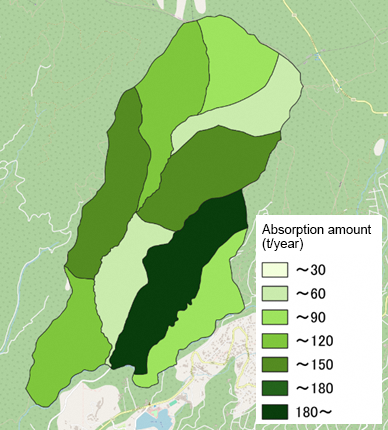
Analysis results showed that, per year, the entire forest of “Tokyu Resort Town Tateshina” absorbs 892 t of CO₂, equivalent to the annual household emissions of approximately 240 general households*.
| CO₂ absorption amount | Absorption amount by species | Total | |
|---|---|---|---|
| Larch | Other species | ||
| Annual estimated value (t-CO₂/yr) |
340 | 552 | 892 |
| Annual estimated value per hectare (t-CO₂/ha/yr) |
1.6 | 1.4 | 1.5 |
CO₂ absorption amount (by area)
Calculated from amount of CO₂ emissions per household from “Japan Greenhouse Gas Inventory (FY2021)”
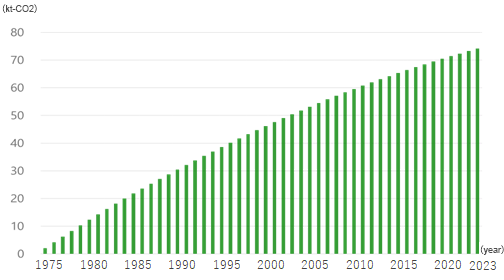
Based on the assumption that the forest area and species composition remain unchanged, with the tree age changing over time, the previous status of the forest was estimated, and the cumulative CO₂ absorption amount from development (around 1974) to 2023 was calculated.
Calculation results showed that a cumulative total of approximately 74,000 t of CO₂ was absorbed in the entire forest of “Tokyu Resort Town Tateshina.” This is equivalent to an annual average of approximately 1,480 t of CO₂, which is equivalent to the annual emissions of approximately 400 households.
| Cumulative CO₂ absorption amount | Absorption amount by species | Cumulative total | |
|---|---|---|---|
| Larch | Other species | ||
| Estimated cumulative amount from 1974 to 2023 (t-CO₂) |
31 k | 43 k | 74 k |
CO₂ absorption amount (cumulative)
Tokyu Resort Town Tateshina receives its water from rivers and groundwater, which is maintained by natural forests. Forests have multiple functions, including carbon absorption, groundwater recharge, and surface runoff control, and have been integral to the sustainable development of Tokyu Resort Town Tateshina over the last 50 years. Tokyu Resort Town Tateshina not only purifies the water it uses but also conserves forests and water resources through proper forest management, including thinning. Owing to its dependency and impact on forests, Tokyu Resort Town Tateshina has important impacts on the water cycle.
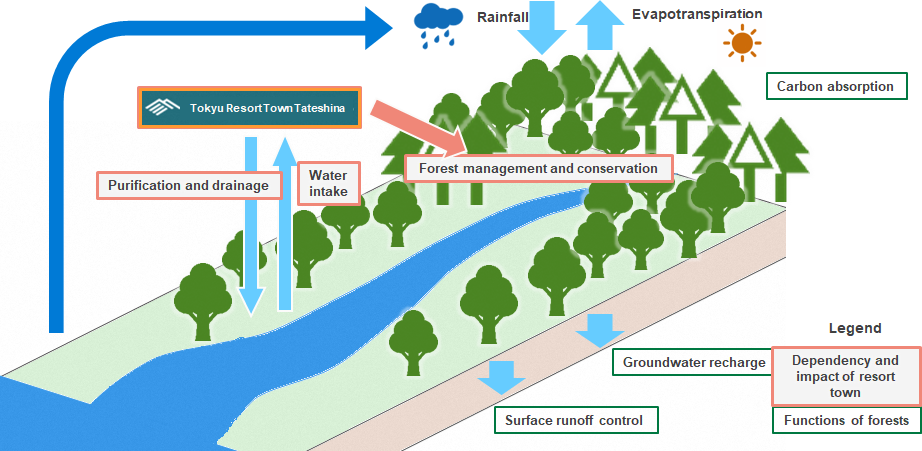
Tokyu Resort Town Tateshina is a self-sufficient resort facility that has its own water supply. It draws water from multiple natural water sources within the town to supply the entire town with tap water. The groundwater recharge function of the town's forests plays an important role in securing and supplying sustainable water resources.
The relationship between the forest groundwater recharge function and town's overall water intake was quantitatively assessed using the water cycle simulator “GETFLOWS” for the forests within the town with the cooperation of Geosphere Environmental Technology Corp., a company that performs comprehensive watershed water-cycle analysis and provides scientific solutions to water problems.
* Groundwater recharge
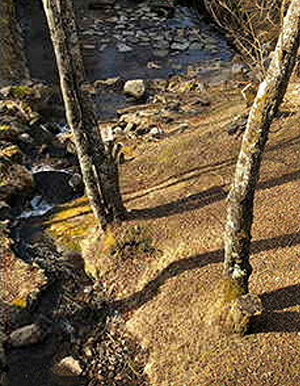
Rainfall seeps into the ground and is retained by forest soil. Rainfall in forests passes through the forest canopy and soil, is stored in the gaps in the soil, and slowly flows out into rivers, contributing to “flood mitigation” and “water resource storage.” Water that passes through the ground is also filtered, which is expected to provide a “water purification” function.
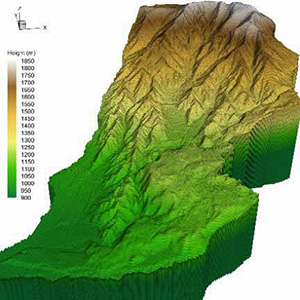
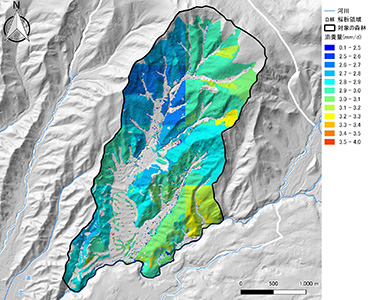
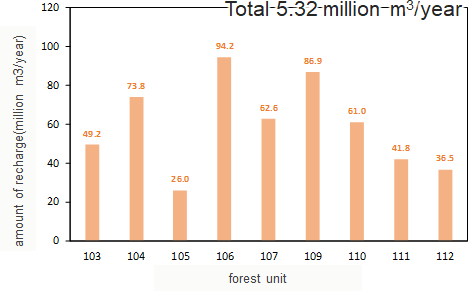
Source) Geosphere Environmental Technology
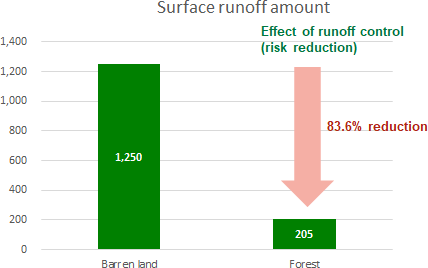
Forest soil plays an important role in groundwater recharge and forest ecosystem conservation, while surface runoff has a negative impact on groundwater recharge, water quality, and ecosystem health.
We quantitatively assessed the extent to which surface runoff is controlled by the forests of Tokyu Resort Town Tateshina.
We used the universal soil loss equation (USLE), a method commonly used to predict surface runoff amounts, to analyze the difference in surface runoff between forests and barren land.
USLE
Based on our analysis of Tokyu Resort Town Tateshina, we examined the risks and opportunities in the hotel and leisure business. We anticipate physical risks such as decreased appeal as a resort and tourist destination due to the deterioration of ecosystem services, and transition risks due to changes in regulations and market environments, but we also identified many nature-related opportunities.
This table can be scrolled horizontally
| Classification | Major dependencies / impacts | Risk components | ||
|---|---|---|---|---|
| Transition | Risks | Policies and regulations | Use of other resources, waste |
|
| Use of water resources |
|
|||
| Water pollution |
|
|||
| Use of terrestrial ecosystems, use of other resources |
|
|||
| Technology | CO₂ emissions, use of water resources |
|
||
| Market | Resource use |
|
||
| Reputation | Land use modification and water resource use in terrestrial ecosystems |
|
||
| Introduction of invasive species, ecosystem disruption |
|
|||
This table can be scrolled horizontally
| Classification | Major dependencies / impacts | Opportunity components | ||
|---|---|---|---|---|
| Transition | Opportunities | Resource efficiency |
Reduction of negative impacts such as land alteration and occupation, pollution, resource use, and waste discharge Positive impacts on ecosystems (and ecosystem services) through proper forest management, biological monitoring, and species protection |
|
| Capital |
|
|||
| Products and services |
|
|||
| Market Products and services Reputation |
|
|||
|
||||
| Protection, restoration, and regeneration of nature |
|
|||
This table can be scrolled horizontally
| Classification | Major dependencies / impacts | Risk components | ||
|---|---|---|---|---|
| Physical | Risks | Acute / chronic | Water resources |
|
| Water resource supply, pollination, and climate regulation |
|
|||
| Soil and sediment retention, storm damage mitigation, and climate regulation |
|
|||
| Climate regulation, natural population and habitat maintenance, and cultural services |
|
|||
Palau Pacific Resort (PPR) is a full-service resort hotel developed in the Republic of Palau in harmony with environmental conservation.
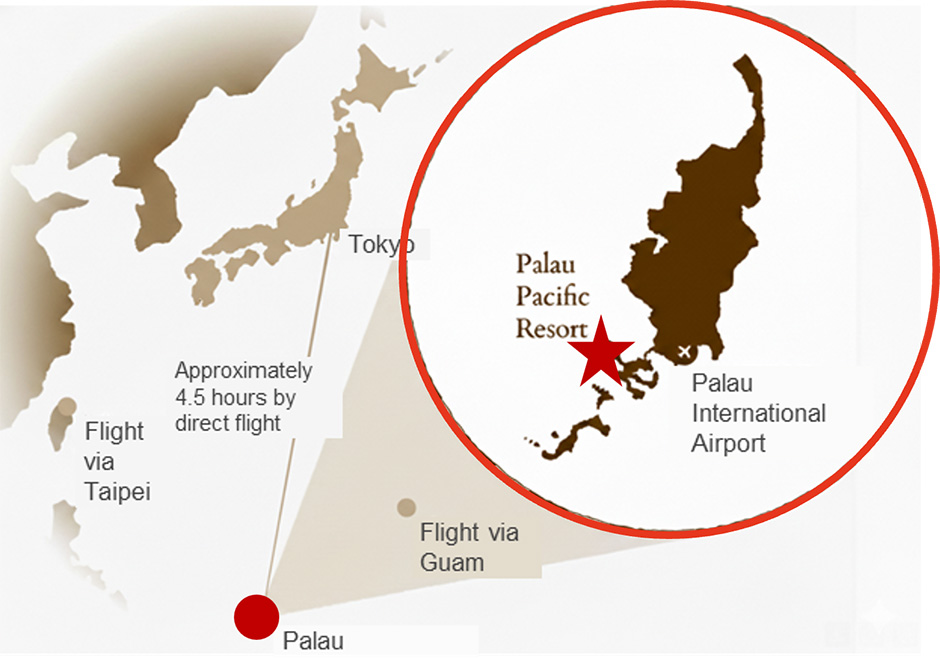
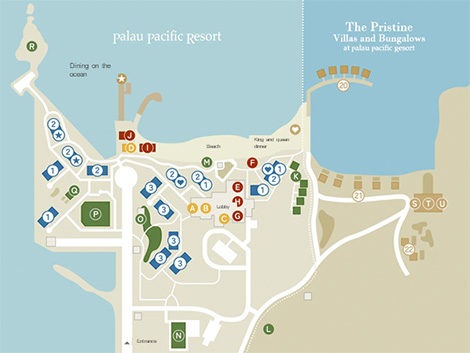
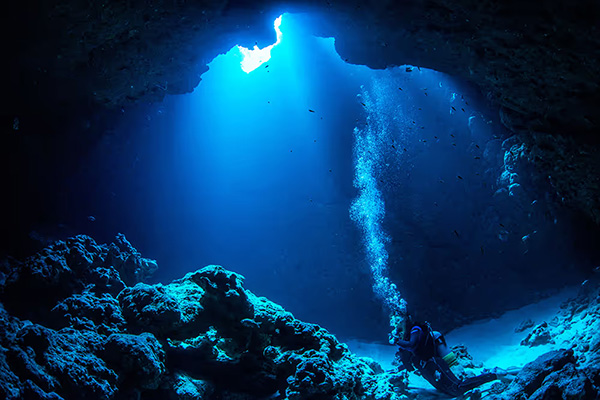
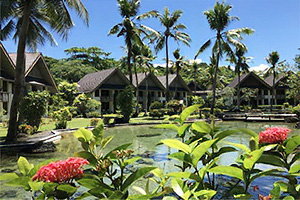
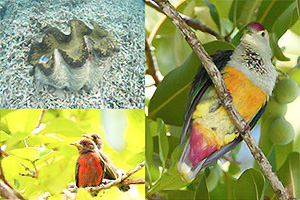
Beginning in 1956, when Tokyu Fudosan Corp.’s first president, Noboru Goto, became the first Japanese civilian to visit Palau after the war, we have continuously developed our business in Palau, often called “the last paradise on earth,” while safeguarding its abundant natural environment, history, culture, and local communities.
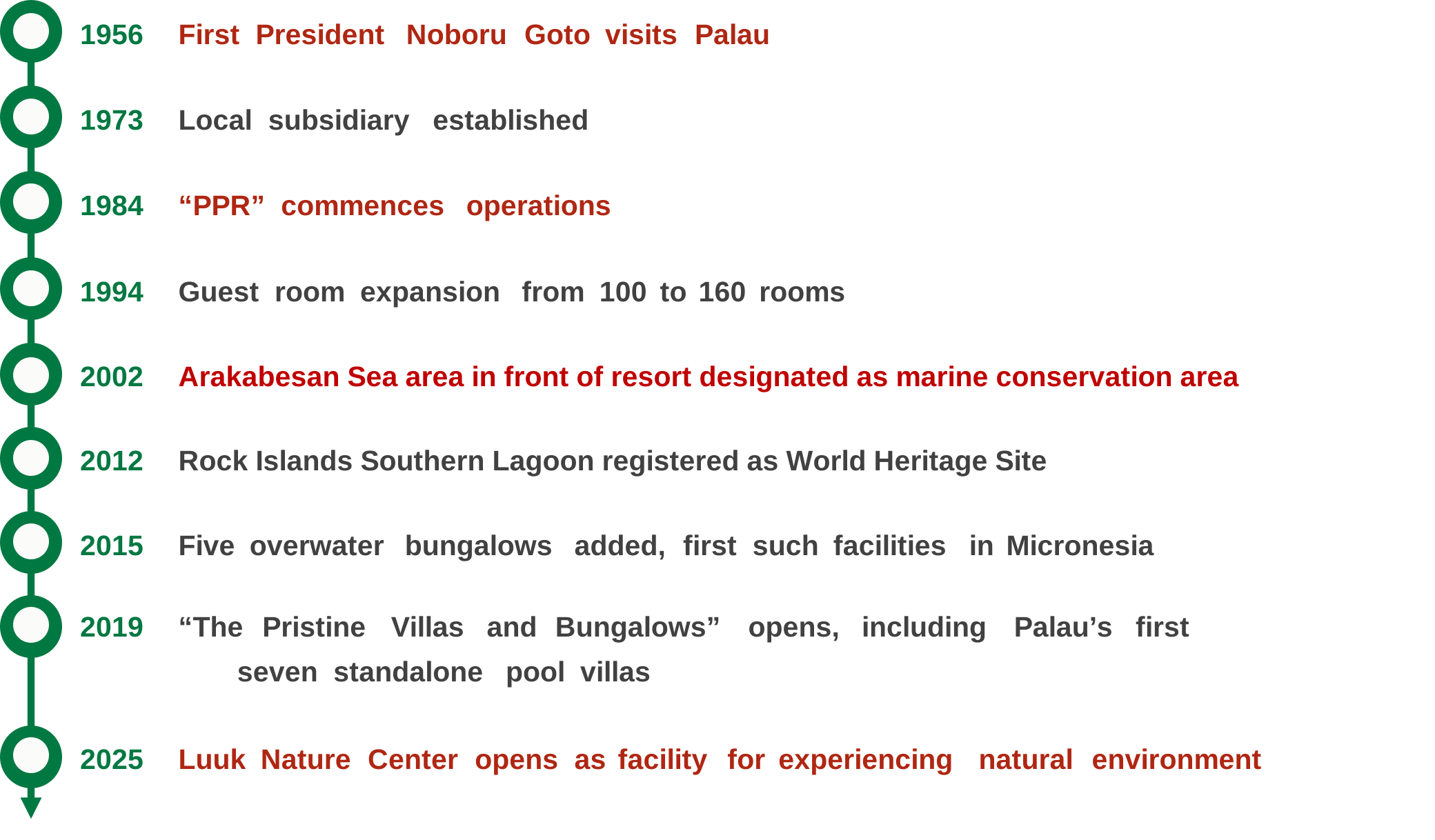
Luuk Nature Center (opened December 2025)
In 2025, Luuk Nature Center was launched as a space dedicated to experiencing Palau’s distinctive natural environment, offering a special program that enables visitors to explore the rich ecosystems of interconnected mountains and ocean, following the concept of “Connectivity from Ridge to Reef,” all within the resort grounds. While generating appreciation for Palau’s dynamic natural scenery, this facility creates new value as an educational space that supports future environmental conservation efforts.
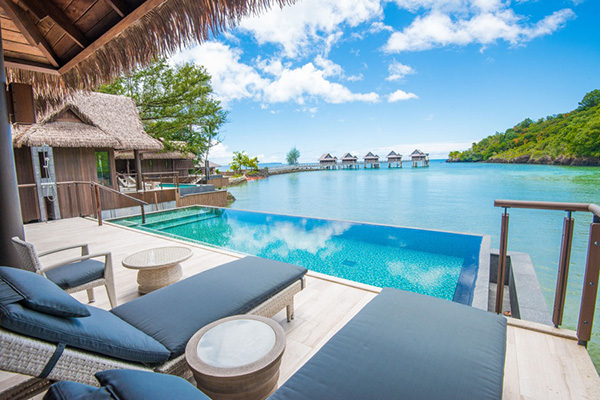
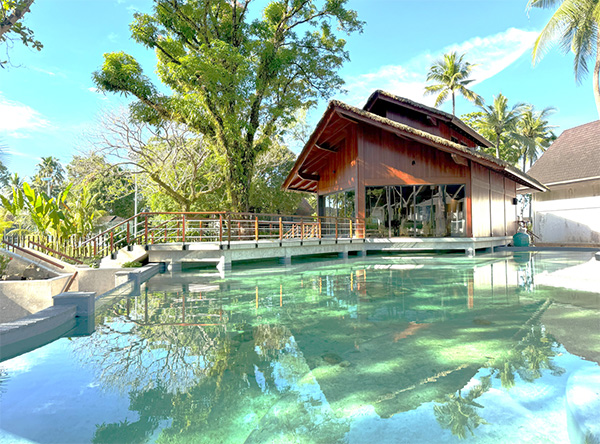
The figure below illustrates dependencies and impacts on nature. Although our activities may generate both adverse and beneficial effects on nature, our operations also rely on natural systems in multiple ways.
Dependencies and impacts on nature across value chain * Items shown in bold are regarded as especially significant.
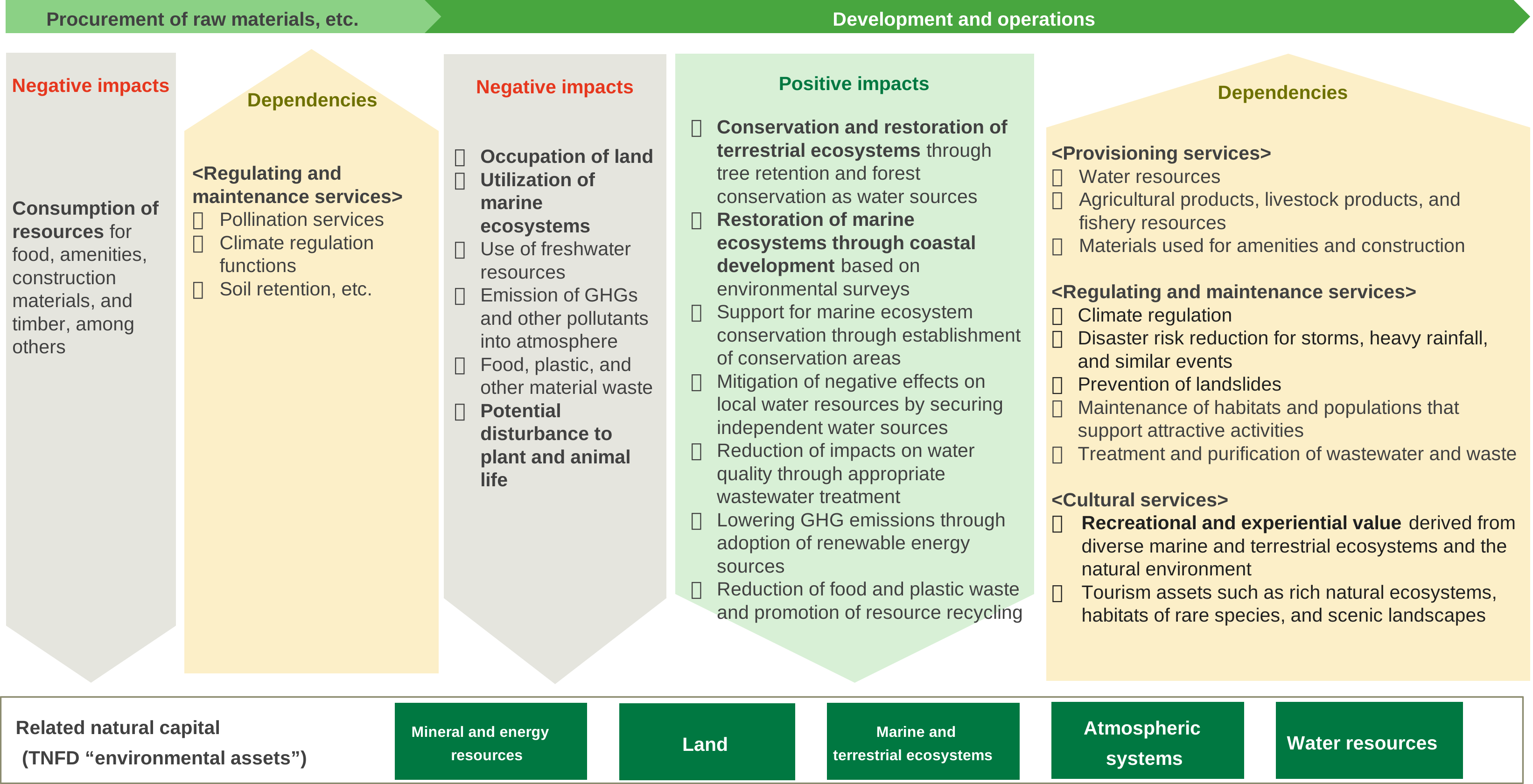
“Biodiversity importance” was assessed to determine the importance of the local area including PPR.
In cooperation with Think Nature Co., Ltd., we analyzed conservation priority as an indicator of biodiversity importance.
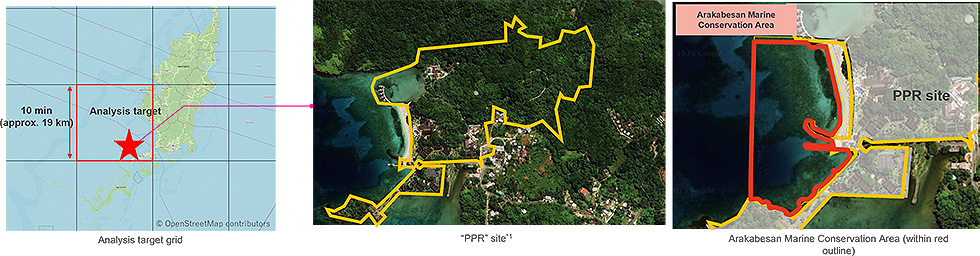
The conservation priority analysis for both land and sea indicated that the terrestrial and marine areas possess extremely high biodiversity conservation value, placing them within the top 1% worldwide in terms of biodiversity importance.
Relative to the global scale, the area supports a large number of species both on land and in the ocean, including many facing a high risk of extinction.
Importance of terrestrial biodiversity
Top 0.9% of global terrestrial areas
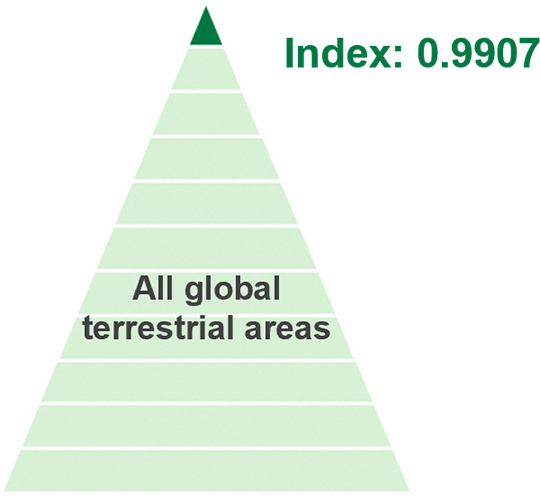
Importance of marine biodiversity
Top 0.1% of global terrestrial areas
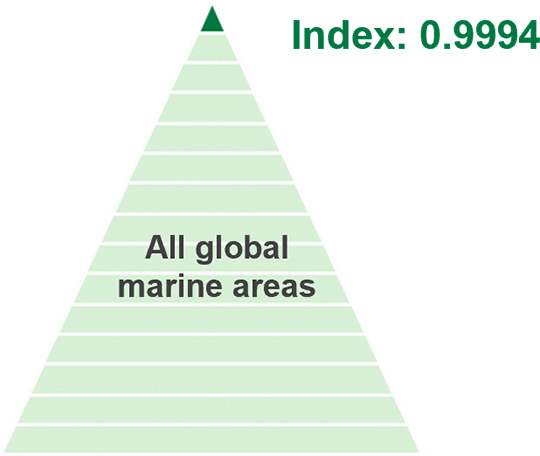
Biodiversity importance of marine resort destinations worldwide, including marine and terrestrial areas
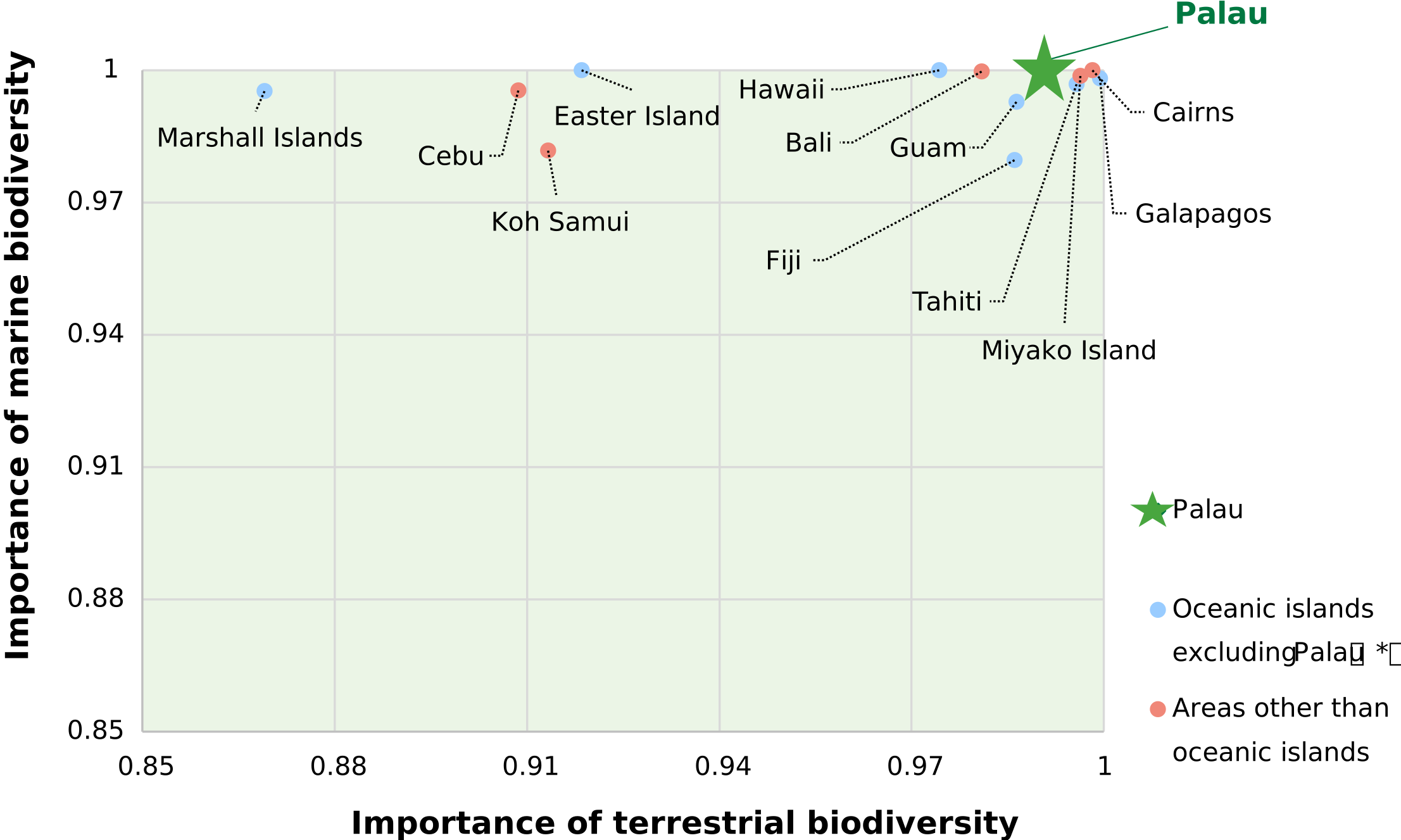
Source) Think Nature Co., Ltd.
Oceanic islands: Islands that have never been connected to a continent, including Palau. Generally, land areas with stronger connections to continents support a larger number of species, and thus non-oceanic islands tend to have higher biodiversity importance.
Analysis of Think Nature Co. Ltd.’s biodiversity big data showed that, across all six terrestrial biological groups, biodiversity importance ranked among the highest globally, with especially large numbers of freshwater fish and reptile species, as well as many endemic bird species.
The presence of bats and birds listed in the Red List along with the nature-conscious development at PPR and the restoration of natural forests may contribute to this high level of biodiversity.
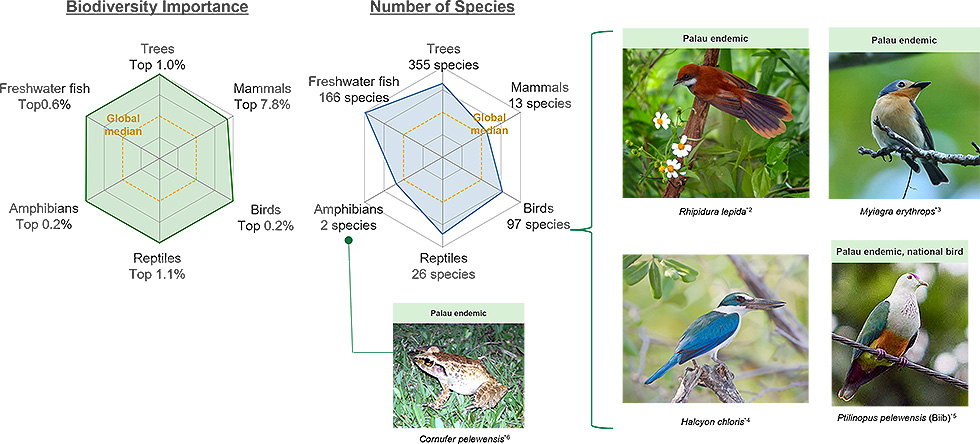
Source) Think Nature Co., Ltd.
Analysis of Think Nature Co. Ltd.’s biodiversity big data indicated that the sea area ranked among the highest worldwide for both biodiversity importance and number of species across all eight biological groups assessed. Species listed on the Red List include marine mammals such as Dugong dugon and Physeter macrocephalus, along with Eretmochelys imbricata and Tridacna gigas. As described later, efforts under “PPR” to conserve and restore marine and terrestrial ecosystems may contribute to the high level of biodiversity.
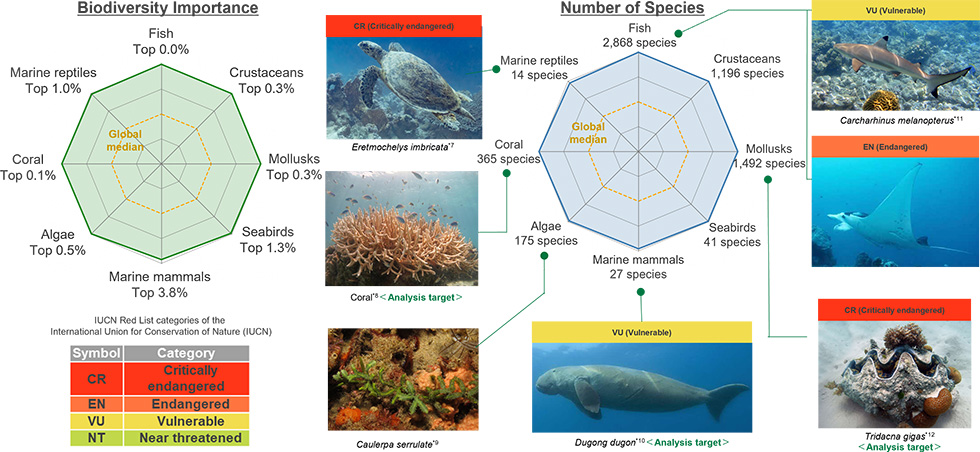
Source) Think Nature Co. Ltd.
Over 40 years ago, long before sustainability became a widely recognized concept, PPR was guided by the principles of “achieving balance between nature and development” and “contributing to the local community while being embraced by local residents.” These ideas are reflected in the words of Tokyu Fudosan Corp.’s first president, Noboru Goto, who said to “not build anything taller than a palm tree” and “engage in work that genuinely benefits local people”.
During the war, the PPR site contained military facilities. Instead of clearing forested areas, the current resort was constructed on the former military site, thereby limiting changes to the surrounding natural environment.
Before development began, detailed environmental surveys focusing on vegetation and terrestrial ecosystems were conducted. The findings of these surveys guided extensive preservation of existing trees, along with the cultivation and planting of native plant species. For instance, a “Calophyllum inophyllum/Casuarinaceae community,” unique to sandy coastal areas, was identified on the beach in 1979 and remains intact today. Additionally, part of the northeastern section of the property has been designated as a water source protection zone and is also utilized as a trekking area.
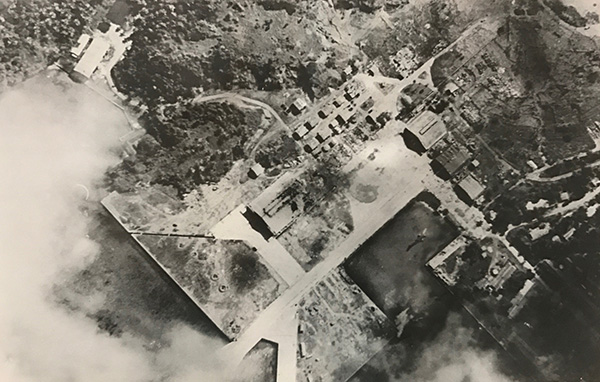
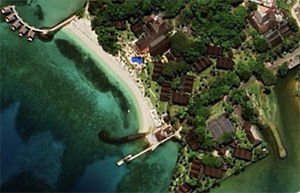
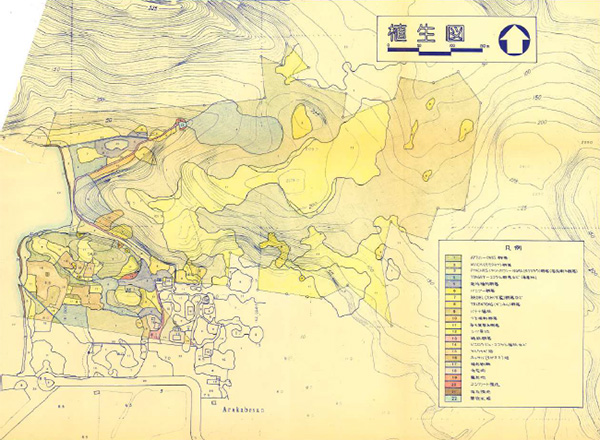
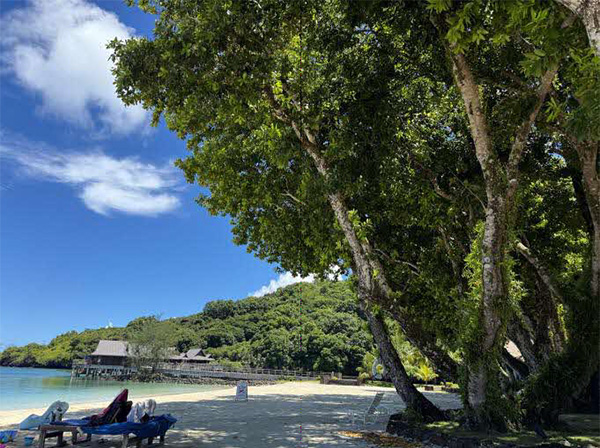
Before development, the sea area in front of the resort was affected by sediment runoff from land, creating conditions unsuitable for coral growth.
Guided by environmental surveys, large-scale beach restoration efforts, including coral transplantation, were implemented, leading to significant environmental improvements and the successful recovery of coral in the adjacent sea area in front of the resort.
Starting in the late 1990s, the resort began releasing juvenile endangered Tridacna gigas into the sea with guests, while also carrying out educational programs for both residents and visitors on restrictions against collecting living organisms.
These conservation initiatives enhanced the marine environment and prompted a request from the state government for marine conservation measures. Consequently, in 2002 the sea area in front of the resort was designated as the Arakabesan Marine Conservation Area, marking the first such designation for a private beach.
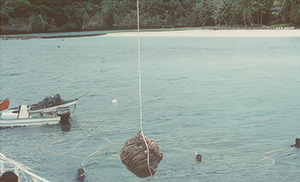
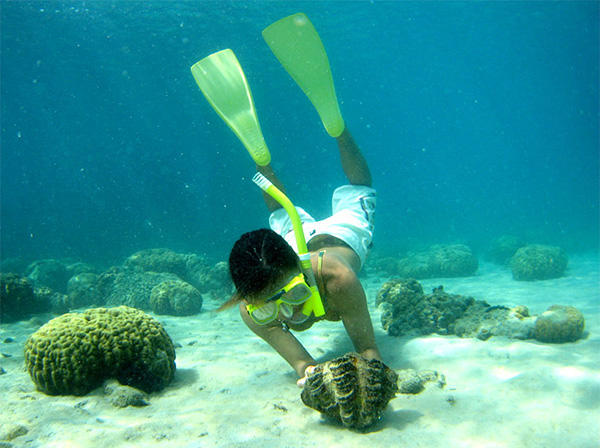
Guided by the objectives of contributing to the local community and gaining acceptance from local residents, we focused on community contributions through designs that are in harmony with local culture and traditions, as well as through employment creation and human resource development.
The buildings are limited to a maximum of two stories, remaining lower than surrounding palm trees, and feature roofs inspired by the traditional Palauan abai, or community hall. Existing trees were retained, and the architectural design harmonizes with the surrounding ocean and greenery.
By incorporating traditional architectural elements along with culturally symbolic buildings and sculptures, the design enables guests to experience Palau’s culture, traditions, and natural landscapes. This shared appreciation also fosters pride among employees, which contributes to higher-quality service.
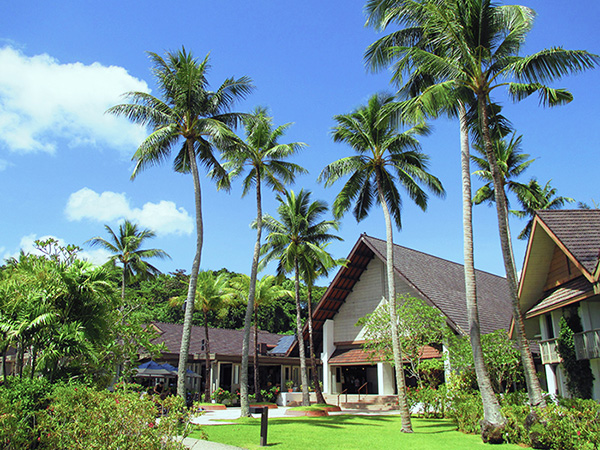
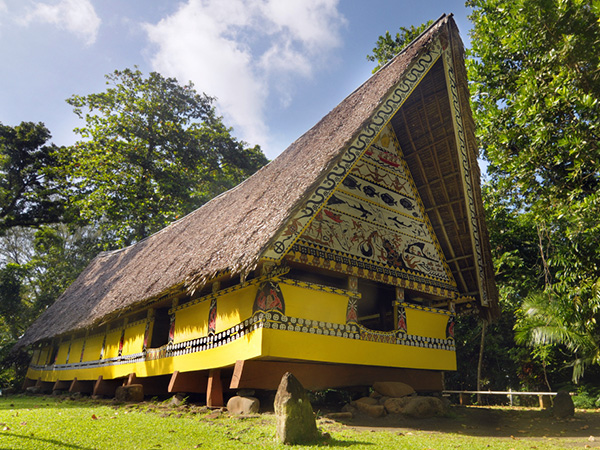
The western coast of Arakabesan Island, where the hotel is located, is also used by local residents, thus the development initially faced opposition. Through the hiring of local residents and by clearly communicating our commitment to developing an environmentally considerate resort, we earned community understanding and proceeded with development.
Today, approximately 60% of employees are Palauan. In addition to providing employment opportunities, we support the local community through training and development in the hotel and tourism sectors.
Consequently, strong relationships have been established with the local community, and PPR’s initiatives have been met with appreciation.
PPR employees participate in environmental initiatives through the Green Care Committee, regularly carry out voluntary cleanup activities, such as collecting driftwood and waste such as plastic bottles from roads, bridges, and surrounding sea areas around Arakabesan Island. Members have a designated leader, with whom they discuss and plan annual activities, and actively conduct cleanup efforts not only on the property but also in nearby areas.
To assess the project’s environmental impact, we conducted a quantitative analysis of changes in the proportion of forested areas before and after development, with the support of Think Nature Co., Ltd., and qualitatively confirmed land use changes using aerial photographs and vegetation survey data from the pre-development period.
Methods The PPR site was examined for 1976, 2009, and 2023, for which aerial photographs and satellite images were available. Using machine learning, images were classified into forest, grassland, and other land types such as built-up areas, and the extent of forest and grassland coverage was calculated.
Image analysis showed that, before development, natural forest coverage declined and grassland areas were extensive. Following the development of PPR, land outside the building site was preserved, leading to a transition toward tropical rainforest, referred to here as “natural forest.” Currently, most of the site comprises natural forest, which is considered to contribute to enhanced forest and marine biodiversity, reduced sediment runoff, and improved watershed protection.
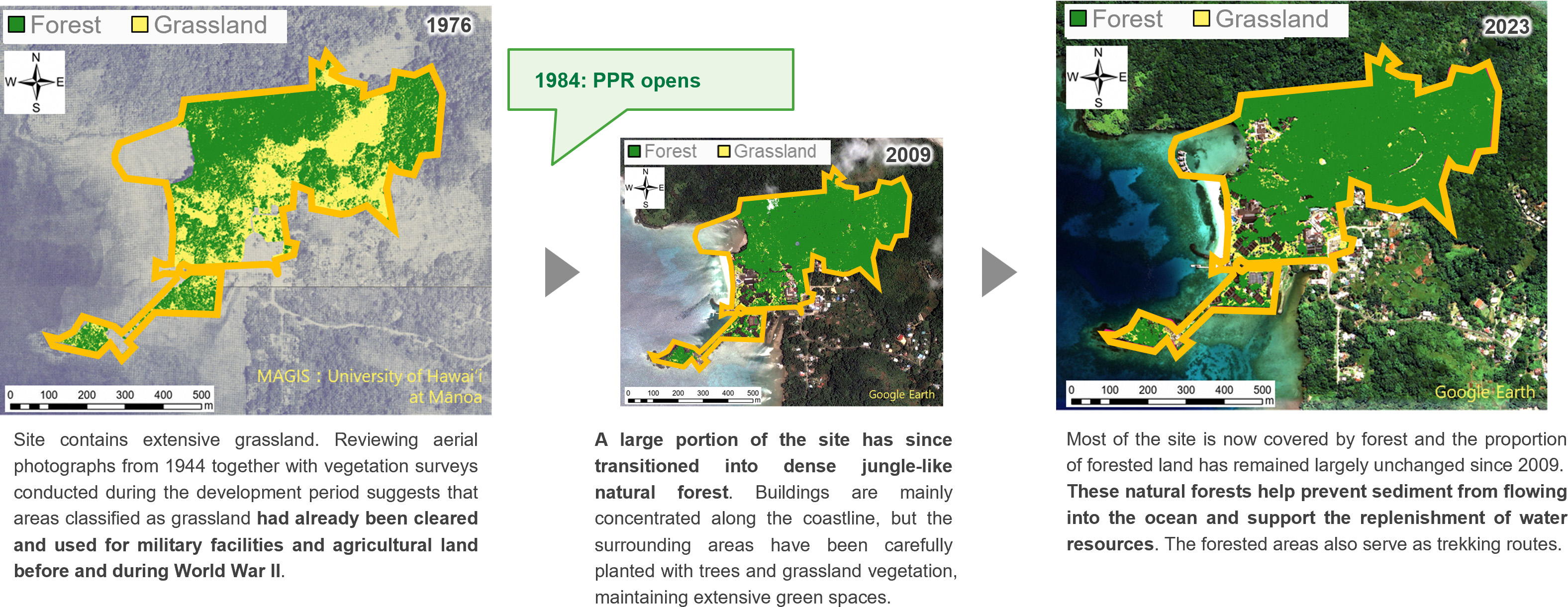
Source) Think Nature Co. Ltd.
Quantitative analysis showed that, although the area used for buildings increased as development progressed, a far greater area of forest has been restored. Since the resort opened, the proportion of forested area has grown approximately 1.4-fold. Development and operations guided by the principle of harmony with nature support the conservation and restoration of natural forests, wildlife habitats, and ecosystem services.
Changes in forest area within site
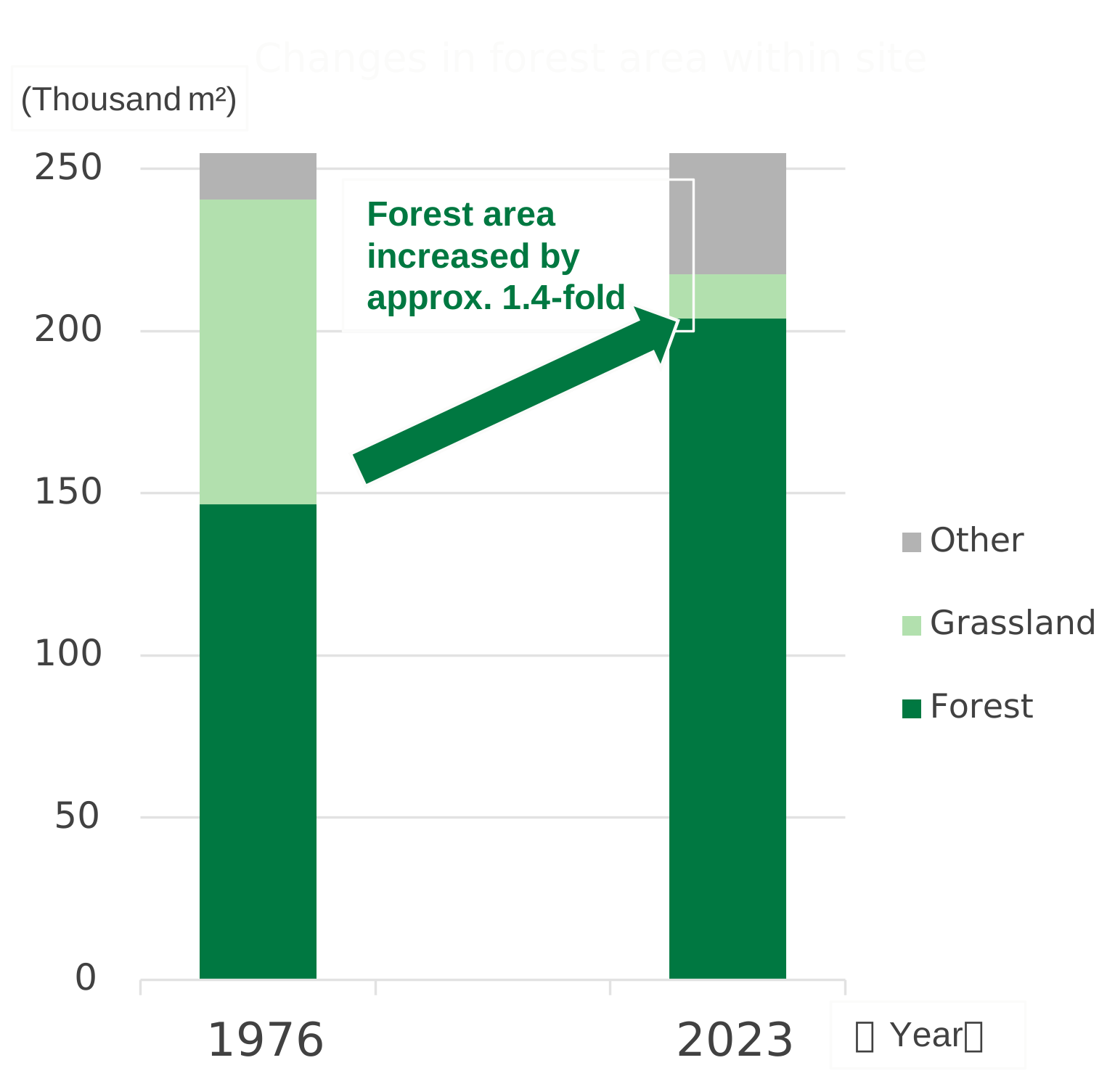
Comparison before and after resort opened in 1984
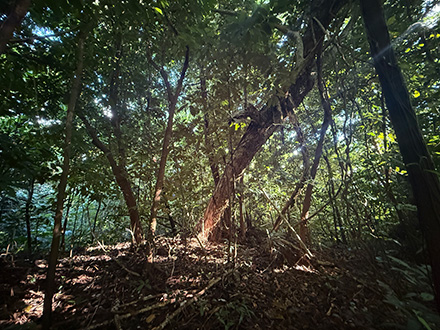
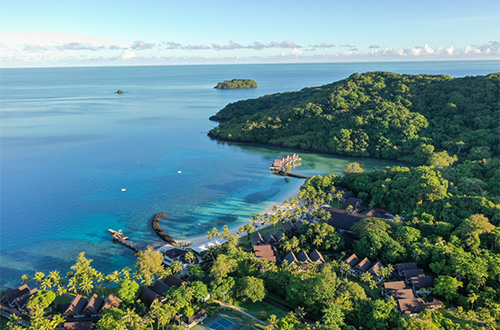
Source) Think Nature Co. Ltd.
Palau possesses some of the most abundant coral reef systems in the world, which draw many visitors and represent important tourism resources. Coral reefs function as biodiversity-rich “oases” and have high biodiversity importance. They also serve as important natural assets upon which PPR’s business depends. Accordingly, we conducted a quantitative assessment of coral reefs using Think Nature Co. Ltd.’s biodiversity big data.
Analysis of coral species counts showed that Palau supports more than 350 species of reef-building corals out of 722 species assessed, which is a notably high figure for an oceanic island. Compared with other resort destinations known for coral reefs, Palau exhibits a particularly rich diversity.
Coral species counts at marine resort destinations worldwide
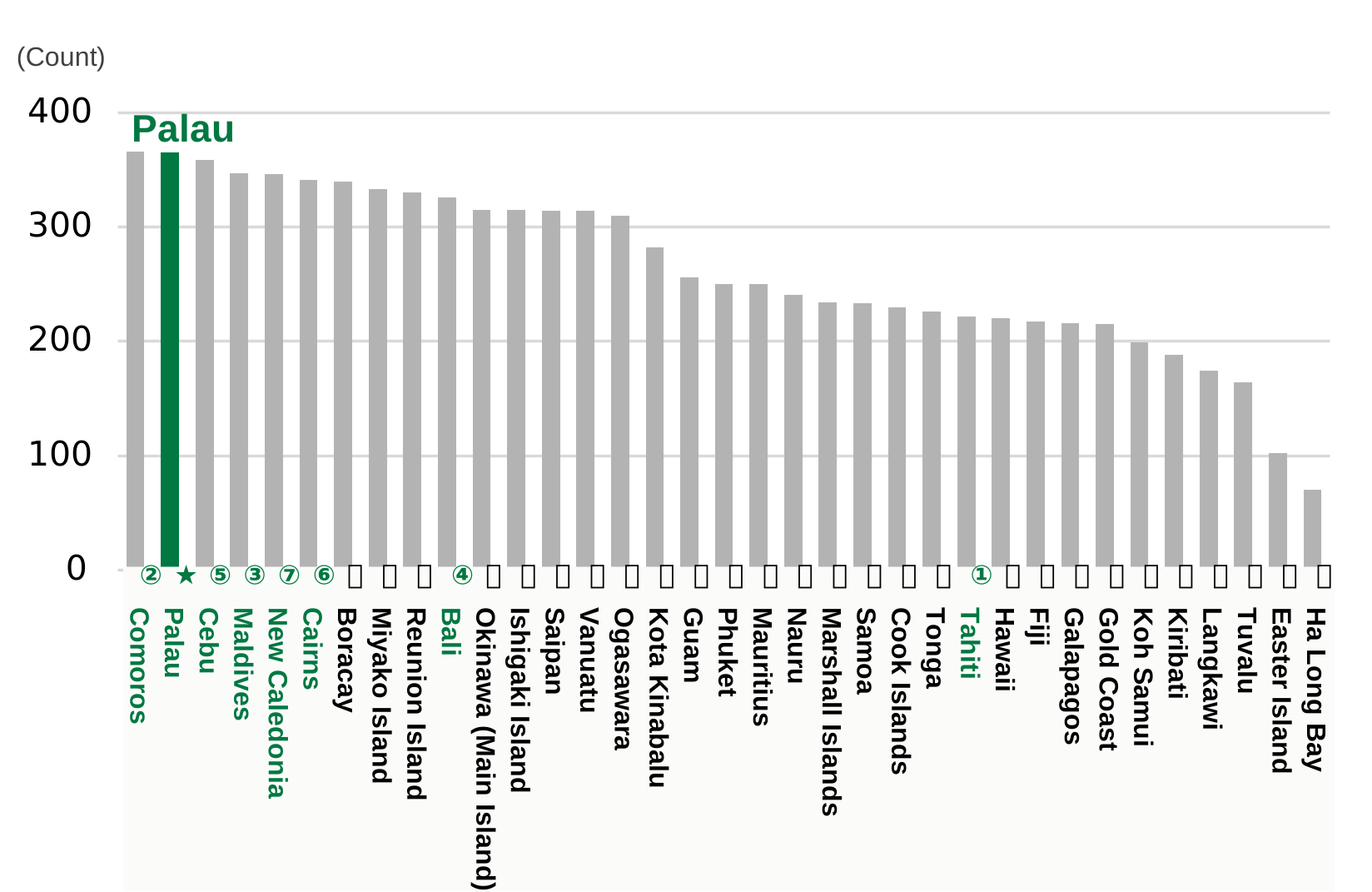
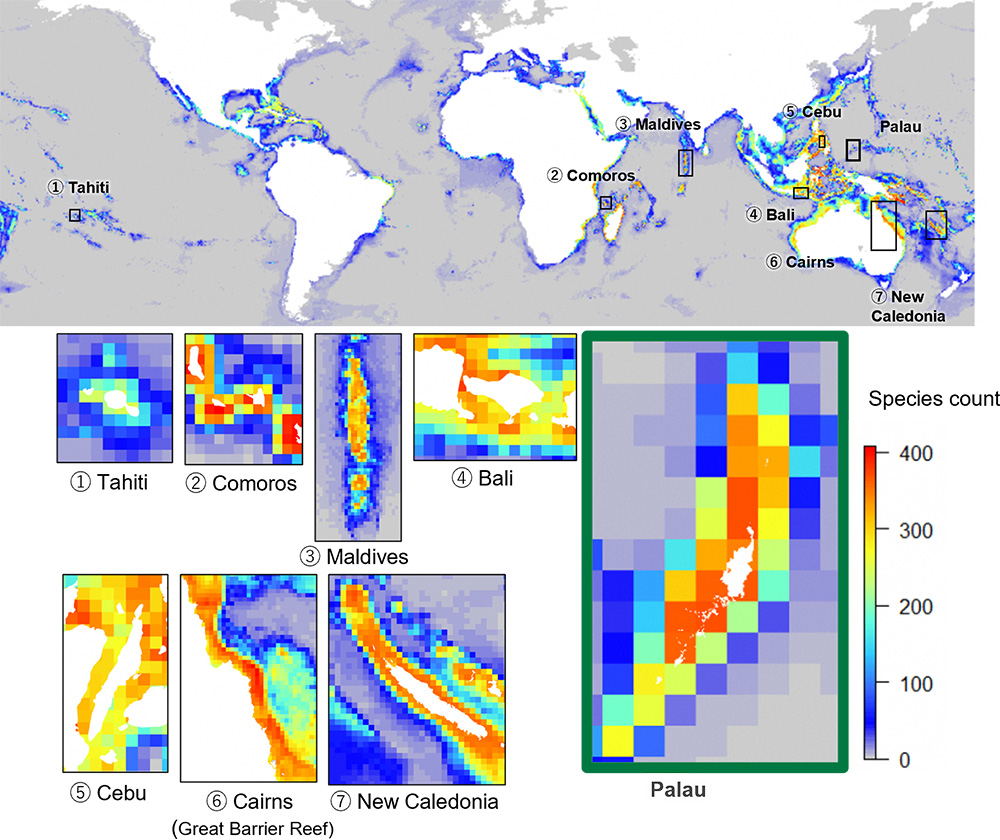
Source) Think Nature Co. Ltd.
また、We collected and organized coral coverage data from a range of existing studies and visualized the results.
Palau includes sea areas where coral coverage exceeds 60%, placing it within the top 1% worldwide, surpassing other resort regions known for abundant coral reefs. In particular, the southwestern seas adjacent to “PPR” exhibit the highest coral coverage levels within Palau.
Coral coverage at marine resort destinations worldwide
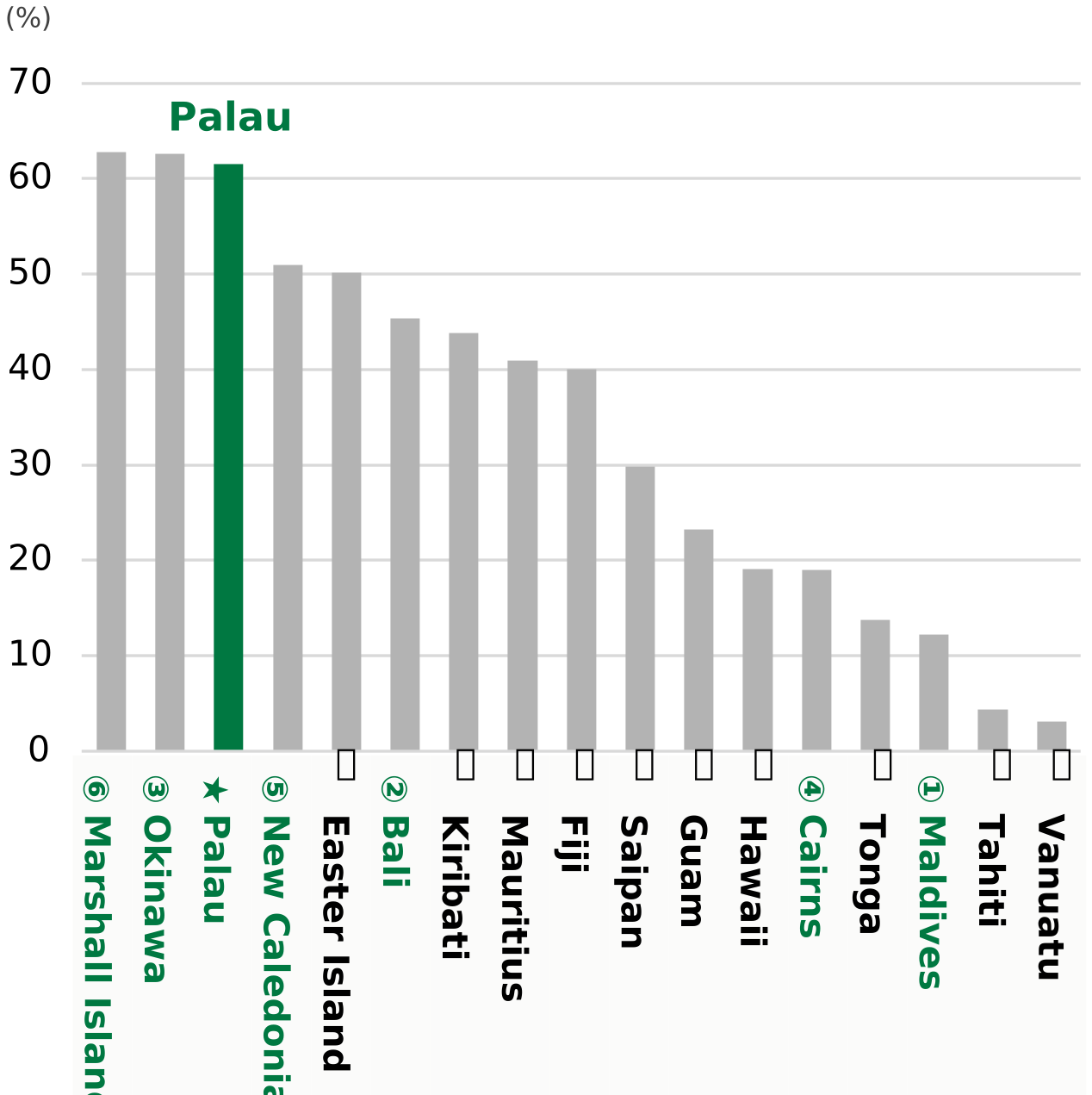
Coral coverage
Coral coverage represents the proportion of the seabed area that is covered by living coral.
It is the most fundamental indicator of coral reef ecosystem abundance and health.
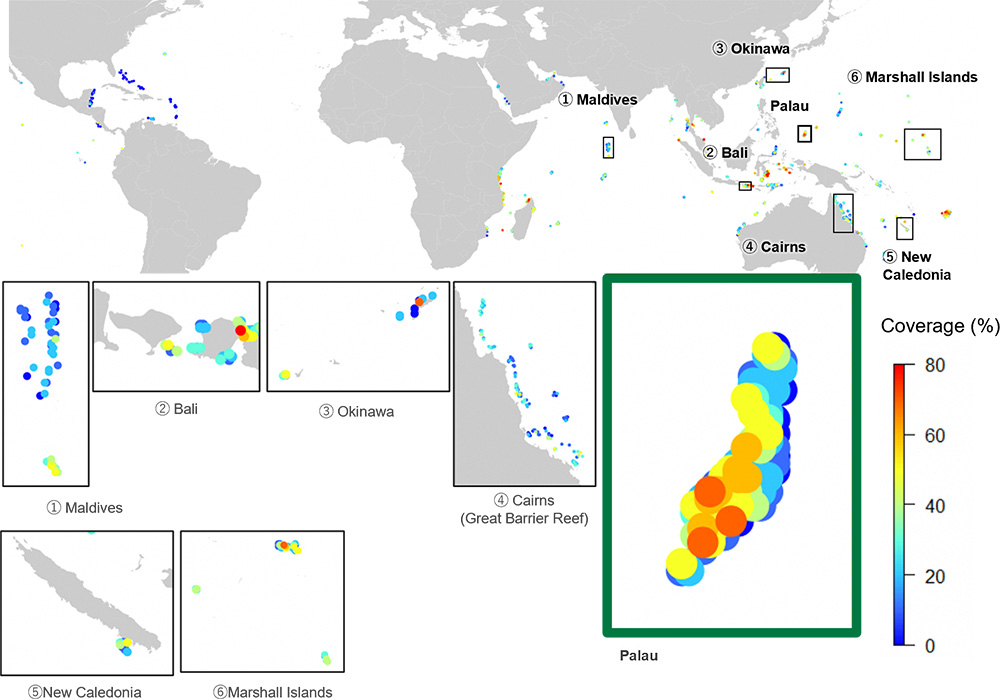
Source) Think Nature Co. Ltd.
As part of assessing the impact of our business activities on nature, we conducted a quantitative analysis of coral coverage trends in collaboration with Think Nature Co. Ltd. and reviewed the findings of on-site monitoring conducted within marine conservation areas.
Reference : Global status of coral reefs
Coral reefs are highly sensitive to environmental changes such as climate change and ocean acidification, as well as human-driven pressures including land-based pollution from agriculture, nutrient and sediment inflows, marine pollution, overfishing, and destructive fishing methods. Consequently, they are considered at risk of global decline. Reports from the United Nations Environment Programme (UNEP) and other organizations indicate that roughly 14% of the world’s coral reefs were lost between 2009 and 2018, with major contributing factors including large-scale bleaching, excessive coastal development, pollution, and typhoons.
Trends in global average live coral coverage
(blue line: coral coverage, black line: sea surface temperature anomaly, red band: periods of rapid increases in sea surface temperature anomaly)

Source) ICRI, GCRMN, Australian Institute of Marine Science, UNEP, “Status of Coral Reefs of the World 2020”
The coral coverage trends are presented below. Since development began, PPR has undertaken initiatives such as beach enhancement, coral transplantation, and the designation of a marine conservation area. These efforts led to a steady increase in coral coverage up to around 2012. However, coral coverage can fluctuate due to multiple factors, and a slight decline has been observed in line with global trends caused by external factors such as rising sea temperatures, the approach of Typhoon Haiyan in 2013, extremely low tide events, and predation by coral-feeding organisms.
Coral coverage remains a high priority, and we have initiated a large-scale coral reef restoration project to restore coral abundance, a critical resource supporting our business activities.
Monitoring surveys conducted in the Arakabesan Marine Conservation Area in front of the resort showed an increase in the settlement of new coral individuals, known as larval recruitment*, indicating that coral coverage may further recover as these larvae grow.
Changes in coral coverage and coral larval recruitment density
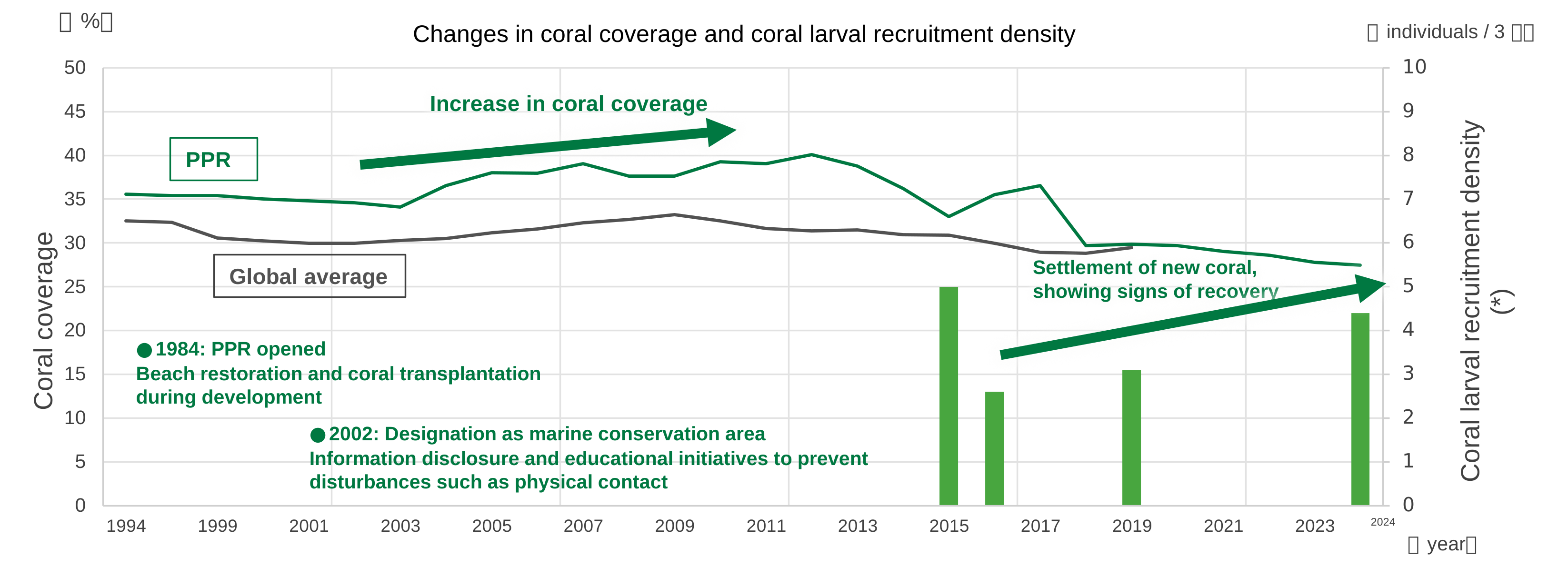
Source:
Coral coverage trends for the Rock Islands and PPR, Think Nature Co. Ltd.
Global average coverage based on ICRI, GCRMN, Australian Institute of Marine Science, and UNEP, “Status of Coral Reefs of the World 2020”
Coral larval recruitment density: PICRC (2025)9)
Coral reef coverage is declining worldwide. Recognizing the importance of coral reefs for both biodiversity and PPR’s business, we are collaborating with partners to conserve and restore these ecosystems through a range of initiatives.
Beach improvement and coral transplantation during development
Because sediment runoff had made the sea area in front of the resort unsuitable for coral growth, large-scale beach restoration works were undertaken, including coral transplantation. These environmental improvement efforts led to the successful restoration of the reef.
Education and awareness activities to prevent impacts from human activity
To reduce physical damage to coral, such as trampling, warning signs and notices have been installed. In addition, environmental education programs are provided to explain basic coral reef ecology and the importance of conservation. Guests who meet safety requirements, such as through snorkeling lessons led by instructors, are also given opportunities to observe coral reefs directly.
Coral reef restoration project in partnership with Asian Development Bank (ADB)
In 2025, a coral reef restoration initiative was launched in cooperation with ADB to restore coral coverage and increase coral populations in the sea area in front of the resort, thereby enhancing ecosystem resilience and biodiversity. To encourage coral growth and the propagation of heat-tolerant coral species, a coral nursery is being installed using electrical stimulation, also known as mineral addition technology.
Predators of coral such as Acanthaster planci are being managed, restoration outcomes are being monitored to assess effectiveness, and capacity-building efforts are being conducted to ensure long-term sustainability. PPR plays an active role in implementing the project by supporting the installation and management of the local coral nursery and by conducting education and awareness activities for local residents and guests through the newly established Luuk Nature Center.
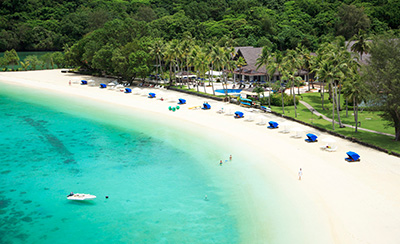
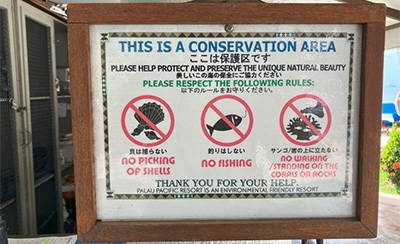
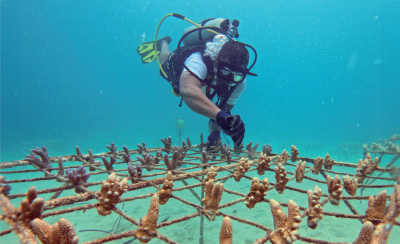
Tridacna gigas inhabit coral reef ecosystems and are closely associated with corals, as both maintain symbiotic relationships with photosynthetic algae known as zooxanthellae.
Since 1998, PPR has been releasing juvenile Tridacna gigas, an endangered species. Monitoring surveys conducted in the marine protected area in front of the resort have indicated that macroinvertebrate populations*, including Tridacna gigas, are increasing, suggesting that protection and restoration efforts have been effective.
Changes in macroinvertebrate population density
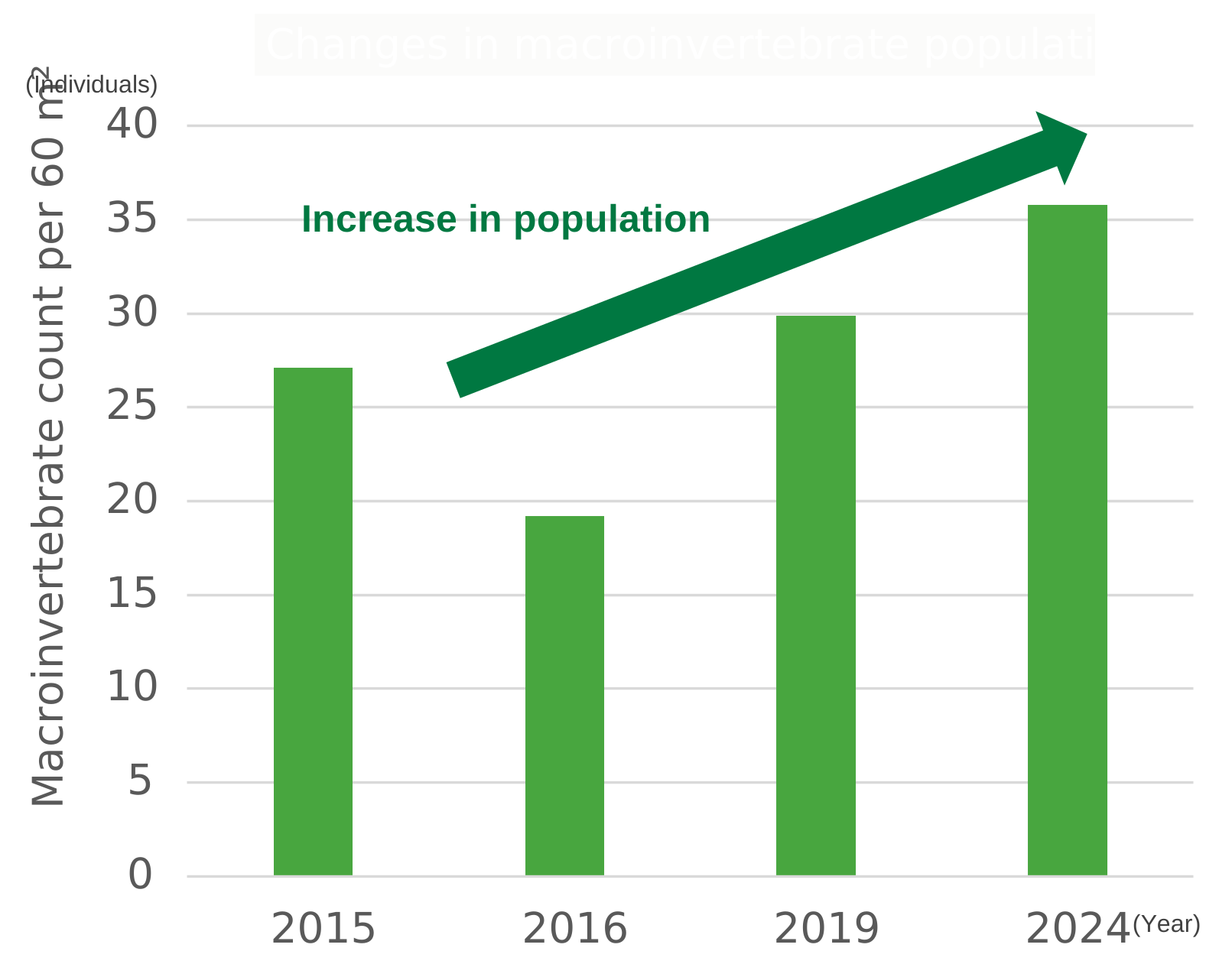
Source) PICRC (2025)9)
Tridacna gigas transplantation and release initiative
Since 1998, juvenile Tridacna gigas, an endangered species, have been released with the participation of guests, after the individuals reach a certain size in captivity
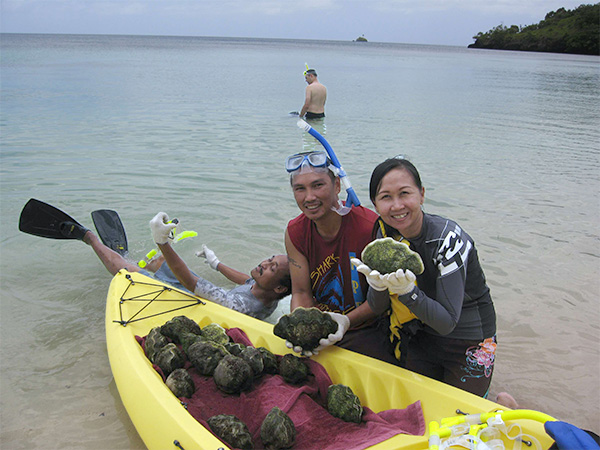
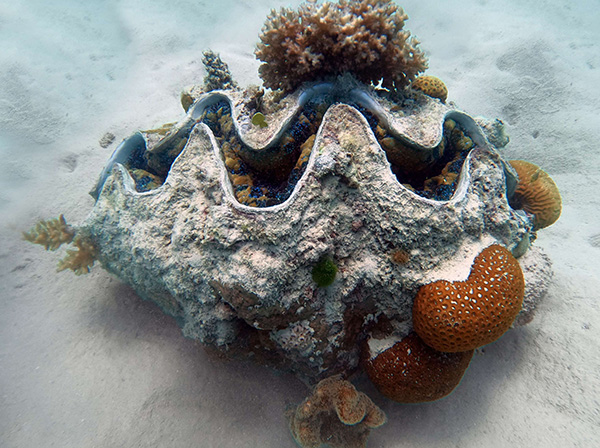
Macroinvertebrates are large animals that do not have a backbone.
Dugong dugon are globally endangered, and Palau supports the only independent population within Micronesia. The seagrass meadows that form Dugong dugon habitats are also critically important for many other marine species. Accordingly, Dugong dugon serve as indicator species for the health and biodiversity of coastal environments.
We assessed habitat suitability in terms of the survival of Dugong dugon in the surrounding waters.
Dugong dugon inhabit subtropical and tropical coastal seas and are endangered in nearly all parts of their range.
Palau hosts the only isolated Dugong dugon population in Micronesia.
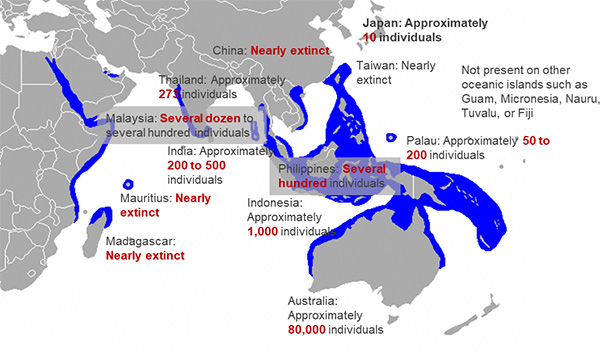
Source) Think Nature Co. Ltd.
Dugong dugon are obligate herbivores that rely almost entirely on seagrass for food, making seagrass beds their sole feeding grounds. The existence of dense seagrass beds is therefore essential for survival.
Seagrass beds are areas of shallow seafloor where seagrass grows in meadow-like formations. They provide abundant food and habitat for a variety of marine organisms, including Dugong dugon, and represent a critical ecosystem for the survival of many species.
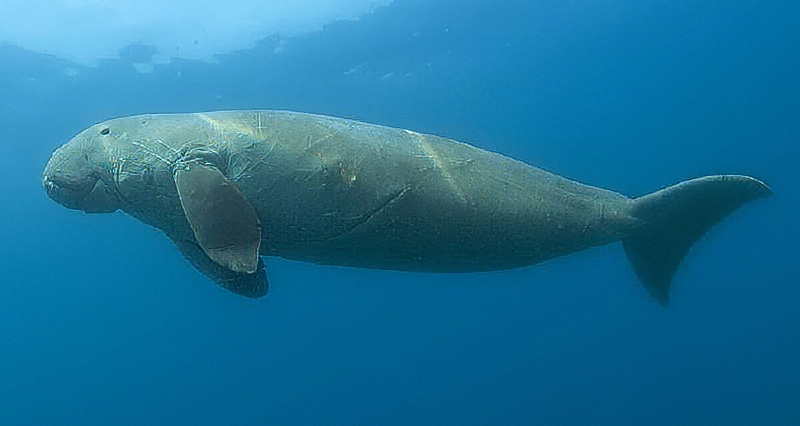
The southeastern region of Palau showed the highest suitability for Dugong dugon, with the area surrounding “PPR” ranking among the most consistently suitable locations in the country. These habitats support not only Dugong dugon but a variety of marine organisms, including fish and crustaceans, as reflected in the rich and diverse marine ecosystem in the surrounding seas of the resort.
[Figure 1]
Comparison of Dugong dugon habitat suitability in 2024
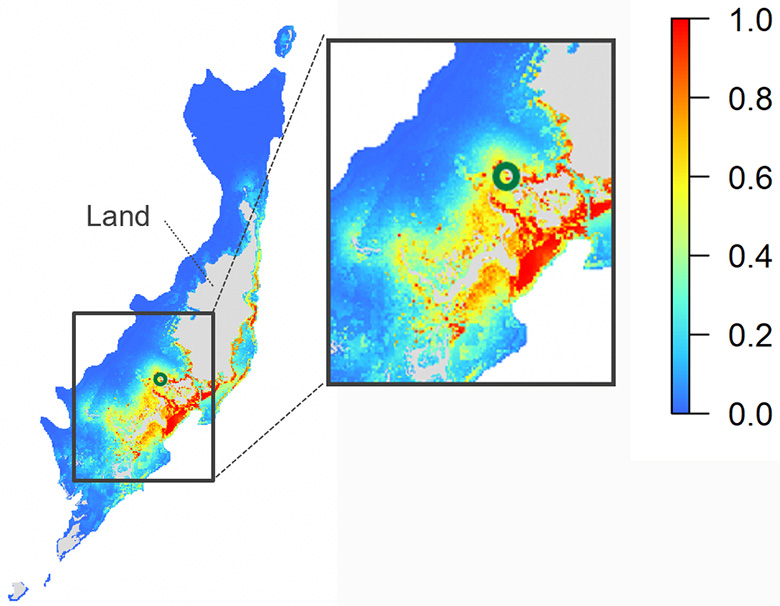
[Figure 2]
Dugong dugon habitat suitability trends in seas in front of “PPR”
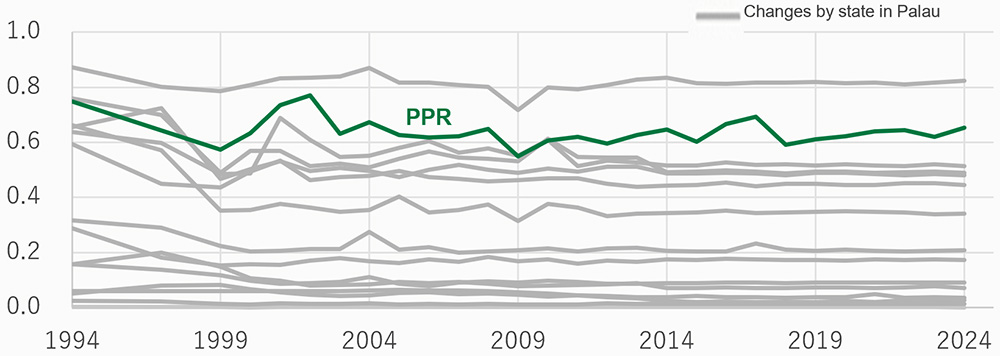
Research from literature also shows that Palau has avoided accidental capture by fishing, seagrass bed degradation, and water quality decline due to urbanization, key factors causing Dugong dugon population declines elsewhere.
These findings suggest that resort operations, including “PPR,” have contributed to Palau's economic growth, and that the country’s tourism-focused development has supported the preservation of natural environments that form the foundation of the country’s economy, thereby maintaining rich marine ecosystems suitable for Dugong dugon habitats.
Source) Think Nature Co. Ltd.
Qualitative and quantitative assessments of terrestrial and marine ecosystems indicated that PPR’s activities positively impact both terrestrial and marine ecosystems. Preserving terrestrial ecosystems helps enrich marine ecosystems through the ecological connection between land and sea, known as an ecotone.
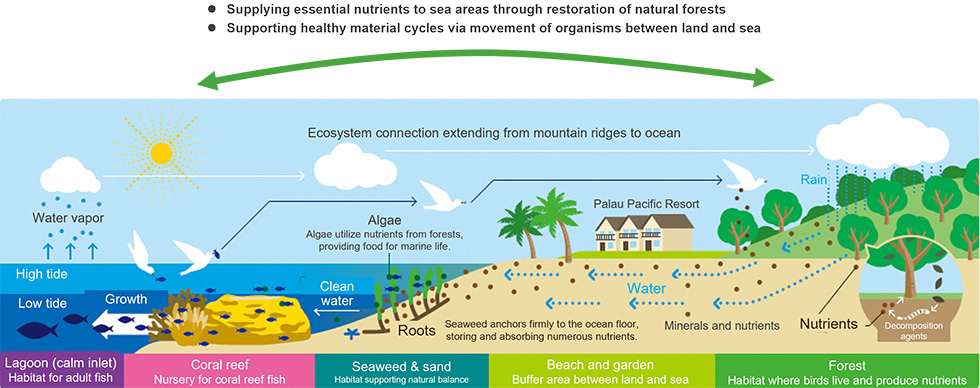
Marine conservation
etc.
World-class terrestrial
and marine biodiversity
Forest conservation
etc.
Qualitative and quantitative analyses of PPR’s operations and its connection with nature showed that the resort has adhered to its original vision and has operated for more than 40 years while respecting both the environment and local communities, highlighting its long-term contributions to nature-positive initiatives.
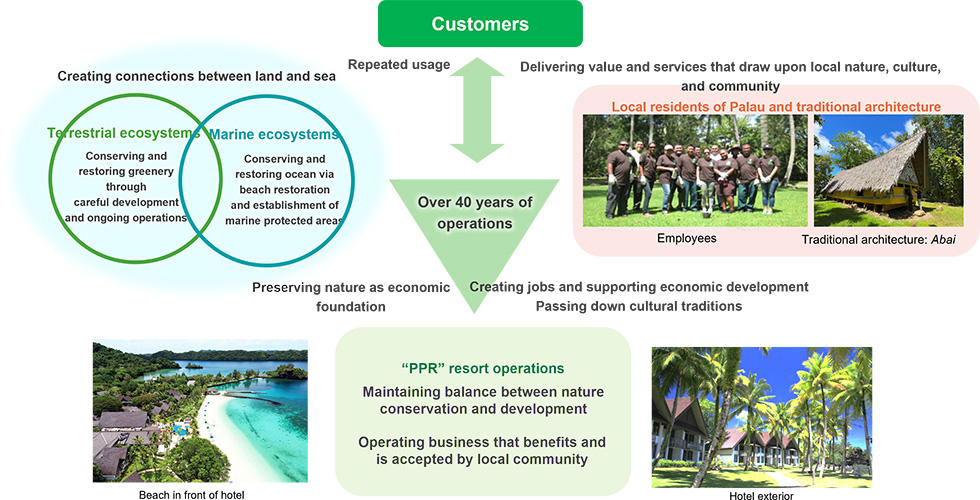
An assessment of potential nature-related risks and opportunities in the marine hotel and leisure industry, with a focus on “PPR,” showed that, although there are expected physical risks, such as a reduction in resort attractiveness and tourist appeal due to declining ecosystem services, as well as transition risks arising from regulatory and market changes, numerous nature-related opportunities may emerge.
この表は左右にスクロールできます
| Classification | Major dependencies / impacts | Risk components | ||
|---|---|---|---|---|
| Transition | Risks | Policies and regulations | Other resource consumption and waste |
|
| Technology | CO₂ emissions and water resource usage |
|
||
| Market | Resource consumption |
|
||
| Reputation | General impacts |
|
||
| Opportunities | Resource efficiency |
Reduction of negative impacts such as land alteration, pollution, resource use, and waste discharge Positive contributions to nature and biodiversity |
|
|
| Capital |
|
|||
| Products and services |
|
|||
| Reputation |
|
|||
|
||||
| Nature protection, recovery, and restoration |
|
|||
This table can be scrolled horizontally
| Classification | Major dependencies / impacts | Risk components | ||
|---|---|---|---|---|
| Physical | Risks | Acute / chronic | Water resources |
|
| Water supply, pollination, and climate regulation |
|
|||
| Soil retention, storm mitigation, and climate regulation |
|
|||
| Climate regulation, population maintenance, habitats, and cultural services |
|
|||
Understanding, integrating, and consolidating social issues
Confirming stakeholder expectations
Identifying high-priority management issues
Identifying materiality, opportunities, and risks
Analysis of dependencies and impacts
Collecting information on
the external environment
Identifying risks and opportunities
Important risks
Examples of ESG risks
Climate change, biodiversity conservation, environmental pollution, waste reduction and proper disposal, resource use, water resource conservation, human rights protection, child labor prevention, community and societal contributions, employee health and safety, employee human rights, corruption, bribery, corporate governance, etc.
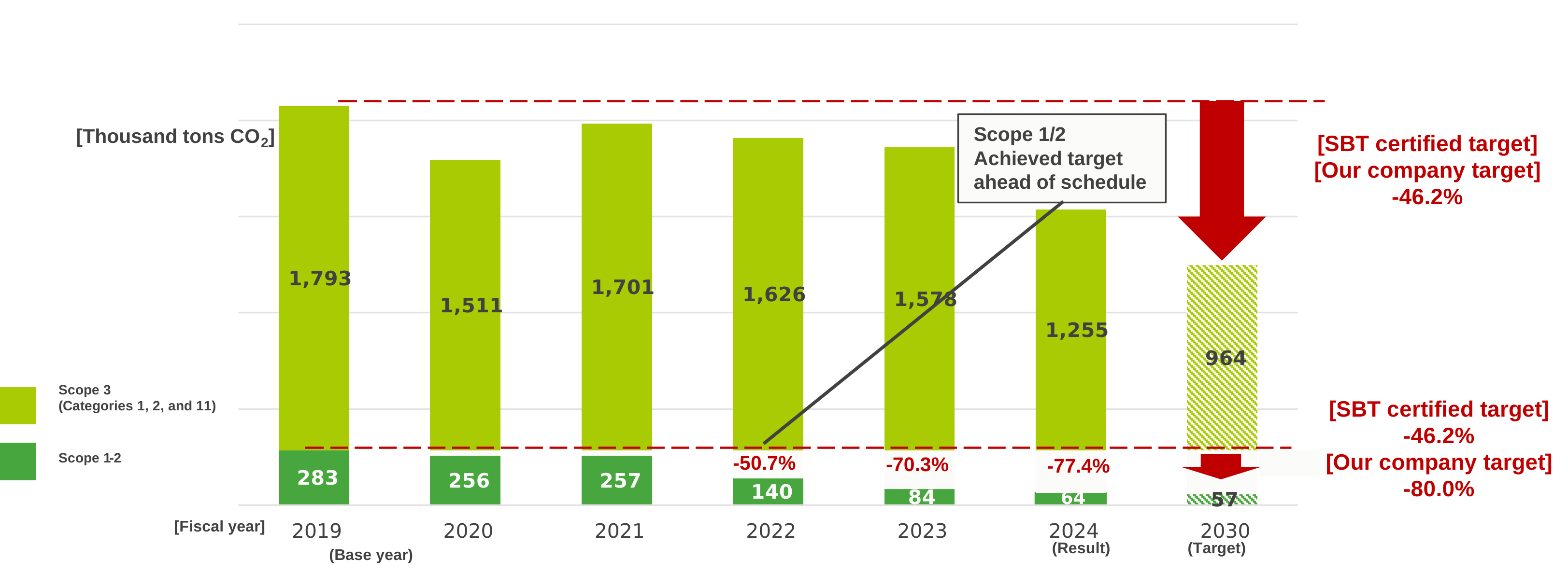
We have also established the following metrics and targets associated with climate- and nature-related issues.
This table can be scrolled horizontally
| Metric | FY2030 target |
FY2025 target |
FY2021 result |
FY2022 result |
FY2023 result |
FY2024 result |
||||
|---|---|---|---|---|---|---|---|---|---|---|
| Financial metric | ROE | ≥10% | 9% | 5.7% | 7.3% | 9.6% | 9.9% | |||
| ROA | ≥5% | 4% | 3.2% | 4.1% | 4.2% | 4.5% | ||||
| D/E ratio | ≤1.8x | ≤2.2x | 2.3x | 2.2x | 2.1x | 2.1x | ||||
| Operating profit | ≥220 billion yen | 120 billion yen | 83.8 billion yen | 110.4 billion yen | 120.2 billion yen | 1,408 billion yen | ||||
| Net income | ≥120 billion yen | 65 billion yen | 35.1 billion yen | 48.2 billion yen | 68.5 billion yen | 776 billion yen | ||||
| Environmental metric | General | Environmental certification acquired*1 | 100% | 70% | 35% | 48.7% | 65.0% | 70.3% | ||
| Environmental initiatives adopted in business activities (cumulative) | ≥150 cases | ≥50 cases | 22 cases | 36 cases | 70 cases | 105 cases | ||||
| Climate change | RE100 achieved (Tokyu Fudosan Corp.) |
Achieved | Achieved | — | Conversion completed | Achieved | Achieved | |||
| Renewable energy power usage ratio | ≥60% | 65% | 4.0% | 52.9% | 84.1% | 89.3% | ||||
|
CO₂ emissions
Target is total amount compared to FY2019
|
Scope 1-2 (tons CO₂) |
56.7 (▲80%) |
ー 2023 (▲50%) |
257.0 (▲9.3%) |
139.8 (▲50.7%) |
84.1 (▲70.3%) |
64.3 (▲77.3%) |
|||
| Scope 3 | — | — | 1,801.7 | 1,739.0 | 1,645.3 | 1,332.2 | ||||
| Categories 1, 2, and 11 | 964.4 (▲46.2%) |
— | 1,700.9 (▲5.1%) |
1,626.3 (▲9.3%) |
1,578.3 (▲11.9%) |
1,252.1 (▲30.1%) |
||||
| Nature | Forest conservation target | 3,000ha | 2,400ha | 2,031ha | 2,086ha | 2,145ha | 2,304ha | |||
| Land-use target: Building greening (rooftop, walls, etc.*2) | 100% | 100% | 100% | 100% | 100% | 100% | ||||
This table can be scrolled horizontally
| Metrics | FY2030 target |
FY2025 target |
FY2021 result |
FY2022 result |
FY2023 result |
FY2024 result |
|||
|---|---|---|---|---|---|---|---|---|---|
| Environmental metric | — | Water usage (m³) | — | — | 4,866,901 | 5,101,092 | 5,386,895 | 4,624,907 | |
| Intensity (m³/m²) (compared to previous fiscal year) (compared to FY2023) |
1.7 ー ▲7% |
ー ー (ー) |
1.4 (+7.3%) (ー) |
1.7 (+19.0%) (ー) |
1.8 (+9.1%) (ー) |
1.6 (▲12.7%) (ー) |
|||
| Pollution / removal of pollution | Wastewater discharge
(TNFD core indicator C2.1)
|
Total wastewater volume (m³) | — | — | 5,004,959 | 5,195,749 | 5,486,100 | 4,759,347 | |
| Total discharge to surface water (m³) | — | — | 929,748 | 1,012,969 | 1,108,319 | 1,026,144 | |||
| Total discharge to sewer system (m³) | — | — | 4,075,211 | 4,182,780 | 4,377,781 | 3,733,203 | |||
| Total floor area of target facility (m²) | — | — | 3,444,317 | 3,034,240 | 2,936,936 | 2,896,819 | |||
| Waste generation and treatment (C2.2) | Total discharge (tons) | — | — | 27,827 | 21,181 | 21,120 | 21,269 | ||
| Non-recycled waste discharge (tons) | — | — | 10,947 | 13,713 | 12,553 | 13,837 | |||
| Hazardous waste discharge (tons) | — | — | 86 | 1,040 | 4 | 5 | |||
| Recycled waste discharge (tons) | — | — | 16,880 | 7,467 | 8,535 | 7,432 | |||
| Floor area of target facility (m²) | — | — | 3,289,418 | 2,853,448 | 2,642,814 | 2,517,229 | |||
| Intensity (kg/m²) (compared to FY2019) (compared to FY2023) |
7.4 ー ▲7% |
— — (ー) |
8.5 (▲11.7%) (ー) |
7.4 (▲22.5%) (ー) |
8.0 (▲16.6%) (ー) |
8.4 (▲11.8%) (ー) |
|||
| Air pollutants other than GHG* (C2.4) | NOx (tons) | — | — | 0.229 | 0.135 | 0.135 | 0.208 | ||
| SOx (tons) | — | — | — | 0.007 | 0.007 | 0.009 | |||
| Resource use / replenishment | Procurement of high-risk natural primary products (C3.1) | Amount of wood procured (m³) | — | — | — | 19,892 | 7,757 | 11,062 | |
| Sustainable procurement (formwork timber) | 100% | 30% | 0% | 2.8% | 9.7% | 23.30% | |||
* Annual discharge at Northport Mall (Yokohama City)
This table can be scrolled horizontally
| Transition plan components | Disclosure components |
|---|---|
| Governance structure |
|
|
|
| Roadmap and measures |
|
| Risks and opportunities |
|
| Metrics and targets |
|
| Stakeholder engagement |
|
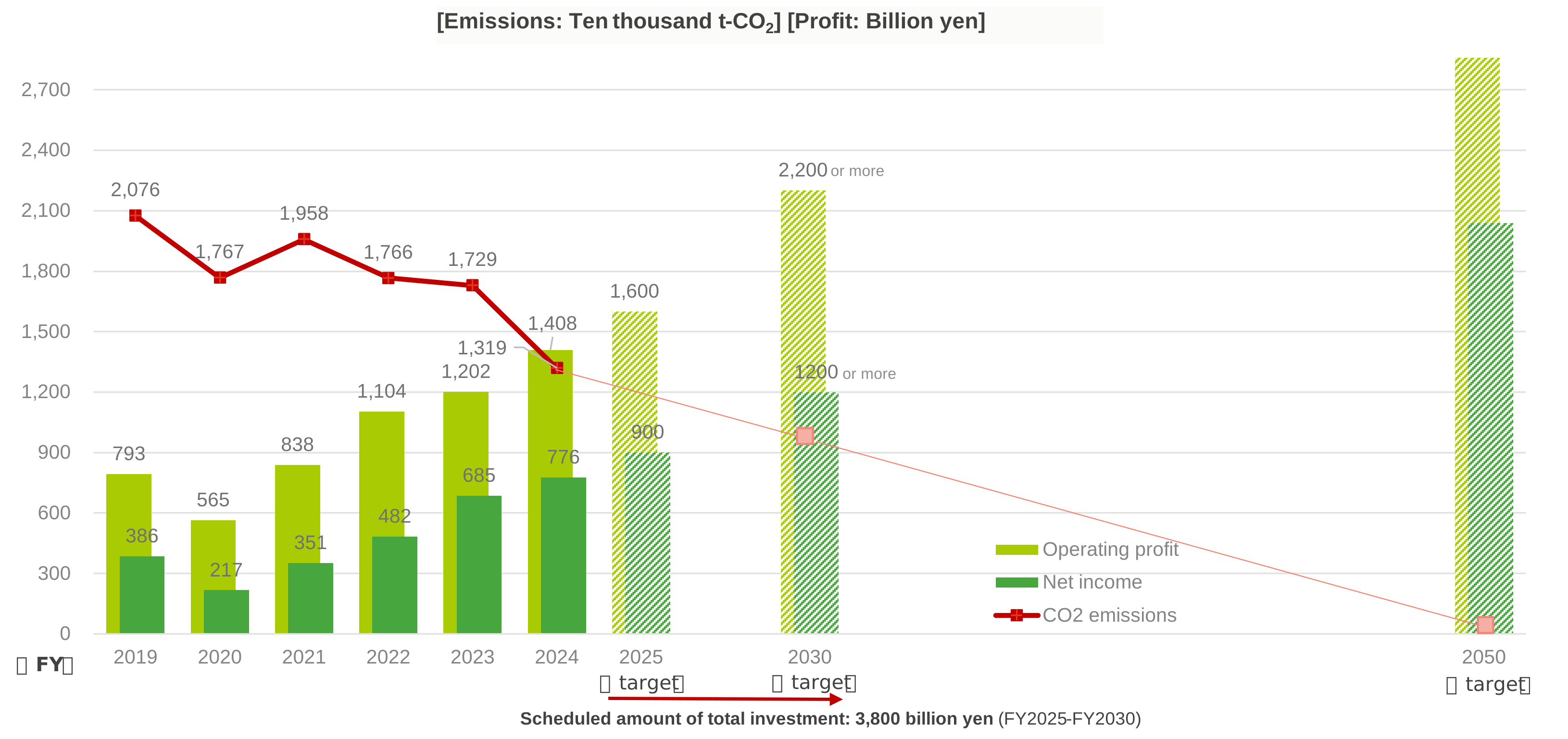
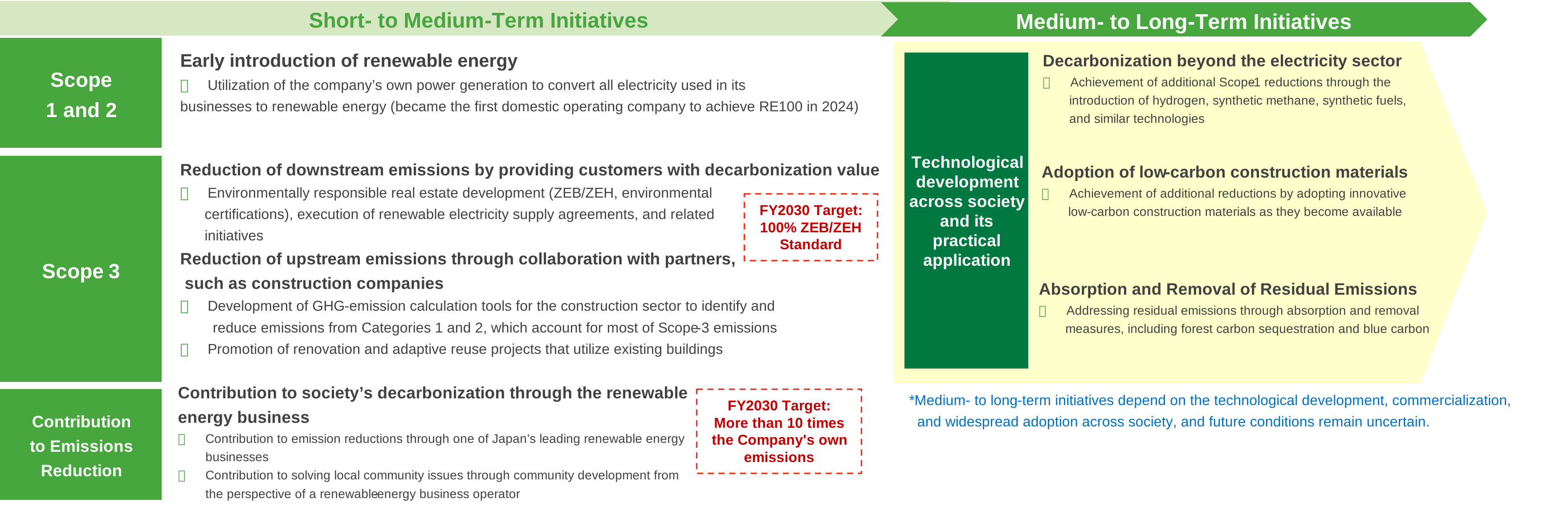
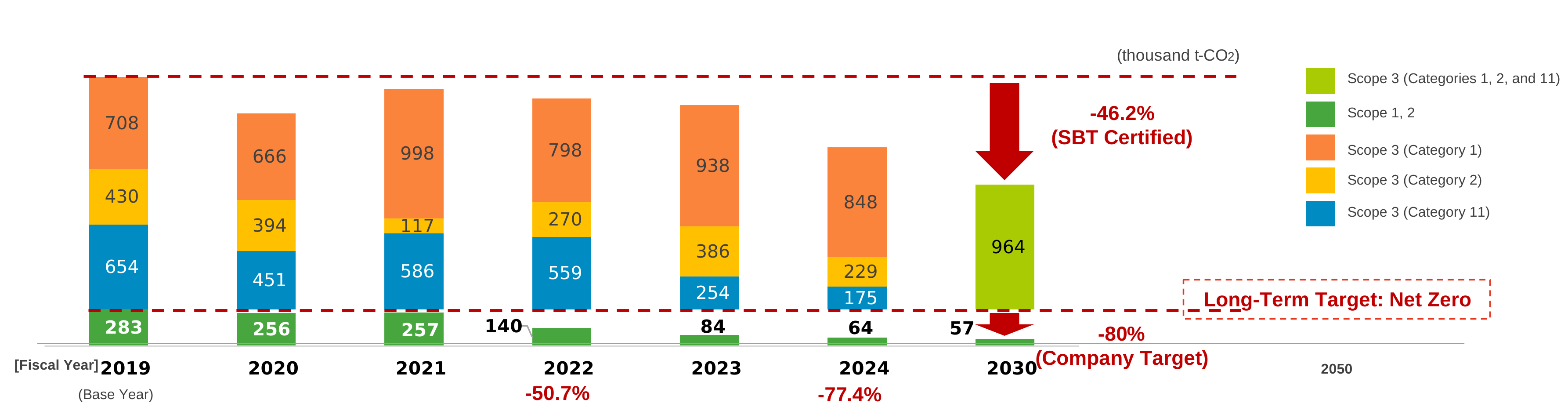
This table can be scrolled horizontally
| Measure | Target | Result | Topic |
|---|---|---|---|
| Scope 1, 2 | |||
| RE100 | Achieved in 2022 (Tokyu Fudosan Corp.) | 100% RE conversion completed in December 2022 RE100 achieved |
Utilizing Japan's top-level RE generation capacity Achieved the first conversion*2 among domestic companies |
| Scope 3 | |||
| ZEB/ZEH standard*3 | FY2030: 100% | 100% achieved (FY2024) | March 2022: All new buildings conformed with the ZEB standard September 2022: All Branz conformed with the ZEH standard November 2025: All Branz conformed with the GX ZEH-compliant standard |
| Other measures | |||
| Environmental certification acquired*4 | FY2025: ~70% FY2030: 100% |
97.3% (FY2025) | Certification examples: Properties that have acquired “5 Stars” in DBJ certification include Tokyo Port City Takeshiba, Shibuya Solasta, and Hibiya Park Front |
| ICP implementation | Introduced as part of management decisions in FY2023 | Already presented at management meetings (FY2022) | |
| Collaboration with government authorities | Participation in the GX Future Consortium★ (FY2025) | ||
Total amount of investment in renewable energy business: Approx. 530 billion yen
(5-year period between FY2025-2030)
Target for FY2030 rated capacity: 4.0 GW*1
| Expanding power generation sources |
|
|---|---|
| Utilizing renewable energy |
|
| Building co-creation relationships and developing systems |
|
[As of end of December 31, 2026] Rated capacity*1: 2,527MW
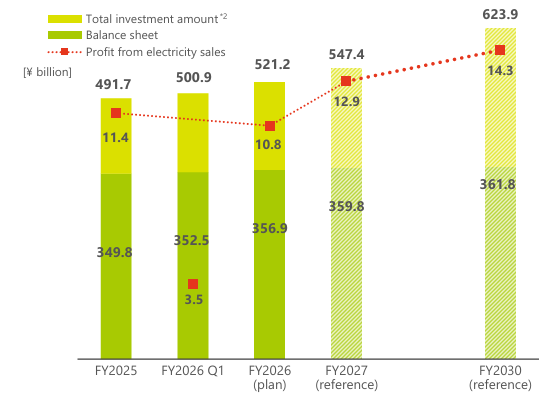
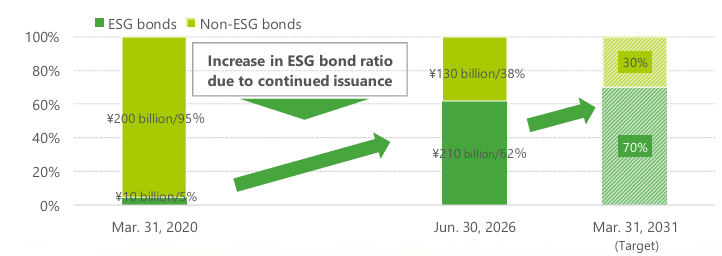
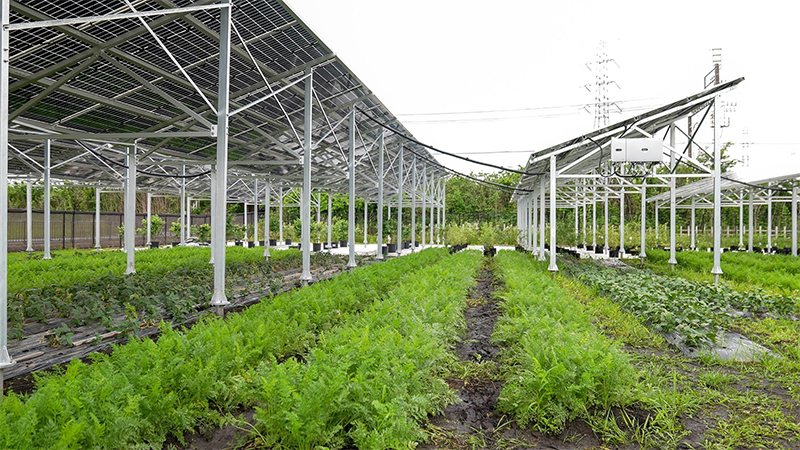

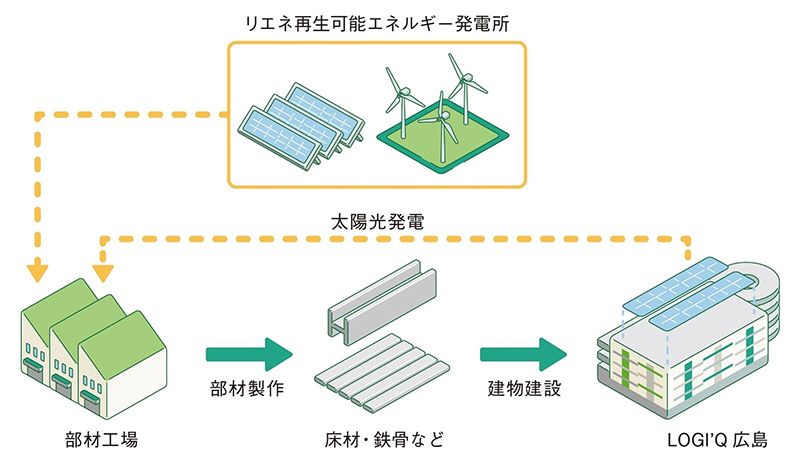
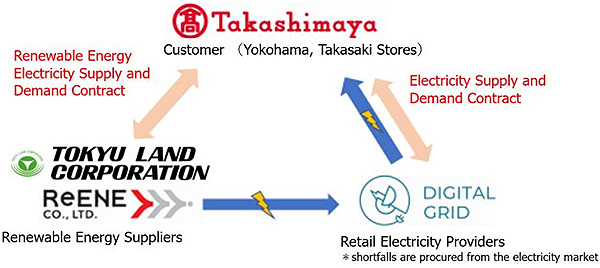
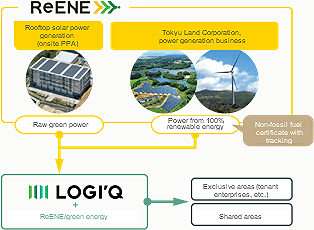
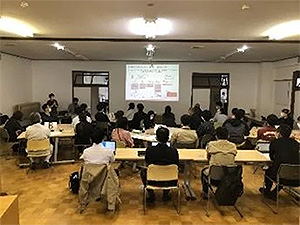
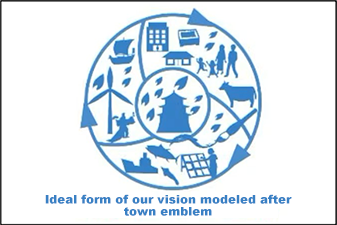
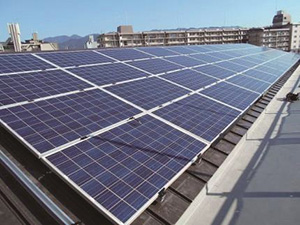








Branz Tower Tanimachi 4-chome has introduced 100% RE in all units and common areas, creating an environmentally advanced condominium that promotes decarbonization. (Completed in 2024)
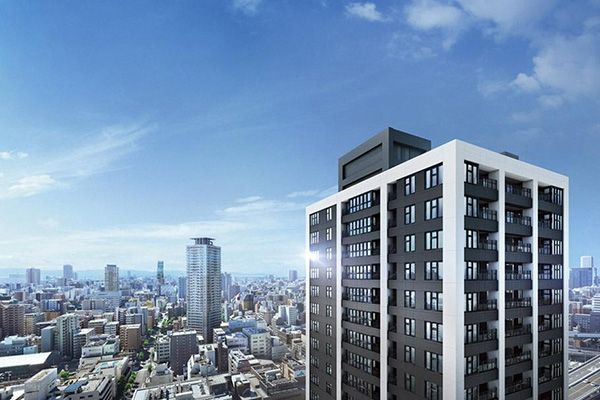
ZEH Oriented certification was obtained for the Branz Chiyoda Fujimi. The condominium aims to reduce primary energy consumption by >20% throughout the entire building, including the common areas, while maintaining the quality of the indoor environment. (Completed in 2025)
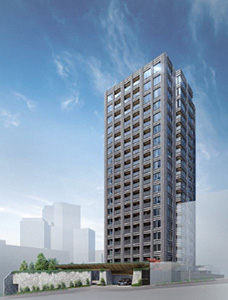
“Logi’Q” provides environmental load reduction services using 100% RE, “ReENE Green Energy,” for tenant companies and their shippers.
We use renewable energy such as solar and wind power in various businesses. The facilities of Palau Pacific Resort and Tokyu Harvest Club Atami Izuyama Viala are powered using solar power generation.
The commercial facility Tokyu Plaza Omotesando has also installed two wind power generation devices on the roof to generate natural energy.
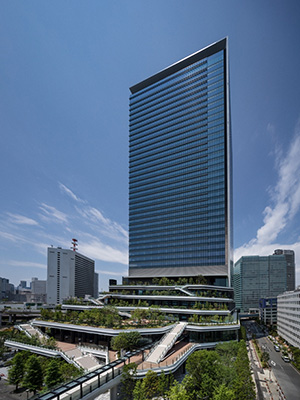
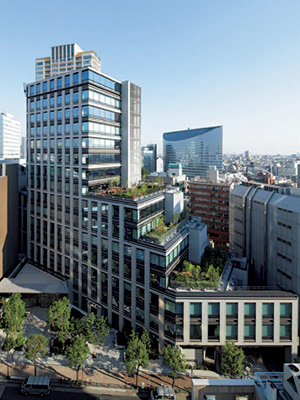
In 2019, our head office, Shibuya Solasta, received the highest rank of CASBEE's new certification: CASBEE-Wellness Office, S Rank.
The first office building in Tokyo to receive Nearly ZEB certification. In FY2020 through a reduction of approximately 87% in primary energy consumption, exceeding the standard.
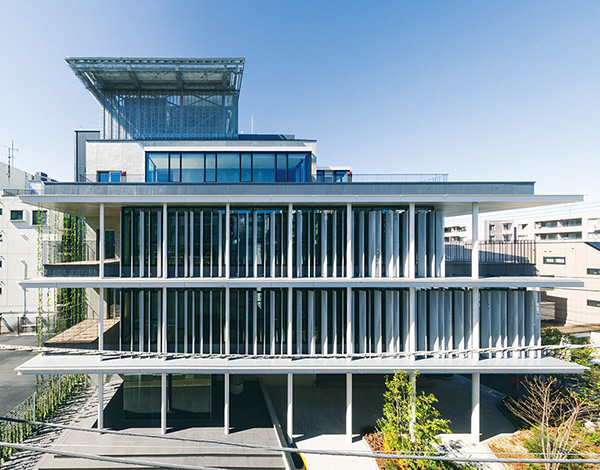
Received ZEB Ready certification at the largest domestic scale for a commercial/hotel mixed-use building.
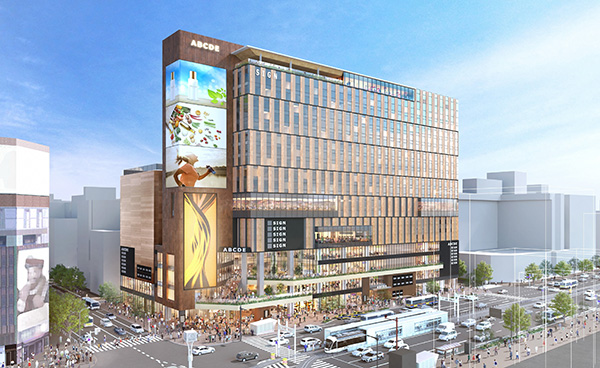
Tokyu Community Co. Ltd. has begun joint demonstrations of charging services for apartment buildings using BEV/PHEV-charging systems developed by DENSO Corp. at an apartment building in the Tokyo metropolitan that it has managed since January 2025.
Construction began in September 2024 on the first Ishikari RE Data Center, which will be operated on 100% renewable energy, in Ishikari City, Hokkaido. Ishikari Regional Energy LLC, an investment recipient of Tokyu Fudosan Corp., and ReENE Co., Ltd., a wholly owned subsidiary, will collaborate to directly supply RE through an on-site PPA.
Specific initiatives in our group to date regarding risks, opportunities, and impact are presented below. The following are some of the major initiatives we have undertaken.
In the greater Shibuya area, which has Shibuya Station at its center, we further evolved upon and deepened our “Greater SHIBUYA 1.0” concept for the area to formulate our new community planning strategy “Greater SHIBUYA 2.0.” In addition to bringing together the three elements of workplaces, residences and entertainment, we will promote initiatives for “digital” and “sustainable” as the foundation of that strategy. Regarding “sustainable,” through efforts such as developing richly-green environments, promoting decarbonization and reinforcing resilience, we are engaging in the planning of a community in which anyone can spend time in safety, security and comfort, one that has cutting-edge environmental measures in place and will grow on a continuous basis.
At our office buildings, we are currently expanding “GREEN WORK STYLE,” through which we seek to realize improved corporate value and the realization of worker well-being from the dual aspects of “the workplace” and “office solutions” through diverse green power while being mindful of health, safety, the environment, and sustainability. By realizing a work style through which workers interact with green, we will alleviate their day-to-day stress and draw out the productivity of each individual member to the fullest while also contributing to the smooth formation of a community.
SHIBUYA SOLASTA :
A green terrace for tenants has been placed on every office floor of this facility. By having workers feel green and fresh air, which is normally lacking in an office environment, in their immediate surroundings, we will contribute to reducing their stress and improving their productivity. Additionally, at the top floor of the facility, we have set up a sky terrace and lounge (shown in photo to the right) that takes advantage of the rooftop space to provide “a place to work under the refreshing sky.”
Given the importance of biodiversity-conscious urban greening, in the greater Shibuya area, we are actively promoting the greening of areas such as rooftops and wall surfaces at our business sites in order to preserve the ecosystem. By connecting the green in the vicinity and acting as a relay point for the living creatures that inhabit those areas, we are tackling the formation of an ecological network in the greater Shibuya area.
In particular, when we develop large-scale properties with considerable impact on the local community, we carry out ecosystem studies in the peripheral area at the planning stage, perform greening using vegetation that takes the bird and inspect species that inhabit the area into consideration, and pursue biodiversity conservation in that community.
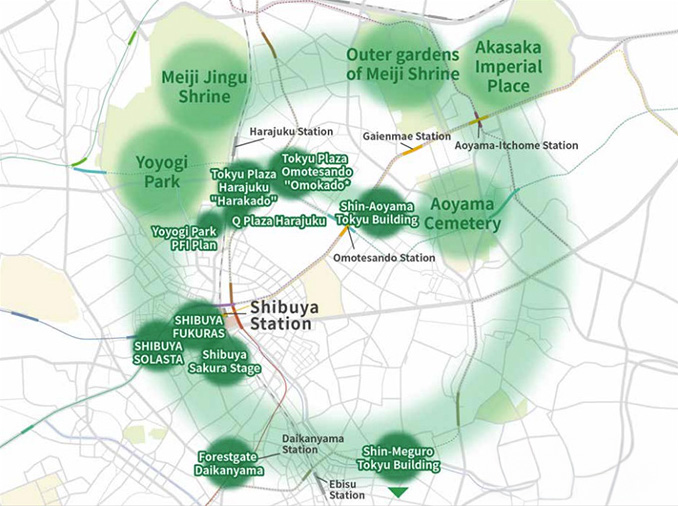
* Newly-built large-scale office building/commercial facility properties
Image representation
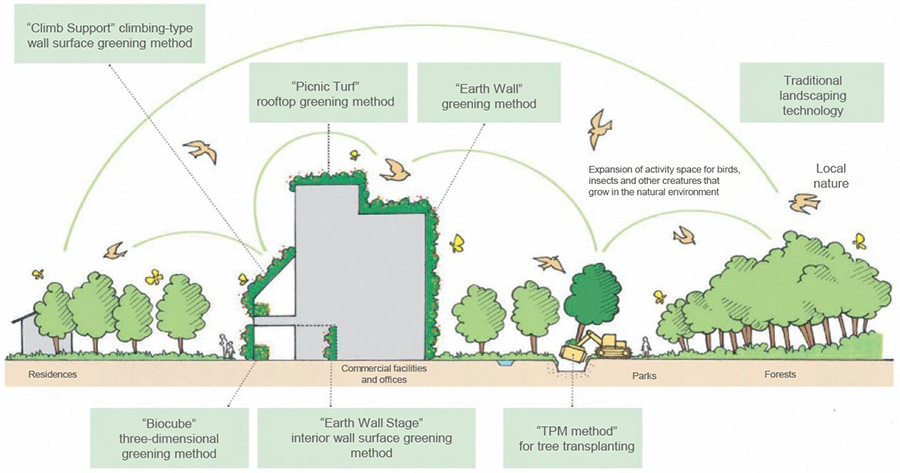
Biological monitoring
At the “Omohara Forest” rooftop terrace at the “Tokyu Plaza Omotesando “Omokado”” commercial facility, with the help of natural environment conservation specialist Regional Environmental Planning, Inc., we perform regular living creature studies throughout the year in order to assess trends in the ecosystem of the green space there. (Previously described)
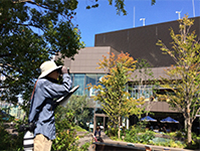
Participation in biodiversity certification systems
For properties that are especially surrounded by numerous natural environments and also have ample green space secured on site, we encourage the acquisition of certifications such as ABINC to back the securing of biodiversity.
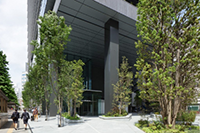
In the Takeshiba area located in Tokyo’s Minato City, which constitutes a national strategic economic growth area, we are pursuing community planning that takes advantage of industry-academia cooperation and technology and are moving forward with long-term continuous initiatives to enhance the appeal and vitality of the area of the whole, including its environment (sustainability).
The office town serving as the core piece of the project is a large-scale complex with a total floor area of approx. 180,000m2, 40 floors above ground, and two floors below ground. The higher floors consist of an office area, with the lower floors hosting a commercial area. The office lobby on the sixth floor provides a space that incorporates water and green and is in harmony with the local community.
On the southeast side of the second through sixth floors, the spacious “Skip Terrace” has been erected in a staircase pattern. There, the “Eight New Views of Takeshiba” made up of eight scenes represented by the sky, bees, a rice paddy, a vegetable garden, aromas, water, an island and rain are presented as a “Satoyama”-like landscape. By forming an ecological network linked to the Hamarikyu Gardens, the Kyu-Shiba Imperial Gardens and the rich green of the surrounding area, we aim to contribute to the biodiversity of the local community.
At the “Rice Paddy Scene” containing a 145m2-wide rice paddy and the “Vegetable Garden Scene” where vegetables and fruits are grown, students at the nearby preschool, tenant-related individuals and people who reside in the residence tower can take part in rice-planting or harvesting events, which will be tied into environmental education for stakeholders.
Additionally, at the “Bees Scene” where beehives are placed and the “Sky Scene” with of nest boxes placed on wall surfaces that are hard for people on the fifth, eight, tenth and twelfth floors to catch sight of, habitats for honeybees and raptor species such as falcons and kestrels will be supplied. Through these, we will contribute to biodiversity in the city center.
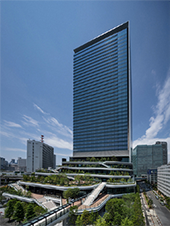
 Office lobby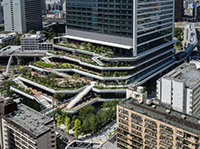
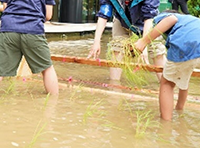
Based on the concept of green infrastructure (see note), ISHIKATSU EXTERIOR INC., which handles the group’s Environmental and Greening Management Business, has been engaged in disaster prevention and mitigation, protection and preservation of nature and biodiversity, sustainable urban development, and contracted management of various green spaces by utilizing various technologies, including urban greening technologies such as rooftop greening and wall greening.
Note : What is Green Infrastructure?
Green infrastructure is a concept that aims to utilize the various benefits of the natural environment, such as disaster prevention, disaster mitigation, and environmental preservation, to solve various social issues, through its functions of mitigating global warming, providing places for organisms to grow, shaping landscapes, and providing cultural services. The Ministry of Land, Infrastructure, Transport and Tourism's GX Strategy for Urban Development includes a call for public-private partnerships to further promote the quality and quantity of urban green spaces with diverse functions as green infrastructure, and the importance and attention to this issue is increasing.

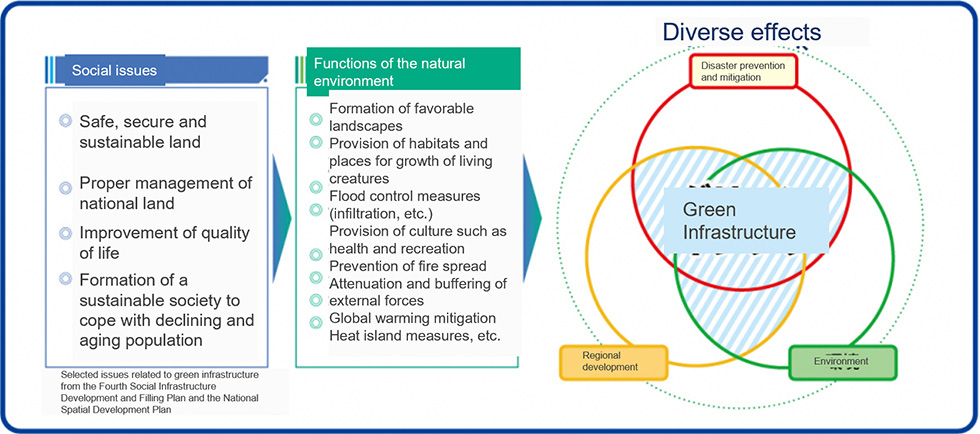
* Excerpt from the MLIT website
About the technology of ISHIKATSU EXTERIOR INC.
The company will reorganize the environmental greening technology and know-how it has promoted in its landscaping and greening business based on the concept of green infrastructure, formulate a green infrastructure menu that can be deployed to customers and various stakeholders, and apply it to all its businesses as "Greentect," a system to promote initiatives to realize green infrastructure. The menu visualized by the system lists a wide range of technologies and know-how in landscaping and greening-related fields, and is classified into eight major categories. The system is designed to use the menu at the sales stage of each project to determine the technological items to be adopted and incorporate them into the design, construction, management, and operation of the project.
Ex.: Trans Planting Machine method
Short for “Trans Planting Machine,” TPM is a technique that involves the use of specialized proprietary equipment by ISHIKATSU EXTERIOR, of which only two machines exist in the world, to enable the transplanting of large-diameter trees, which was considered difficult in the past. TPM enhances the degree of freedom of greening plans while protecting large trees as assets of the local community.
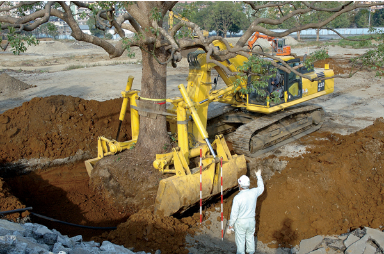
Ex.: Three-dimensional greening method (Biocube)
This technique is used to perform planting on multiple surfaces in a three-dimensional shape. Involving a box-shaped configuration that makes it easy to handle, Biocube realizes multisided greening while also saving space.
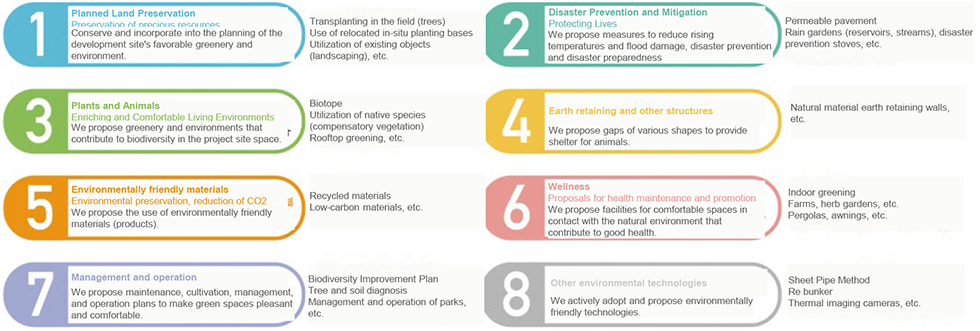
Example of menu
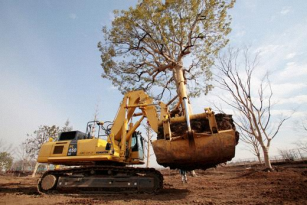
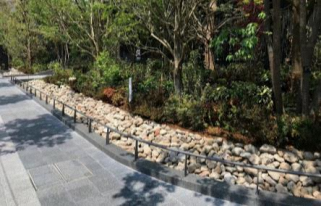
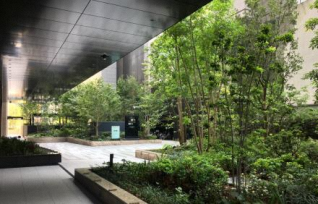
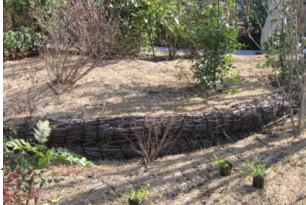
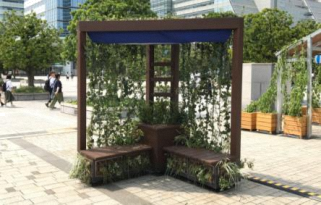
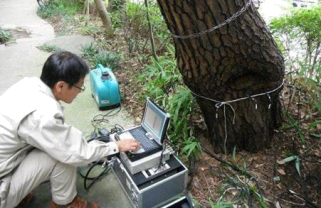
In condominiums, ISHIKATSU EXTERIOR INC. plans and constructs greenery to realize a living environment that nurtures life, create planting management plans (agendas) to connect them to the future, and promote "GREEN AGENDA," which integrates planning and management based on management plans and visualization technology.
In order to realize greenery for homes that meets the demands of the environmental age, it is committed to "visualizing" planting over the medium to long term, and to promoting its customers' "interest" and "sympathy" toward green.
It aim to provide sustainable landscaping support services that contribute to the conservation and restoration of biodiversity in urban development by developing its existing landscaping technologies.
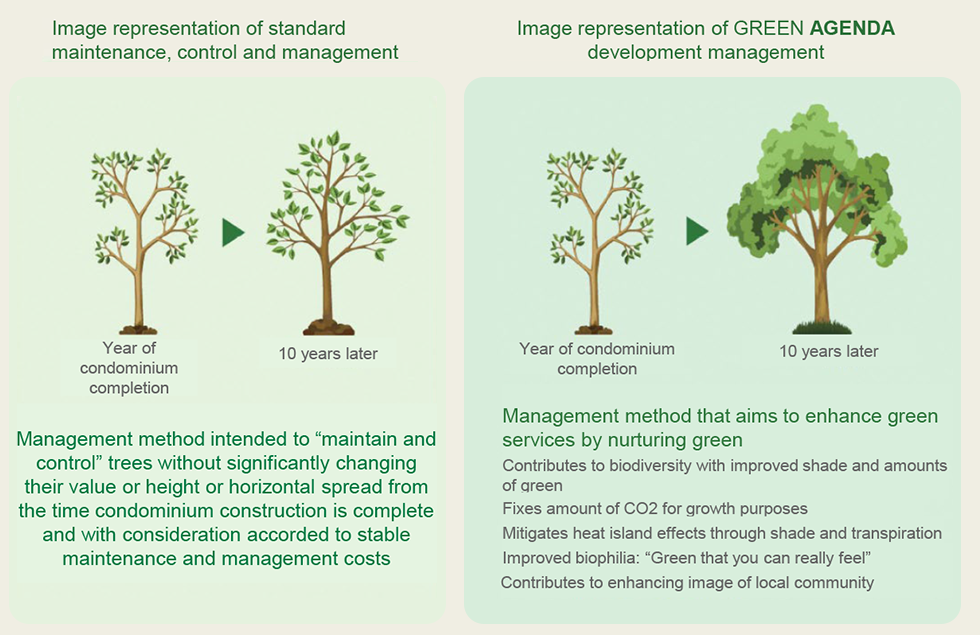
To promote environmental management in our group, the wellness business, which includes hotels and leisure, is formulating target values in the wellness business area, which includes the hotel and resort business and healthcare business, by FY2030 while considering three key environmental issues.
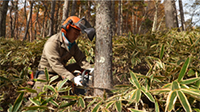
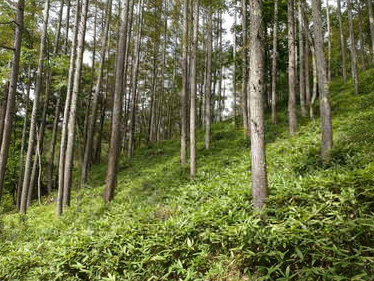
To achieve the above-mentioned vision, it is important for visitors to the resort facility and stakeholders to experience the importance of coexisting with the community and nature and provide opportunities to increase awareness of the environment in daily life, which are unique to the resort facility, not only during facility development but also during sales and operation.
Tokyu Resorts & Stay, which operates the resort facility, has devised the concept of “Morigurashi®,” which incorporates harmony with forests, which are a locally shared resource, and sustainability through forest activities and glamping workcations, and promoted community problem-solving and nature conservation where local residents and employees work in an integrated manner. Furthermore, in 2024, the new slogan of “Happy ‘encounters’ in the community through the power of resorts” was devised. The aim is to provide an “experience-based sustainable resort” based on the three themes of “fostering biodiversity,” “creating a local future,” and “utilizing local energy” to provide facility visitors with a sustainable space, experience, and activities that are enjoyable and kind to the earth and community.
Event information and value for each resort facility are also sent out with the “Enjoy Green Guide” website.
Our group supports 30 by 30, an international goal with the aim to effectively conserve at least 30% of terrestrial and marine areas as healthy ecosystems by 2030.
At the “Tokyu Resort Town Tateshina”, as part of our efforts to achieve 30 by 30, we have participated in the MoE-certified “Other Effective area-based Conservation Measures” (a system that certifies areas where biodiversity conservation is being implemented through private initiatives) research project in FY2022, and in February 2024, the resort facility, including the ski area and golf course, received its first “Other Effective area-based Conservation Measures” certification.
Forest management and biological monitoring surveys are being conducted to protect the abundant biodiversity. As of 2023, 1,699 floral and faunal species have been confirmed, with 32 rare species that are included in the Red Lists of MoE and Nagano Prefecture being confirmed.
There were 605 floral species confirmed, of which 10 were rare species such as Corydalis decumbens. There were 65 bird species, including 4 rare species, such as Emberiza fucata, and 1,018 insect, reptile, and amphibian species, including 18 rare species, such as Ochodaeus maculatus. The area has been highly regarded for its characteristic and diverse habitats, including those for grassland flora and fauna.
Our group has formulated a BAP for areas of particular conservation importance within our project areas, where biodiversity conservation efforts are being conducted. At “Tokyu Resort Town Tateshina”, monitoring surveys of floral and faunal habitats and growth environments have been conducted in the vacation home sites and its surrounding forests. Measures are being considered if threats to the habitats and growth environments of the rare floral and faunal species are present, and there are plans to utilize such measures for green space management plans.
In “Tokyu Resort Town Tateshina,” a forest management plan has been established since 2018, where conservation thinning has been conducted. These actions promote forest growth, such as by encouraging undergrowth and strengthening tree roots, and prevent natural disasters, such as landslides, by strengthening the ground. Efforts such as processing thinned wood into wood chips and utilizing them as fuel for biomass boilers have also been conducted as efforts to contribute to nature and biodiversity conservation as well as local production and consumption of energy. A CO₂ absorption / fixation device has been introduced in the biomass boiler, and golf tees, as well as bottles and sleeves, are made from the CO₂ contained in the flue gas, which is then provided to guests.
Appropriate thinning also promotes tree growth and increases CO₂ absorption amount. In 2022, our group became the first general developer to receive J-Credit certification based on forest management activities under the J-Credit system, in which the Japanese government certifies the CO₂ reductions made by companies as credits.
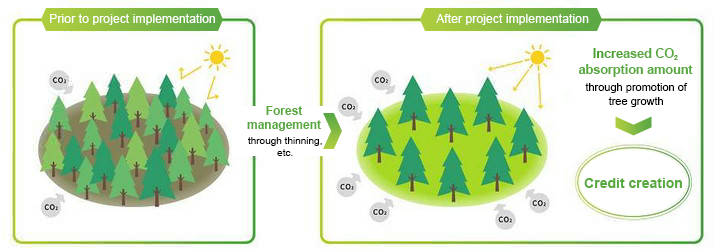
Our group has collaborated with Forest Mori no Kobo Akanesha, a welfare service provider in Suwa City, Nagano Prefecture, and Araki Sewing Co., Ltd. in Shimo-Suwa to sell larch sachets that can be used as a shoe dryer and desiccant, forest candles and wood diffusers that utilize larch scents, and larch outdoor sprays that serve as a naturally-scented insect repellent, which were sold as part of the “ordinary” series. A special craft beer, Larch HAZY IPA, was also sold as part of the “special” series.
Additionally, in the Tokyu Fudosan Branz Gallery Omotesando, an integrated condominium gallery of Branz, which is our group’s new condominium brand that opened in September 2023, the thinned wood that was generated as a result of forest conservation activities in Tokyu Resort Town Tateshina has been used as flooring and designer furniture.
“Tokyu Resort Town Tateshina” has a large number of visitors year-round, and invasive plants have naturally infiltrated the area. Morikomichi, which has been held regularly since FY2021, involves people picking up trash while enjoying walks along the five “Komichi (trails)” in “Tokyu Resort Town Tateshina,” weeding invasive species that may damage the ecosystem of Tateshina, and removing branches and fallen leaves.
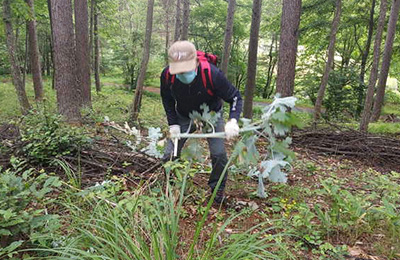
This event was held to utilize the Nagano Prefecture subsidized project “Prefectural Citizen Collaboration-based Satoyama Development and Utilization Project,” deepening understanding of forests and the natural environment among locals and bringing forward a beautiful and healthy forest into the future. Under the theme of “bushcraft and tree planting experience,” local children experienced making fires and planting trees, while vacation homeowners and local residents experienced “tree management courses,” where they mainly learned the proper way to use a chainsaw and make firewood.
(Sponsor: Chino City Shikayama District Morigurashi Promotion Regional Council, in collaboration with Yaso Co., Ltd., and Konoha Co., Ltd.)
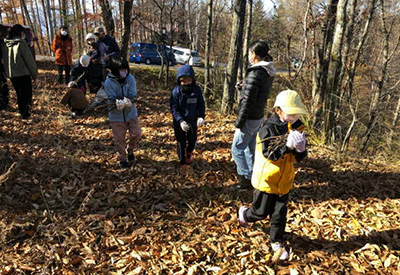
The “Seseragikan,” which used to be a vacation homeowner’s lounge, was renovated and re-opened as a working facility under the brand name “Work Lab,” which is being developed in Chino City. The town is equipped with a variety of accommodations and outdoor facilities, and users can conduct workcations while enjoying the resort, whether they stay overnight or just on a day trip. The furniture in the free space is semi-private sofas and modular sofas so that each user can work while relaxing, and there are also conference rooms and private booths for online meetings, allowing for a variety of working styles.
“Tokyu Resort Town Tateshina” is home to many flora and fauna, including rare species. Our group has planned Tateshina Darwin Tours, a customer-participation biological survey event, in collaboration with Biome Co., Ltd., where participants use Biome, an organism collection app developed by the eponymous company that can identify the name of organisms by taking a photograph with a smartphone camera and feel closer to biodiversity initiatives. The use of Biome by customers will allow them to connect to the abundant nature in the area, while the collected data can simultaneously be utilized as town monitoring data, and they will be utilized for promoting initiatives toward nature restoration in Tateshina.
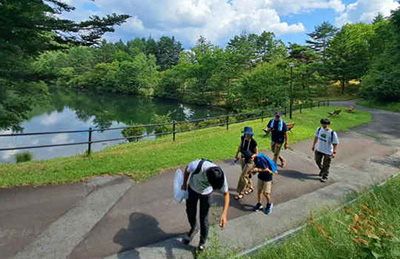
A wine grape seedling planting experience event was held in the fields of the winery “Oreilles de Chat,” which was opened in 2023 in Chino City, Nagano Prefecture. This was an initiative to convert abandoned farmland, which has increased in area across Japan and is becoming a social issue, to vineyards, and the utilization of abandoned farmland allows for the addressing of environmental and local issues. Approximately 720 grape seedlings were planted while imagining a bountiful harvest three years from now.
The town has previously experienced landslides due to heavy rain, and in March 2015, the town was designated as a “landslide hazard zone and special hazard zone” under the Landslide Disaster Prevention Act. Given these circumstances, our group has prioritized the safety of users above all else and sought to raise awareness of district disaster prevention plans and confirm group-based actions by conducting drills on information transmission and instructions, patrols and reports, and evacuation guidance in collaboration with the town center, as well as facilities in the town such as the hotel and golf course.
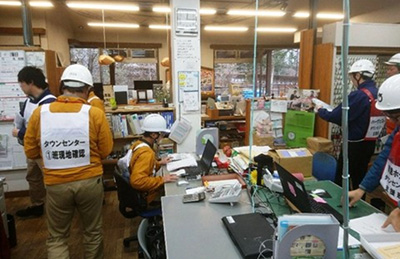
at “Tokyu Resort Town Tateshina,” had its grand opening in August 2023, where users can learn and experience the food and forest cycle through the cultivation and harvesting of vegetables, herbs, fruits, and edible flowers.
In the town, a “composter” (food waste processor) was introduced in March 2023, where food waste from the hotel restaurant in the town is turned into high-quality compost and provided to local farmers, thereby achieving environmental conservation, food circulation, and local collaboration.
The “edible garden” is an experience-based spot where customers can experience the cultivation and harvest of foods, such as vegetables, and eat freshly picked produce to learn and experience food and forest cycles while enjoying coexistence with nature.
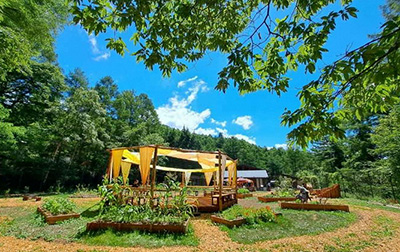
In “Tokyu Resort Town Tateshina,” Tenoha Tateshina was opened in July 2024 as a base for creating and transmitting the values of “local collaboration” and “consideration of the environment.” Since the first phase of vacation home sales in 1978, this town has long continued to coexist with nature, where conservation thinning has been conducted to suppress the densification of the forest. All the walls, furniture, and fixtures in Tenoha Tateshina are made from thinned wood from within the town, and these furniture and fixtures are produced with the cooperation of local sawmills and workshops that share the concept of Tenoha Tateshina, achieving a form of local collaboration.
Furthermore, the plaza adjacent to Tenoha Tateshina uses an abundance of Nagano Prefecture-based wood to ensure local production and consumption of the lumber. The plaza entrance gate is made from lumber, local stone, and glass blocks made from upcycled glass waste from construction, serving as the representation of the circle of local circulation. The Town Opening Marche, which is the opening event, marked its first step as a hub for local community creation.
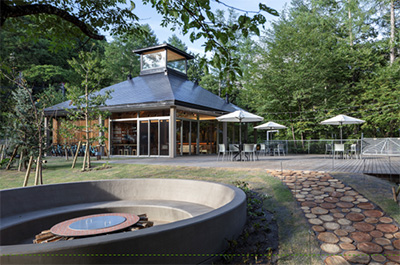
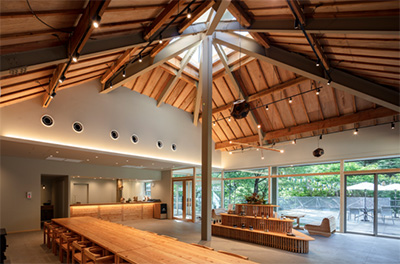
In August 2025, our group launched the Katsuura City Seaweed Bed Conservation Council in partnership with Katsuura City, Chiba Prefecture, the Shinkatsuura City Fisheries Cooperative Association, and related organizations. Katsuura City sits at the junction of warm and cold currents. Its coast features deep waters and numerous rocky reefs where seaweed thrives, supporting diverse marine life. However, recent climate change and the rise in herbivorous fish populations have worsened coastal denudation, causing declines in the quality of seaweed beds. The Council promotes initiatives to maintain and recover high-quality seaweed beds, control herbivorous fish populations, and generate blue carbon credits.
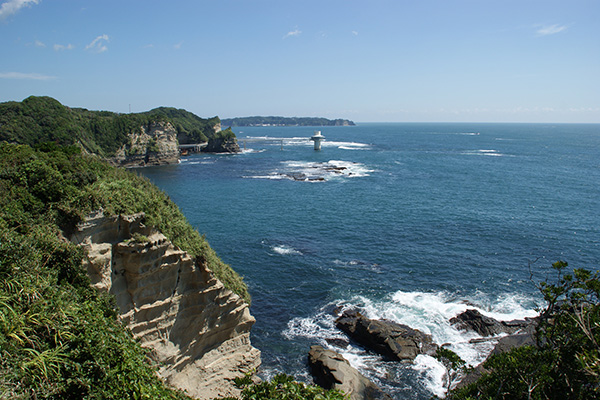
The Hyatt Regency Seragaki Island, operated by a company in which we hold an investment, is conducting the “Seragaki Island Clownfish Cultivation Project” in partnership with the Okinawa Institute of Science and Technology (OIST) in the waters around Seragaki Island in Onna Village, located on the central west coast of Okinawa Island (Main Island). Since 2021, the project has involved hatching, rearing, and releasing clownfish, which are sensitive to temperature changes and whose global populations are reportedly declining, into breeding areas.
To preserve the coral reef ecosystem that attracts tourists to the resort, we collaborate with Onna Village, designated a “Coral Village” in 2018, and the local fishing cooperative to implement initiatives such as introducing Green Fins, an environmentally friendly diving guideline.
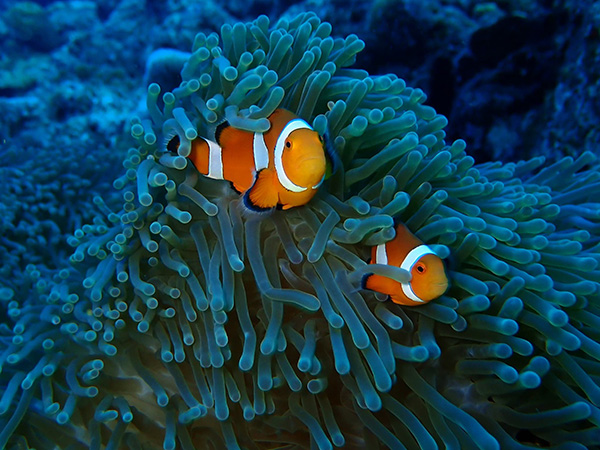
Our group has operated in Indonesia since 1975, developing approximately 5,000 single-family homes and around 2,200 mid- to high-rise residential units. Alongside these urban development projects, we have engaged in long-term community initiatives including coral conservation in marine tourist areas, sea turtle conservation, and tree planting in the suburbs of Jakarta.
Our group has collaborated with stakeholders such as design companies, construction companies, customers, and local communities to engage in water resource conservation initiatives through appropriate management and efficient water resource use according to the unique water resource issues of each region.
Reduction in water usage by the introduction of water-saving equipment
“Tokyu Harvest Club Atami Izuyama & Viala,” which opened in 2013 as a resort hotel in harmony with nature, has engaged in water resource conservation initiatives, such as reducing tap water usage through the adoption of water-saving toilets. “Tokyu Harvest Club Hakone Koshien” and “Tokyu Harvest Club Viala Hakone Tateshina” have also promoted efficient water use, such as the use of well water within the premises.
Water resource conservation at Palau Pacific Resort
Public tap water in the Republic of Palau is not suitable for drinking due to the aging of pipes over the years, and the region also suffers from serious water shortages from January to April. The Palau Pacific Resort has constructed its own water infrastructure system to supply safe water in a stable manner. The resort has installed a seawater desalination device as a measure against dry periods as well as other unique water purification systems while using well water and stream water on the premises as its main water source to secure drinking water and protect water resources.
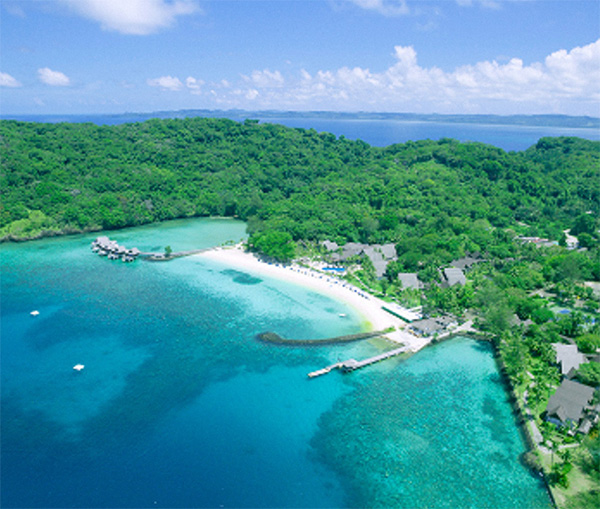
Under the Invasive Alien Species Act (Ministry of the Environment), invasive alien species refers to species of plant or animal that do not originally inhabit Japan and entered national boarders either with or without intention through human activity. These may harm or otherwise impact the ecosystem of local communities. In its endeavors to preserve the ecosystem of those communities, the Group has established a manual and set forth ways of dealing with highly invasive alien species when they are spotted.
Working together with design and construction companies and other stakeholders, the Group endeavors to reduce the effects of contaminants on the environment by preventing their discharge and refraining from using materials that cause that discharge.
Recognizing the need to effectively utilize the resources that go into its businesses, in collaboration with design and construction companies, customer users and other stakeholders, the Group endeavors to utilize resources properly and effectively.
The Green Connection Project to form a cycle of circulation in wood resource utilization
The Green Connection Project is an initiative through which the Group preserves forests alongside its various stakeholders. Linking up with the forest preservation activities conducted by the Village of Nishiawakura in Okayama Prefecture, which is currently pursuing the “100-Year Forest Concept,” we work to preserve forests in accordance with various forms of stakeholder use, such as a condominium purchase, property management, use of office, hotel or leisure facilities, or use of our real-estate sales agents for existing residences. The Group provides forest preservation funds in accordance with the sales results that it posts. An example would be funds to preserve 10m2 worth of forest for each sale of a residential unit. In recent years, the Group is simultaneously purchasing J-Credits generated from the management of forests by the Village of Nishiawakura, thereby helping to popularize forest J-Credits. Up to this point, the Group has successfully preserved over 2,000 hectares of forest, and manages its progress yearly in this regard in the form of KPI with the goal of preserving 3,000 hectares of forest by FY2030.
The timber produced by the preserved forests is utilized in a number of Group businesses, then provided to customers to form a cycle of circulation. We are actively pursuing initiatives to purchase and utilize thinned wood—generated through forest conservation activities in Nishiawakura Village—in construction projects; specifically, we source this wood directly from FSC CoC-certified operators who process and sell FSC-certified timber from the local forests in question, and we use it as interior material for the renovation of residential and commercial facilities.
Locally-produced timber for local consumption
At Tokyu Harvest Club Viala Kinugawa Keisui, which opened in December 2022, trees cut down in the development site were used in elements such as furniture in the common areas.
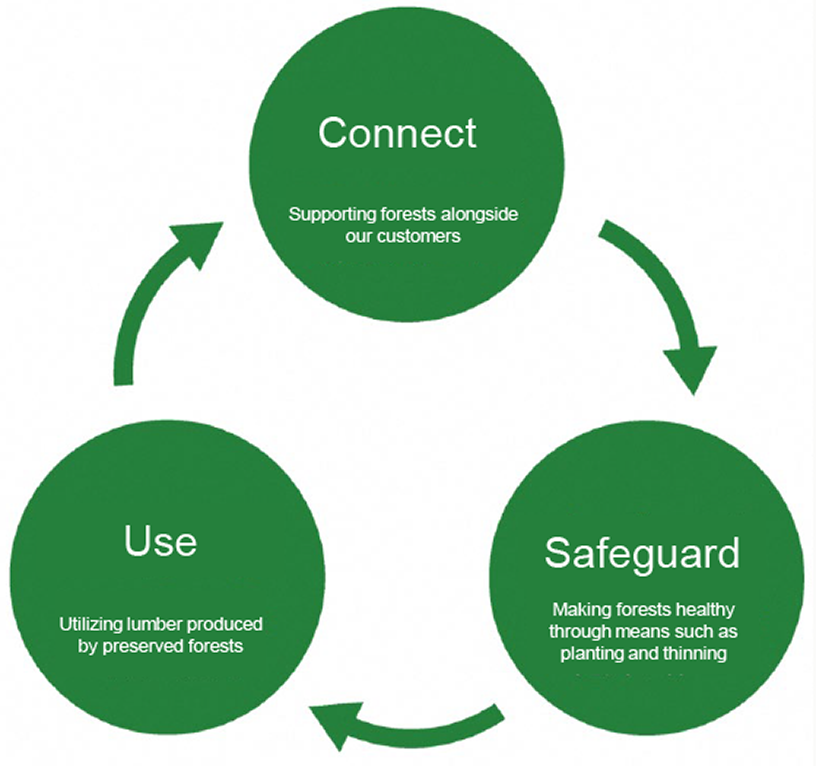
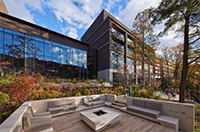
Circular economy initiatives at Forestgate Daikanyama
Our Forestgate Daikanyama property will consist of two buildings: the MAIN Building, which will house rental housing, share offices and a commercial facility, and the Tenoha Building, which will provide a sustainable lifestyle experience. This complex is slated to open in late October 2023.
The Tenoha Building, in turn, will be made up of a cafe and event space. In addition to providing a sustainable lifestyle experience, it will serve as a site of activity that bridges the local community and the city in cooperation with business operators who conduct circular economy activities and the local government. While supplying points of contact with sustainable endeavors to consumers, we will link up with various stakeholders to realize a circular economy. The building itself is a wooden construction containing thinned wood from the Village of Nishiawakura in Okayama Prefecture, which contains one of the forests targeted by Tokyu Fudosan Holdings for preservation, as the building’s structural materials.
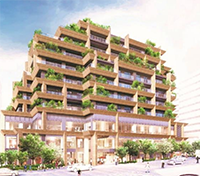
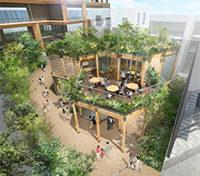
Promotion of circulatory construction and renovation
Through the implementation of regenerative and conservative construction, reforms and renovations, Tokyu Land Corporation, TOKYU LIVABLE and Tokyu Re・design contribute to the reduction of waste and resource circulation.
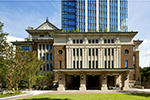
Reduced use of resources through lengthened cycles of large-scale renovations
Tokyu Community sells a long-term warranty product called CHOICE, which can extend the cycle of large-scale renovation work on condominiums from the conventional 12 years to up to 18 years.
Improvements in the specifications and construction methods used in large-scale renovation work allow for the warranty period for building exterior-related work, such as waterproofing and painting, to be extended by 1.5 to 2 times compared with the conventional period. This has enabled a reduction in the frequency of large-scale renovation work before reaching the second stage of 60 years of building age. Reducing the frequency of large-scale renovation work also contributes to the reduction of resources used through the life cycle of the condominiums as well as a reduction of total life cycle costs.
EM checkups are a system that performs analyses and surveys not conducted in normal building and equipment inspections of office buildings, summarizes survey results in an easily visualized and understandable single sheet, and provides these results to customers based on the concept of “Enchanted in 1 minute.”
Diagnosing the energy-saving performance at present through EM checkups allows for the determination of the BELS certification level based on our company’s unique analysis results, and the proposal and support of appropriate management and repair work in the future.
An additional aim is to propose measures to improve building safety and asset value by helping customers understand the multifaceted building management and operation issues and raising their awareness and interest in such topics. The EM checkup will enable the increased environmental value of building assets without rebuilding, as well as appropriate proposals and support for obtaining ZEB and BELS certification.
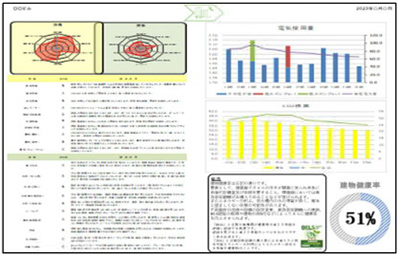
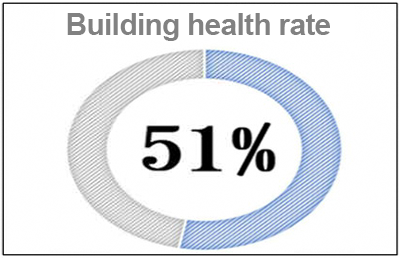
The TCFD and TNFD frameworks consist of disclosure recommendations organized around four pillars, and disclosure relating to these items is recommended. The General Requirements are disclosure items required only under TNFD.
Overview of TNFD Disclosure Framework
This table can be scrolled horizontally
| General requirements | |||
|---|---|---|---|
|
|||
| Governance | Strategy | Risk and Impact Management | Metrics and Targets |
| Disclose the organization’s governance relating to climate-related risks and opportunities and nature-related dependencies, impacts, risks, and opportunities. | Disclose the impacts of climate-related risks and opportunities and nature-related dependencies, impacts, risks, and opportunities on the business, strategy, and financial plans, where such information is material. | Disclose the processes used to identify, assess, and manage climate-related risks and opportunities and nature-related dependencies, impacts, risks, and opportunities. | Disclose the metrics and targets used to assess and manage climate-related risks and opportunities and nature-related dependencies, impacts, risks, and opportunities. |
|
|
|
|
The table below summarizes which of the 14 disclosure recommendations shown on the previous page corresponds to each of the LEAP phases of the TNFD. In this report, the results of our review with reference to the LEAP approach are disclosed in accordance with the General Requirements and the TNFD Disclosure Recommendations.
Overview of the LEAP Approach and its relationship to disclosure recommendations
This table can be scrolled horizontally
| Locate The interface with nature |
Evaluate Dependencies & impacts |
Assess Risks & opportunities |
Prepare To respond & report |
|---|---|---|---|
|
|
|
|
|
|
|
|
| Disclosure recommendations corresponding to LEAP | |||
|
|
|
|
| Item | Overview of the Calculation Method |
|---|---|
|
Increases in the costs for new construction and renovation resulting from ZEB and ZEH implementation and carbon pricing were estimated using the standard cost increase rates for ZEB and ZEH, along with the IEA’s scenario-specific carbon price assumptions. The impact rates for vacancy rates and changes in rent were also established based on external publications to estimate the financial impact of reduced demand. The financial impact of fuel costs for hotels and resort facilities was estimated using the IEA’s scenario-specific carbon price assumptions and projected fuel prices. |
|
Increases in business profits were estimated using the IEA’s scenario-specific assumptions for renewable electricity expansion and future power generation cost projections from industry organizations, together with certain assumptions regarding the sales prices of electricity. |
|
Increases in profit were estimated by applying rent levels, vacancy rates, and sales prices for ZEB and ZEH based on external publications. |
|
Increases in profit were estimated by assuming the rent levels, sales prices, and premiums for offices, residential properties, and resort facilities that are in harmony with nature based on external publications. |
|
Increases in the costs for new construction and renovation resulting from ZEB implementation, along with those in the construction cost caused by carbon pricing, were estimated using the standard cost increase rates for ZEB implementation together with the IEA’s scenario-specific carbon price assumptions. The impact rates for vacancy rates and changes in rent were also established based on external publications to estimate the effects of reduced demand. |
|
Increases in profit were estimated by assuming the rent levels and vacancy rates for ZEB based on external publications. |
|
Increases in profit were estimated by assuming rent premiums for offices that are in harmony with nature based on external publications. |
|
Increases in profit were estimated by assuming sales prices and demand impacts for ZEH based on external publications. |
|
Increases in profit from remodeling and renovation were estimated by assuming the growth rate of the renovation market based on external market research. |
|
Increases in profit were estimated by establishing sales price premiums for housing that is in harmony with nature based on external publications. |
|
The amount of profit constrained by the overlap between suitable renewable energy sites in Japan and areas important from the perspective of nature was estimated based on the profits estimated after the renewable energy market expansion assumptions in B). |
|
The financial impact of fuel costs for hotels and resort facilities was estimated using the IEA’s scenario-specific carbon price assumptions and projected fuel prices. |
|
Increases in profit were estimated by assuming rate premiums for sustainable resort facilities based on external publications. |
|
The impact on profits from the ski business was estimated based on external publications describing future scenario-specific changes in snowfall days. |
|
The financial impact for regions where certain resort facilities are located was estimated based on external publications by assuming the effect on visitor numbers if certain tourism resources were degraded. |
| Biodiversity Intactness Index | Metric denoted as a percentage (%) that indicates the extent to which species are remaining relative to cases where the ecosystem has only been subject to the minimum disturbance. (Source:Newbold et al.(2016)”Global map of the Biodiversity Intactness Index, from Newbold et al(2016)”) (For the Biodiversity Intactness Index, 100% is assigned to so-called “untouched nature.” Otherwise, this index indicates the degree to which biological species are remaining after the ecosystem of the land in question has been “touched”) |
|---|---|
| Key Biodiversity Area(KBA) | Significant area serving as key to biodiversity conservation as selected according to international standards. |
| STAR Index | Metric representing a quantification of the possibility that activities to reduce threats to species in that area contribute to the reduction of extinction risk around the world as a whole. |
| Conservation priority level | Metrix indicating priority level based on the prevention of the extinction of biological species and the conservation of biodiversity in light of information on the distribution of biological species. (Source:Think Nature Inc.) |
| Baseline water stress | Metric indicating level of stress on water at basins based on percentage of water consumption relative to water supply volumes at the basins. (Source:WRI Aqueduct) |
| TCFD | Task Force on Climate-related Financial Disclosures: Established in 2015 by the Financial Stability Board (FSB) at the request of the G20 with Michael Bloomberg as Chair. Publicly released its final report in June 2017. Requests the proactive disclosure of information on what kind of initiatives geared towards climate change are being conducted by corporations and institutions. Revised in 2021. It recommends that companies and institutions proactively disclose the following items on how they are tackling climate change. |
|---|---|
| TNFD | Abbreviation for “Taskforce on Nature-related Financial Disclosures.” Launched in 2021 by four institutions: the United Nations Development Programme, the World Wildlife Fund, the United Nations Environment Programme - Finance Initiative and Global Canopy. Calls for the adequate assessment and disclosure of nature-related dependencies/impacts and risks/opportunities. |
| SSBJ | Sustainability Standards Board of Japan (SSBJ): An organization that develops and formulates sustainability disclosure standards for Japan based on the standards of the ISSB (International Sustainability Standards Board). |
| SBT 1.5°C targets | Science Based Targets: GHG emission reduction targets configured by corporations with 5 to 10 years as the target years. SBT conform with the standards required under the Paris Agreement (rise in global temperature is at a level well below 2˚C of that before the Industrial Revolution or kept at 1.5˚C). |
| RE100 | Renewable Energy 100%: An international collaborative initiative, in which companies from around the world participate with the goal of procuring 100% of the electric power consumed by their business activities from renewable energy sources. |
| ICP | Internal Carbon Pricing: A method where a company sets carbon prices independently and uses it to visualize the business impact of a carbon tax, or for organizational strategy and decision making. This is one method of carbon pricing which puts a price on CO₂ emissions to change the behavior of emitters. |
| United Nations Global Compact | UNGC: Initiative through which the UN advocated complying with and practicing ten principles that concern human rights, labor rights, the environment and anti-corruption at the World Economic Forum in 1999. |
| IEA | International Energy Agency: Established in 1974 in the aftermath of the first oil crisis as an international agency within the framework of the Organization for Economic Cooperation and Development (OECD) with the main purpose of improving the energy situation in oil-consuming nations. |
| ZEB / ZEH | net Zero Energy Building / net Zero Energy House: Buildings with net zero or negative annual primary energy consumption. The amount of reduction is found by summing the amount of energy saving and the amount of energy creation, in comparison with conventional buildings. |
| LEAP | Abbreviation for “Locate, Evaluate, Assess, Prepare.” Approach recommended by the TNFD to assist corporations and financial institutions with evaluating their nature-related risks / opportunities. Comprised of the four steps of “Locate” (locate the interface with nature), “Evaluate” (evaluate dependencies and impacts), “Assess” (assess material risks and opportunities) and “Prepare” (prepare to respond and report). |
| ENCORE | Tool for financial institutions developed by the UNEP Natural Capital Finance Alliance, or NCFA for short. Enables the assessment of the importance of dependencies and impacts on nature according to business category and the analysis of data such as distributions of ecosystem services. |
| Cultural services | Cultural services that are aesthetically, spiritually, and psychologically influential that humans obtain from being in contact with nature. |
| Ecosystem integrity | Degree to which the composition, structure and functions of the ecosystem are within the scope of natural fluctuation. |
| Thinning | Felling some trees depending on crowding extent to reduce competition between trees being grown. |
| Clear-cutting | Felling a certain group of trees that constitute a forest all at once. |
| Forest management plan | Plans created by forest owners or entities that are entrusted with forest management regarding forest management and conservation for the managed forests. |
| IPCC | Intergovernmental Panel on Climate Change. Organization established by the United Nations Environment Programme (UNEP) and the World Meteorological Organization (WMO) in 1988 to comprehensively assess manmade climate change, its effects, and adaptation and mitigation measures from scientific, technological and socioeconomic perspectives. |
| GBF | Global Biodiversity Framework (abbreviated as GBF): A global goal adopted at the 15th Conference of the Parties to the Convention on Biological Diversity (COP15); it sets forth a 2050 vision and a 2030 mission aimed at achieving a "nature-positive" outcome. |
| BCP | Business Continuity Plan. A plan that defines the activities that should be carried out under normal circumstances and the methods and means for business continuity in an emergency, in order to enable the continuation and early recovery of core business operations while minimizing damage to assets in the event of a natural disaster or other emergency situation. |
| Ecological network | The concept of positioning areas with excellent natural conditions as biodiversity bases (core areas) and connecting core areas with ecological corridors to allow for the movement and dispersion of wild animals. |
| LCP | Life Continuity Plan. A plan to continue living and living while limiting damage to assets in the event of an emergency such as a natural disaster. |
| SBTs for Nature | Abbreviation for “Science Based Targets for Nature.” Initiative calling for the setting of targets with time limits that can be measured and executed based on the best available science with respect to the setting of nature capital-related goals by corporations. |
| Regulating and maintenance services | Services that control and maintain the environment through biodiversity, such as climate control, mitigation of local disasters, suppression of soil erosion, and suppression of harmful organisms and diseases within the ecosystem. |
| Scope1・2・3 | Categorizations of greenhouse gasses established as part of the Greenhouse Gas (GHG) Protocol, an international standard of calculating and reporting GHG emissions. Depending on the emitting entity, GHG are categorized into one of the following: Scope 1 (direct emissions), Scope 2 (indirect emissions) or Scope 3 (other emissions). The sum of these is considered to be emissions by the overall supply chain. |
| Micro grid | System for bringing together energy supply sources and consumption facilities within a certain scope and locally producing energy for local consumption. Distributed power sources for the likes of renewable energy such as solar and wind power are used to supply energy. |
| FIT | Feed In Tariff: System made compulsory for electric power companies so that electricity generated using renewable energy such as solar power generation is purchased at prices determined by the national government. |
| FOURE | Reciprocal and Regional Revitalization with Renewable Energy: Agreement between Tokyu Land Corporation, Osaka Gas, Looop, Tokyo Gas and Renewable Japan to jointly examine reciprocal and regional revitalization through renewable energy with the goal of having renewable energy and regions to develop together while taking into account policy trends of principal ministries and agencies. |
| GX Future Consortium | (GX: Green Transformation) A platform where companies aiming to achieve sustainable growth join forces with other like-minded enterprises, government agencies, and universities to take practical action toward transforming economic and social systems and creating new markets. |
| PPA | Power Purchase Agreement: System through which power generated by renewable energy generation systems installed by companies who own and manage renewable energy generation equipment (PPA operators) in sites, on roofs and in other spaces supplied by the facility owner is provided to power users at that facility at a charge.
|
| Race To Zero | International campaign calling upon corporations, local autonomous bodies, investors, universities and other non-government actors to take action immediately to achieve the goal of reducing greenhouse gas emissions by essentially half by the year 2030. |
| JCI | Japan Climate Initiative: Established in 2018 with the participation of 105 organizations as a loose network to reinforce the communication of information and exchange of opinions by corporations, local autonomous bodies, NGOs, etc. that proactively engage in climate change measures. |
| PRI | Principles for Responsible Investment: launched through a partnership between the UNEP Finance Initiative and the UN Global Compact based on advocacy by the UN in 2006. Requests investors to engage in investment behavior that takes ESG information into consideration from a long-term perspective after analyzing and evaluating companies. |
| Biodiversity Action Plan (BAP) | An action plan for biodiversity conservation by countries, companies, or other organizations. In the case of countries, contracting parties to the Convention on Biological Diversity (CBD) are required to formulate a BAP under Article 6. |
The following were used as a reference in the preparation of this report.

Disclaimer on Forward-Looking Statements
The forecasts and other forward-looking statements in this report are based on available information and certain assumptions determined as rational as of July 2026. Consequently, any statements herein do not constitute assurances regarding actual results by the company. Actual performance may significantly differ from these forecasts due to various factors in the future.
Environment reporting to the board of directors, Named position responsible...
Goals, Initiatives, and Achievements Quantified CO₂ reduction targets ...

Targets in the investment process ① Electrical facility: Introdu...

Company position on public policy for mitigating climate change Tokyu La...
Support for mitigating climate change through Membership of business associ...
Efforts, Supports and Involvement for activities to avoid climate change ...
Tokyu Land Corporation implements the following management process as a cou...
Tokyu Fudosan Holdings measures the energy efficiency of all real estate pr...
In office buildings and commercial facilities operated and managed by Tokyu...

Reduction of CO₂ Emissions Reduction in CO₂ emissions in office building...

The 356-unit Branz City Shinagawa Katsushima is a large condominium buildin...
Initiatives towards ZEB and ZEH TOKYU COMMUNITY Technology Training Cent...
Program to promote corporate value improvement through decarbon management ...

Third-party Independent Verification The Tokyu Fudosan Holdings Group rece...
Tokyu Fudosan Holdings Corporation has developed and disclosed a “TCFD/TNFD...
INTRODUCTION Introduction - worldwide aims of net zero and nature positi...
Strategy Climate and Nature-Related Scenario Analysis Climate...
Nature-related analysis based on the LEAP approach Nature ...
Risk and impact management Climate Nature ...
Metrics and targets Climate Metrics / targets ...
Transition plan for a decarbonized society Climate ...
Climate- and nature-related initiatives Examples of climate-related init...
Appendices and Glossary Appendix: Structure of the TCFD and TNFD Framewo...
Tokyu Fudosan Holdings Group makes a commitment to environmental issues an ...
Governance Sustainability Committee to assess and manage climate-related...
Strategy Faced with mounting threats of climate change and environmental...
Risk management Identifying / assessing climate-related risks/opportunit...
Metrics and targets Climate change-related targets in our long-term GROU...
Tokyu Fudosan Holdings Group makes a commitment to environmental issues an ...
Planning and management at the project site Biodiversity Action Plan (BA...

Creation of “Invasive Alien Species Response Manual” According to the In...

Biodiversity risk assessment(Disclosure of biodiversity habitat) ~ Conducti...
《Existing project》For example, at the roof terrace garden named Omohara For...
At "Tokyo Port City Takeshiba Office Tower", we are working on environmenta...
“Tambara Ski Park" has been working to protect ‘forest green tree frogs’, w...
Participation in biodiversity certification systems Systematic applicati...

Obtained the highest rank (AAA) of "JHEP Certification The FUTAKO TAMAGA...
Disclosure of engagement on efforts to reduce loss of biodiversity Gover...
The Tokyu Fudosan Holdings Group has established environmental management a...
INTRODUCTION Introduction -Nature Positive as a Global Goal- Am...
Nature-Related Information Disclosure in line with TNFD G...
Risk and impact management Risk and impact management ...
Metrics and Targets P Metrics and Targets ...
Goals, Initiatives, and Achievements Time-specific targets to reduce pol...

Tokyu Land Corporation has rigorous performance standards for its newly bui...

The Group's office buildings, commercial facilities and resorts manage and ...
Measurement of NOx, SOx, emissions According to the Air Pollution Contro...

Management Structure The Group has established the Sustainability Commit...
Process targets to reduce or avoid waste: Tokyu Land Corporation has set...

The Tokyu Fudosan Holdings Group is working to reduce waste through home re...
Ratio of establishments receiving environmental management certification ...
Working with others to reduce waste or resource use by Participation in spe...
Use of LCA (Life Cycle Analysis) The Tokyu Fudosan Holdings is developin...

Management Structure The Group has established the Sustainability Commit...
Progress against previously set targets to reduce resource use: Quantifi...

Forming a reuse cycle for wood resources The Green Connection Project is...
The Tokyu Fudosan Holdings Group has invested in a company that promotes th...

Management Structure The Group has established the Sustainability Committe...
Water conservation measures Water management plan Tokyu Land Corporat...

Reducing water use with water saving systems and features The Tokyu ...

Initiatives Along the Tama River - Environmental Conservation of the River ...
Initiatives in water-scarce regions Engagement, water withdrawal, etc. ...
Business activities in water-scarce regions The Republic of Palau is chr...
Works with others Works with others to reduce water use Tokyu Fudosan...
Collaboration with other companies operating at same sites such as making u...
Costs associated with water-related risks The cost of water-related risk...
The number of incidents of non-compliance with water quality/quantity permi...
Third-party Independent Verification The Tokyu Fudosan Holdings Group rece...

Goals, Initiatives, and Achievements Results on goals of acquisition of en...
Targets and performance on water usage from property portfolio Water Use...
Training and providing programs to raise employees' environmental awareness...
Environmental policies integrated with suppliers through Training of releva...
Tokyu Fudosan Holdings has introduced a green lease clause in some of the l...

Operating energy management systems together with tenants Tokyu Land Cor...
Tokyu Fudosan Hodings participate in the Environmental Management Committee...
Commitment to Green Field Development Commitment to Green Field Developm...

Measures to reduce energy and water consumption Aggregate energy data at...

Tokyu Community Corporation has been selected to be an MEMS aggregator as a...

Reducing water use with water saving systems and features The Tokyu ...

Reduction of water usage by using rainwater The office building "Kasumig...

As a member of the Keidanren Nature Conservation Council, Initiatives fo...
Tokyu Fudosan Holdings distributes the Sustainable Procurement Policy to it...
No-Deforestation Commitment Much of plywood used for concrete formwork i...






